The Solitude of Creation by Jeannine Cook

Yesterday, I attended a gathering to celebrate the launching of a new book by Robert Coram, a very talented and successful author who spends time in McIntosh County. Entitled Brute. The Life of Victor Krulak, U.S. Marine, it is the biography of a legendary hero in the Marine Corps. Published by Little, Brown and Company, the official publication date is November 10th, the 235th anniversary of the U.S. Marine Corps.

During the short speech Robert made, he talked of the solitude of creation, the long hours he had spent in his studio here on the Georgia coast whilst writing this book. He intimated that the transition to public persona when a book appears is a difficult passage. He is now beginning the book tours, the speeches, the book review process - the antithesis of the lonely creative work.

I reflected that so much creative work necessitates this dedicated solitude. As a visual artist, I know that producing art - and especially trying to create good work - completely precludes a social life style. The hours needed to work are precious and require jealous guarding against intrusions from people, phones and the distractions of daily life. Every artist learns to programme life so that time to work does not get whittled away. Of course there is time and opportunity to "join the outside world" on occasions, but when a project is underway, solitude is vital. I have always found it interesting to note how many very successful artists are single... there is thus less danger of creative energies being drained away. And even those with partners are frequently blessed with people who understand this need to work alone and be periodically obsessed by what is being created.

This solitude tends to be one of the hallmarks of a serious artist, writer or other creator. Otherwise, books would not get written, poetry or drama would not appear, music would remain silent and the arts would not get produced. Yet, interestingly, once the creative solitude has yielded its fruit, that creation requires the presence of other people - the public in some form - to complete the circle and render the work launched and thus alive.

Robert Coram is the perfect example of how dedicated, organised and creative solitude yields wonderful results. As an artist, I am so glad to be reminded by him that I need to be serious about ensuring I have similar solitude on occasions. Not always easy to achieve, but definitely something to try to do!
Life Experiences and Art by Jeannine Cook

Pablo Picasso was of the opinion that "a painter should create that which he experiences".

As one goes along in life, there are plenty of experiences that mark one, positively and negatively. As an artist, there are times when you can "digest" an experience fairly quickly and it will show up in your art in a relatively straightforward fashion. Perhaps the most direct way to depict experiences pictorially is plein air painting or drawing. You are filtering through onto paper or canvas your sensory experiences of an area, urban or rural, coastal or upland, whatever.

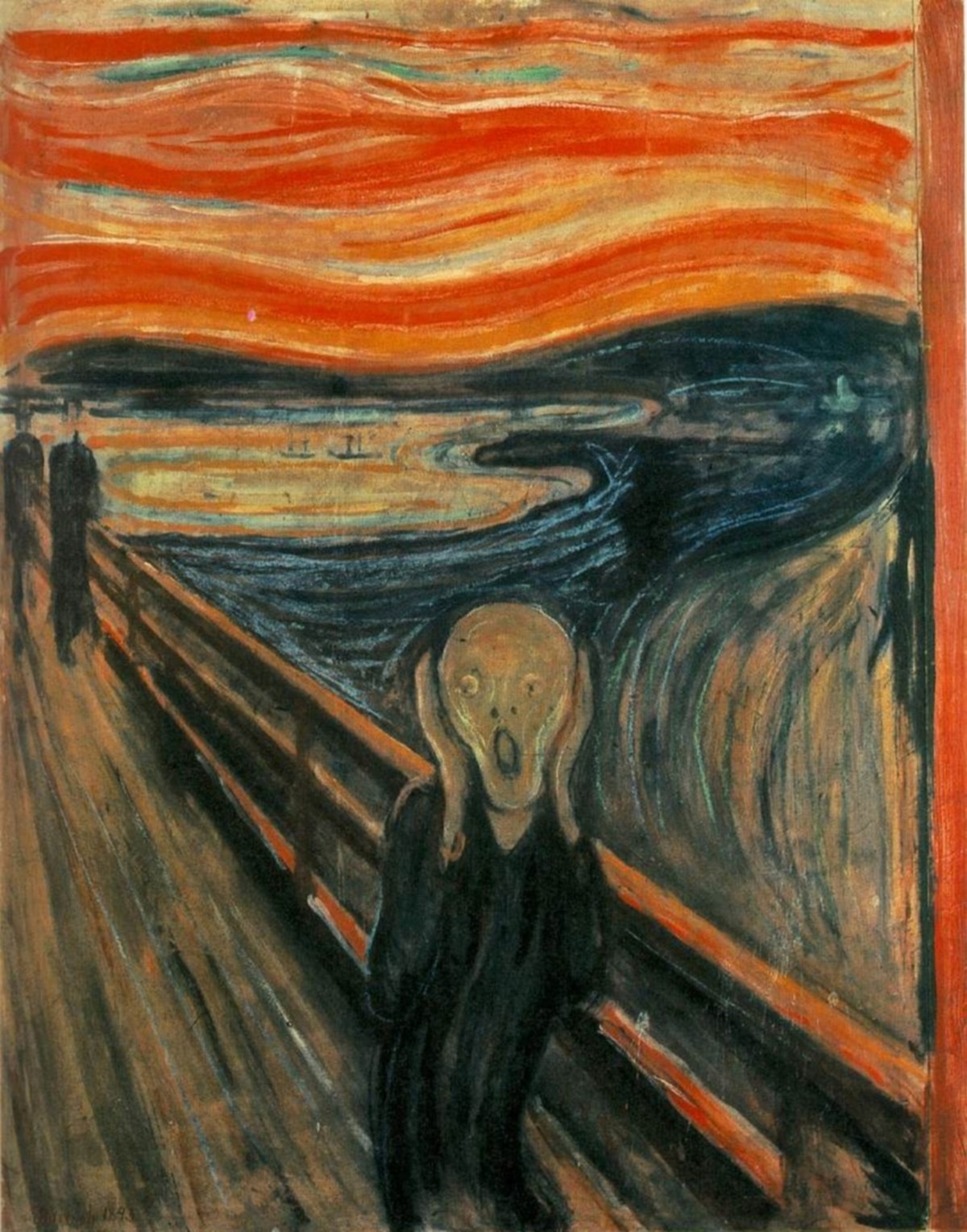
When an artist's life goes through major ups or downs, those experiences are more complex, but sooner or later, they do seem to show up in a serious artist's work. Perhaps one of the most famous examples of art arising from life experiences is The Scream which Edvard Munch painted when he was 30 years old.

The Scream,Edvard Munch, oil, 1893, (Image courtesy of the National Gallery, Oslo, Norway

The Scream,Edvard Munch, oil, 1893, (Image courtesy of the National Gallery, Oslo, Norway

He had had a very difficult life from childhood. He wrote about his father, "My father was  temperamentally nervous and religiously obsessive - to the point of psychoneurosis. From him, I inherited the seeds of madness. The angels of fear, sorrow and death stood by my side since the day I was born." By the time he had moved to Berlin and then to Paris, experimenting with different artistic styles, he was coping with deep anguish and angst. He later said about this painting that, "for several years, I was almost mad. I was stretched to the limit - nature was screaming in my blood. After that, I gave up hope ever of being able to love again."

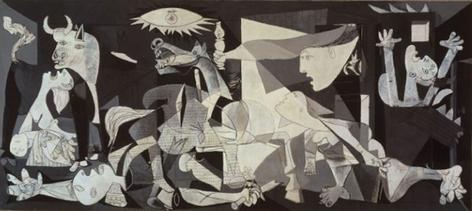
Picasso spoke very accurately of his art being derived from his experiences. His Blue Period paintings were influenced by the suicide of his friend, Carlos Casagemas. His love affairs with his various mistresses were the source of the amazing work that continued to flow from him during his long and productive life. Borrowed experiences are also sometimes the source of great art. Again, Picasso is a prime example, with Guernica, which was created after the Germans bombed the small town of Guernica during the Spanish Civil War.

Guernica, Pablo Picasso (Image courtesy of the Reina Sofia Museum, Madrid)

Guernica, Pablo Picasso (Image courtesy of the Reina Sofia Museum, Madrid)

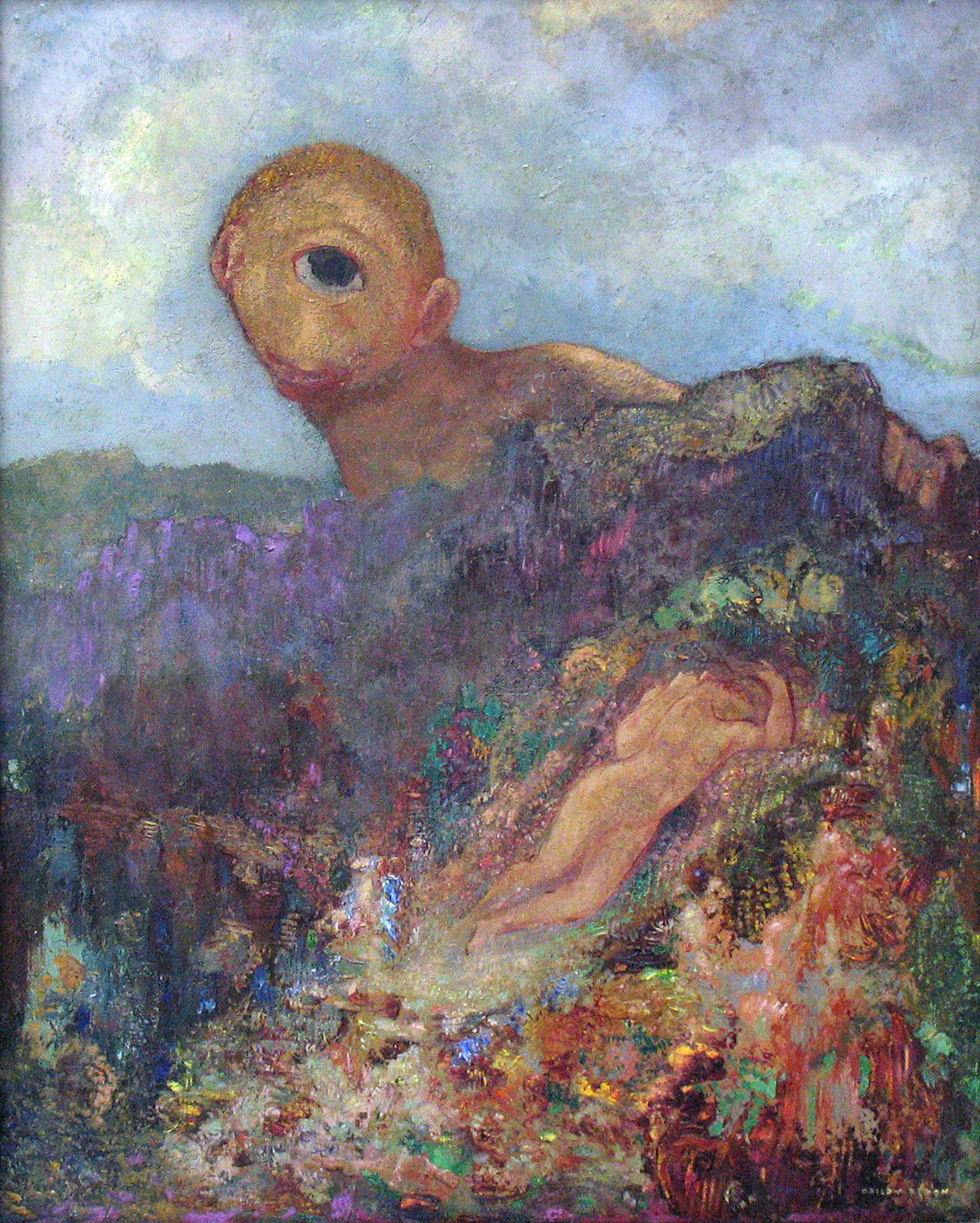
Other artists believe in placing "the visible at the service of the invisible", as 19th century Symbolist  Odilon Redon said. His inner experiences were channeled into strange pastels and paintings which often had an initial appearance of real subjects, but then then veer into the grotesque and ambiguous.

The Cactus Man 1881, Odilon Redon, Charcoal on paper (Image courtesy of  Museum of Modern Art, New York )

The Cactus Man 1881, Odilon Redon, Charcoal on paper (Image courtesy of  Museum of Modern Art, New York )

The Cyclops, 1914 by Odilon Redon. Symbolism. mythological painting. Kröller-Müller Museum, Otterlo, Netherlands.

The Cyclops, 1914 by Odilon Redon. Symbolism. mythological painting. Kröller-Müller Museum, Otterlo, Netherlands.

The Cactus Man (1881) is one of Redon's strange drawings. But there is a consistency that runs through his work, for in 1914, he paints The Cyclops . One can only conjecture at the personal experiences that drive these works of art.

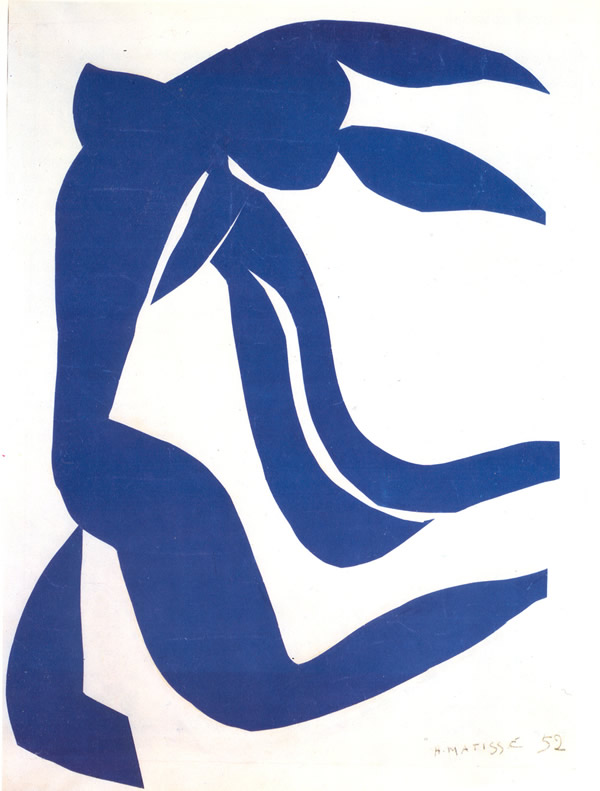
Another type of experience that led to wonderful art is when Henri Matisse was increasingly unwell, towards the end of his life, and was confined to a wheel chair after 1941. So he turned to "painting with scissors" and produced his wonderfully joyous cut outs, his Blue Nudes from 1952 and his limited edition book, Jazz, with its series of colourful cut paper collages, amongst others.

Blue Nude with her Hair in the Wind, 1952, gouache-painted paper cut outs, Henri Matisse (Image courtesy of www,henri-matisse.com)

Blue Nude with her Hair in the Wind, 1952, gouache-painted paper cut outs, Henri Matisse (Image courtesy of www,henri-matisse.com)

Today's artists have such a wide array of examples of how artists drew on their personal experiences to inspire their art. It makes a very strong case for each of us to believe in ourselves as artists, to listen to our inner voices and follow their inspiration into creating strongly individual art.

Skies by Jeannine Cook

After the many glorious days of cloudless skies and brilliant sunshine, today was cloudy and grey. A bit of a shock, in a way. The change in the light and the sense of space was marked.

Skies, for an artist involved in any depiction of the natural world, are so important. Their role in setting a tone, a mood in any painting or drawing, is key. As a child of Africa, where the vast skies arch brilliant and endless, I love the wide vistas across the salt water mashes of coastal Georgia because here too, the sky is so expansive. Such views allow a sense of liberty, an expansiveness of soul that are allied to a sense of the infinite vastness of nature, of space and those countless galaxies far beyond our world. All these feelings are often filtered through the art one creates, in spite of oneself. In essence, it is "painting about something", versus "painting something". Whether the something is the light, the space, or much more complex philosophical concepts, the sky is central to the art making.

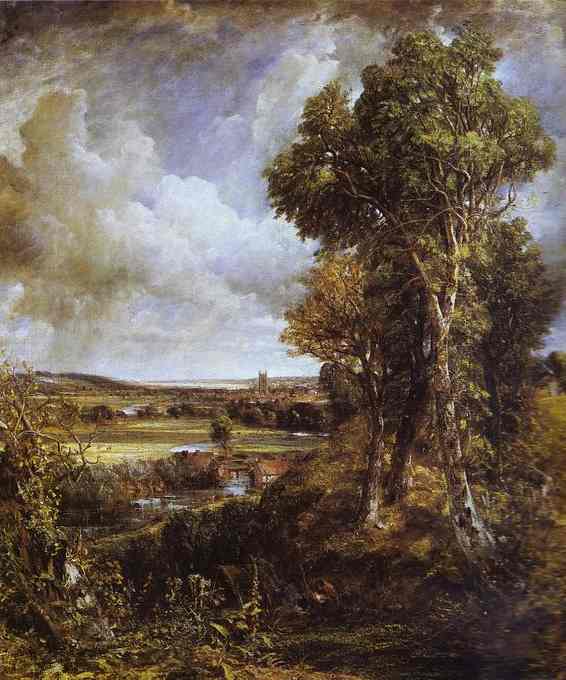
The painting below is the famed Deadham Vale 1802 depiction of rural England, where Constable used the sky to set the whole tone of the landscape, to flood it with northern light and give it a gentle expansiveness that is memorable.

Dedham Vale with Ploughman, 1814, John Constable, (Image courtesy of Scottish National Gallery)

Dedham Vale with Ploughman, 1814, John Constable, (Image courtesy of Scottish National Gallery)

John Constable RA, Cloud Study, Hampstead, Tree at Right, 1821. (Image courtesy of the Royal Academy)

John Constable RA, Cloud Study, Hampstead, Tree at Right, 1821. (Image courtesy of the Royal Academy)

John Constable believed that the sky was "the key note, the standard of scale, and the chief organ of sentiment" in a landscape painting. This 1821 Cloud Study, (above) a plein air study, is an example of his famed quick art done to record skies and weather conditions.

Despite the ever-increasing divorce between man and nature that we are witnessing today, there are still many artists who are enthralled - nay, obsessed - by skies and the wonders of light, clouds and atmospheric effects.  Graham Nickson, the British-American artist who is Dean at the New York Studio School since 1988, had a wonderful exhibition at the Jill Newhouse Gallery in 2009, entitled "Italian Skies".

Graham Nickson, Sarageto III, 2008 (Image courtesy of Jill Newhouse Gallery)

Graham Nickson, Sarageto III, 2008 (Image courtesy of Jill Newhouse Gallery)

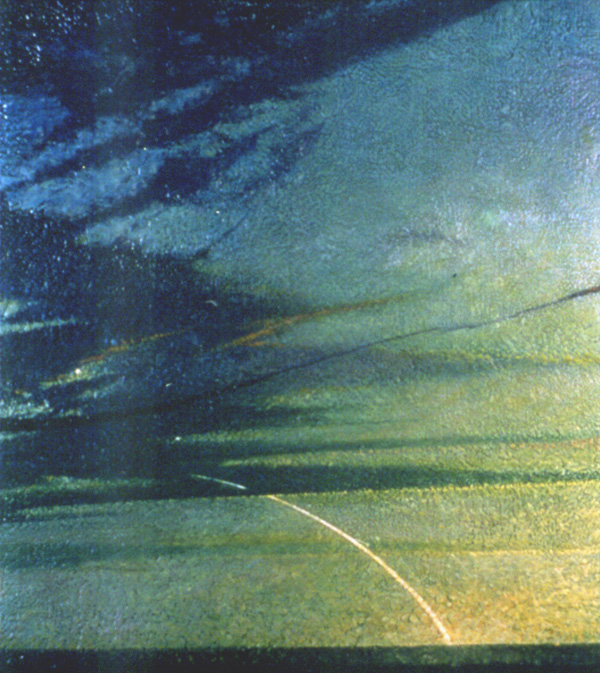
Jeffrey Lewis, who teaches are at Auburn University. He works in encaustic, and his series of paintings are lyrical in the extreme.

Towards Ontario mirus caelum, Jeffrey Lewis (Image courtesy of the artist)

Towards Ontario mirus caelum, Jeffrey Lewis (Image courtesy of the artist)

Towards Ontario Vespers, Jeffrey Lewis (Image courtesy of the artist)

Towards Ontario Vespers, Jeffrey Lewis (Image courtesy of the artist)

He speaks eloquently about the emotions that these skies inspire in him and what he seeks to convey in his paintings.

Towards Ontario Eventide, Jeffrey Lewis (Image courtesy of the Artist)

Towards Ontario Eventide, Jeffrey Lewis (Image courtesy of the Artist)

Photography too is a wonderful medium to celebrate skies, the light that emanates from them, and thus also the passage of time. One artist who has devoted much of her life to exploration of these subjects is Erika Blumenfeld, a Guggenheim Fellow and photographer. She discourses at length about such research and work in a recent fascinating interview with Art Interview, and clearly shares the same deep awareness of skies and their influence on all of us below their domes.

Background - Sky Scrolls, Erika Blumenfeld photographer (Image courtesy of the artist)

Background - Sky Scrolls, Erika Blumenfeld photographer (Image courtesy of the artist)

Drawing from Life by Jeannine Cook

In a period that has been over-busy with the other side of art - matting, framing and preparing for exhibitions - life drawing was a welcome break, albeit for only three precious hours.

A fellow artist was talking to me during one of the brief breaks to let the model remember his limbs existed. We were talking about the humbling but ever-necessary discipline of looking, looking and looking, to teach one's hand to trust one's eye in the drawing process. The conversation then moved on to the ever-interesting necessity often faced in life drawing: reconciling the slight changes in pose that even the best model has during the session.

In short poses, it does not matter. For those, the challenge is more to analyse quickly the pose and sort out how to tackle understanding the arms and legs being - often - in somewhat strange positions and how to depict the figure. that can sometimes be very challenging, particularly if there is a lot of foreshortening on limbs relative to where the artist is placed.

During longer poses, models settle into a position but then may tire, slump, move slightly... Depending where one is in the drawing process, these changes can be hard to reconcile. Nonetheless, as my fellow artist remarked, even the evident changes in the drawing make for a much more vibrant and alive work, as compared with the "perfect" work done when someone is drawing from a photograph. In fact, redrawn lines, correcting and modifying the drawing, are frequently a source of strength and interest in a work.

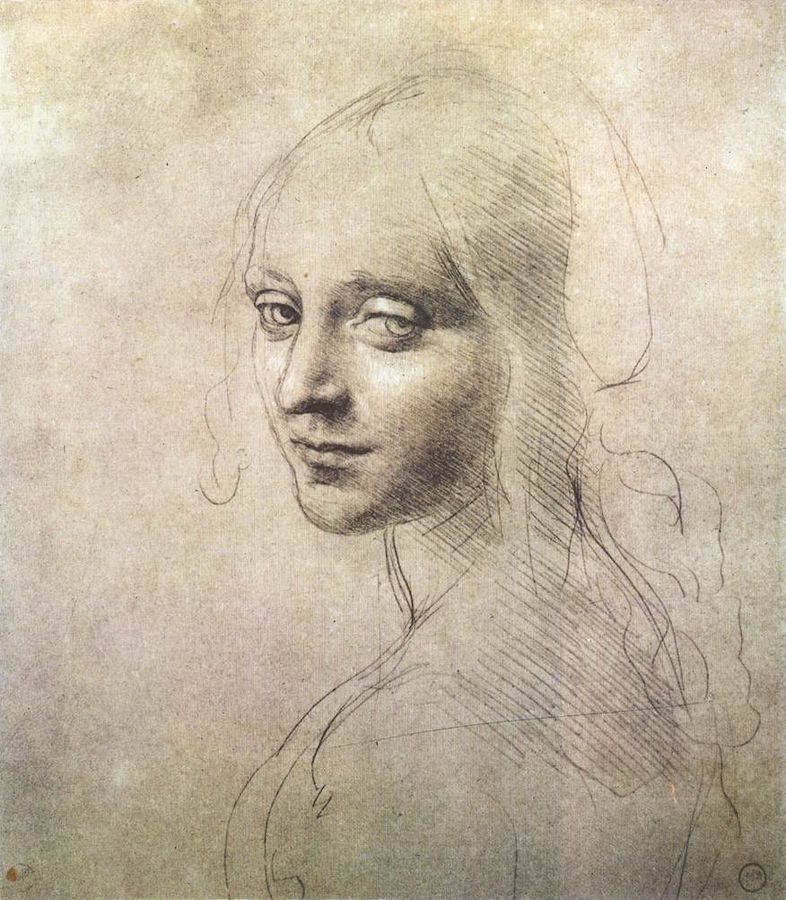
Silverpoint, of course, is one of the least forgiving drawing media for these modifications and corrections, because every alteration shows and nothing can be erased. Yet here again, it can strengthen the image. Two works from some of the greatest silverpoint draughtsmen during the Renaissance illustrate this point. Below is a hauntingly beautiful study Leonardo da Vinci drew. Look at the reiteration of lines on the left side of the neck. They strengthen the impression of solid support for the detailed face and head, adding stability and emphasis.

Head of a girl, Loenardo da Vinci, c.1483, Silverpoint On Paper, (Image courtesy of Biblioteca Reale, Turin, Italy)

Head of a girl, Loenardo da Vinci, c.1483, Silverpoint On Paper, (Image courtesy of Biblioteca Reale, Turin, Italy)

Likewise, Standing Youth with his hands behind his back, and seated Youth Reading has many lines which are repeated and altered as he readjusted the contours of both youths' arms, for instance, and even the seated youth's knee is redrawn, with felicitous emphasis.

Standing Youth with his hands behind his back, and seated Youth Reading,  Metalpoint, highlighted with white gouache, on pink prepared paper (recto),  1457/58–1504,  Filippino Lippi (Image courtesy of the Metropolitan Museum, New York)

Standing Youth with his hands behind his back, and seated Youth Reading, Metalpoint, highlighted with white gouache, on pink prepared paper (recto),  1457/58–1504,  Filippino Lippi (Image courtesy of the Metropolitan Museum, New York)

Such works make me feel much better about corrections I make when I am drawing from life, whether it is from models or from something in nature. Today's emphasis on "perfection" - reaching for the eraser, or copying almost slavishly from a photo, can often vitiate a drawing.

None of us is perfect, so why should we expect works of art to be any different?

Negative Spaces by Jeannine Cook

I found an interesting comment recently: "It is the complexity of melody which makes music beautiful, just as negative spaces make a painting work. When next at the easel, remember we are making music for the eyes". Mary Kilbreath, a wonderful artist who paints in oils, made this remark. When you look at her paintings, she does indeed use negative space wonderfully.

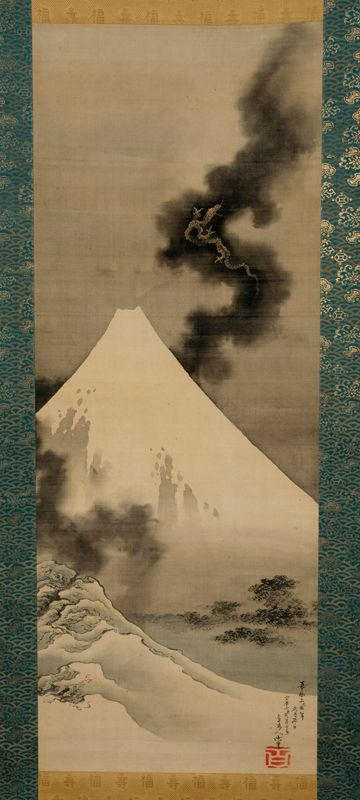
I have always been fascinated by the power and necessity of negative space. Perhaps my childhood spent with Japanese wood cuts hanging on many of the walls of our home had something to do with my love affair with it. For example, this is a wonderful Hokusai study of The Dragon of Smoke emerging from Mt Fujiyama.

Hokusai. Dragon Flying over Mount Fuji. (Hokusaikan), painting on silk

Hokusai. Dragon Flying over Mount Fuji. (Hokusaikan), painting on silk

Negative space in art is the empty space between delineated objects, the area where the eye can rest. It allows a very strong underlying composition to be woven into a drawing or painting, directing the eye around the art in subtle fashion. It allows a rhythm between the positives and negatives, similar to what Mary Kilbreath was saying about music, the pauses and silences highlighting the melody.

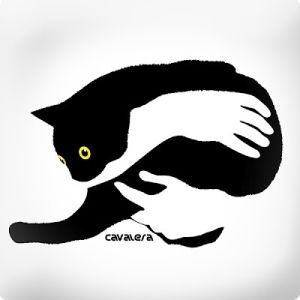
The classic demonstrations of negative space usually use pedestalled urns which also read as silhouetted faces, but I found this cat image was an interesting way of showing positive and negative in simple fashion.

Positive and Negative Space, Feline Style

Positive and Negative Space, Feline Style

One of the aspects of using negative space that I relate to very readily - again thanks to the Japanese influence - is ensuring that the composition reaches to all four sides of the paper or canvas. Carrying shapes and lines to the edges not only implies more space and continuation of the composition beyond the confines of the paper; it also helps break up the composition into more interesting shapes. Negative space thus becomes easier to incorporate into the composition.

This is an example of my working to all four sides of the paper: Blue Encounter below. Negative space is part and parcel of the work.

Blue Encounter, silverpoint and watercolour, Jeannine Cook artist

Blue Encounter, silverpoint and watercolour, Jeannine Cook artist

Island Art-making by Jeannine Cook

Last weekend, bright and early, I set off by boat to a friend's island for a day of art with my artist friend,  Marjett Schille. As we stepped onto the dock and walked along the deliciously distinctive boardwalk to the high ground, it was like entering a magic kingdom. Islands always have a strange allure - it is as though time is somehow suspended, and the routines of daily life slip away. Everything becomes possible, fresh and beckoning. In other words, the most wonderful place imaginable to visit as an artist.

We spent a golden, sun-filled day in an incredibly ancient and sacred-feeling place, a vast Indian shell mound dating back thousands of years. All the bleached oysters have created the perfect soil environment for red cedars to grow, with live oaks a little further away from the salt water marsh line.

A Grasp on the Marshes, watercolour and sanguine ink, Jeannine Cook artist

A Grasp on the Marshes, watercolour and sanguine ink, Jeannine Cook artist

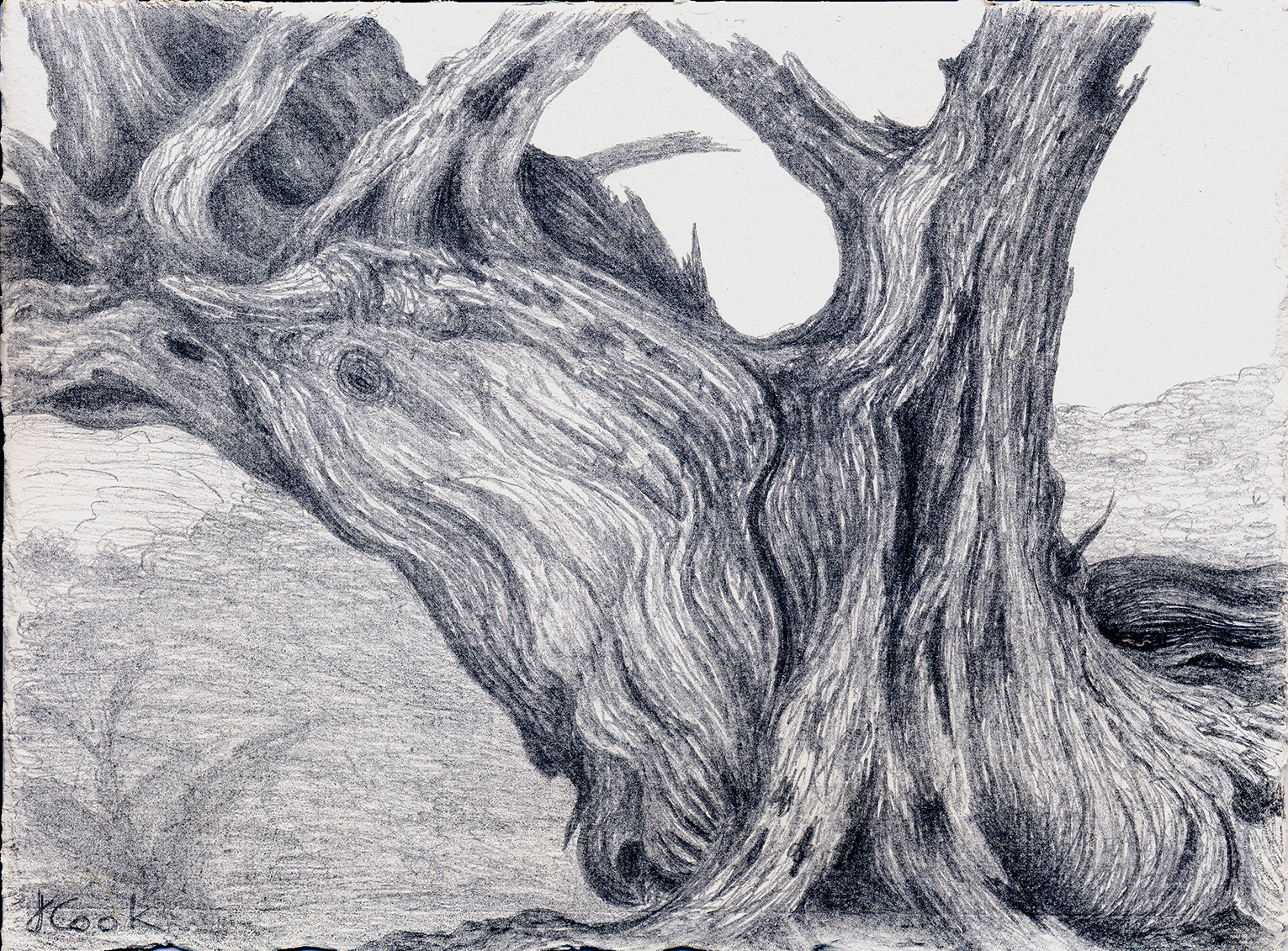
These trees are huge, gnarled, contorted - each one is a total personality. One could spend years simply doing "portraits" of these trees, survivors of storms, droughts, gales and other adversities.

The Cedar Seer, silverpoint, Jeannine Cook artist

The Cedar Seer, silverpoint, Jeannine Cook artist

We worked hard - if you can call it work - as it is always such a privilege and joy to be able to visit this island. Time means nothing. The sun moves around, the tide comes swiftly back to lap at the roots of the cedars and the herons sit silently far above in the tree tops. Only the diminutive pigs, rooting in the dry leaves, make any sound.

The Marshes of McIntosh, graphite, Jeannine Cook artist, Private collection

The Marshes of McIntosh, graphite, Jeannine Cook artist, Private collection

Before we could comprehend, the sun was slanting far to the west and it was time to head back to the house to join our wonderful hosts. Soon, in the luminous twilight, we coasted gently home on a full tide to "the hill", the mainland, as the bright moon rose and Venus glowed far above our peaceful boat.

Island art-making is indeed a special affair.

Quick or Slow - which is best for Drawing? by Jeannine Cook

The life drawing group in which I participate has a very sensible programme of one session of short poses, and then - normally - the following week, the same model poses for one long pose.

These sessions always get me thinking about the speed at which I draw and how fast or slowly other artists there draw. Some people can produce a very finished drawing in a remarkably short time, while others seem barely to have made many marks in the same time period.

Historically, drawing have always fallen into the categories of quick studies and finished drawings, but history seldom tells us how long each artist actually took to accomplish the drawing. Rembrandt, clearly, had a wonderful ability to draw fast and evocatively; his pen and ink drawings have a breathless immediacy on occasions, blots, drying pens, scribbles and everything in between. His drawing of Jesus and the Adulteress is spare and fast, as if he was thinking, planning, organising. Other drawings evoke a spur-of-the-moment view as he sees someone asleep or sitting in a moment of introspection, a moment that he wants to remember, a scene that he wants to record for the pure joy of drawing. Spare and elegant, his lines are fast and fluid.

Jesus and the Adulteress, Rembrandt

Jesus and the Adulteress, Rembrandt

Granted, the medium somewhat dictates the speed at which an artist draws. Pen and ink, conte, graphite or charcoal are all relatively fast, and marks can be made expressively with quick results. When you get to silverpoint, things tend to slow down a lot. The time available to make a drawing is therefore important, and subject matter tends often to dictate the medium – if the scene is about to disappear, you chose a quicker, more impressionistic way of capturing it. Each artist also has an individual eye, choosing what is important to record. Some aim mainly to capture the essence of the subject; others get fascinated by the play of light, the spatial composition or other aspects which are more time-consuming to depict.

Adolph Menzel, for instance, often used a wonderful technique of drawing a person doing something from multiple poses on the same page.

Man scraping the  bottom of the pot, Adolph Menzel, 1815-1905 (Image courtesy of the BBC)

Man scraping the  bottom of the pot, Adolph Menzel, 1815-1905 (Image courtesy of the BBC)

In a way, he was a forerunner to William Kentridge, with his many images being drawn, erased, filmed and then refilmed after changes. Menzel was drawing fast, fluently - he was a master draughtman. Kentridge is a superlative draughtsman too, but his approach, innovative and very much of our era with its mix of media, tends ultimately to be a slow and meticulous process, as each drawing evolves, is recorded and then evolves again until its final concluding version in narrative.  As Kentridge remarked,  “The activity of drawing is a way of trying to understand who we are and how we operate in the world.”

Drawing for Project,  charcoal, William Kentridge (Image courtesy of Nitram Fine Art Charcoal)

Drawing for Project,  charcoal, William Kentridge (Image courtesy of Nitram Fine Art Charcoal)

Lots of approaches to drawing - mercifully! It means that each of us can be a tortoise or a hare in our drawing methods. The results are really what count.

A Sense of the Marvellous by Jeannine Cook

I saw a large and diverse exhibition of black and white photographs of Paris, Twilight Visions: Surrealism, Photography and Paris, at Savannah's Telfair Museum. In the introductory explanation about all these photos which mostly date from the 1920s and 1930s, there was the phrase, "a sense of the marvellous". It struck me, because it is so important to retain that sense, especially if one wants to be an artist.

The exhibition did indeed illustrate some wonderful moments. Serendipitous sights - the wonderful reflection of buildings in a puddle by the pavement's edges by Ilse Bing, for instance, or extraordinary patterns of shadows and people beneath the Eiffel Tower by Andre Kertesz - were accompanied by more planned photographs of the illuminated Eiffel Tower. or old street scenes in Paris. There were many photographs which were much more "contrived", in keeping with the prevailing surrealism movement. But it was the photographs that record the photographer's eye and awareness of magic and marvels that I savoured most.

Ilse Bing, 'Three men on steps by the Seine' , (Image courtesy of the Victoria and Albert Museum)

Ilse Bing, 'Three men on steps by the Seine' , (Image courtesy of the Victoria and Albert Museum)

Ilse Bing, Rue de Valois, Paris, 1932, gelatin-silver print, (Image courtesy of Victoria and Albert Museum, London)

Ilse Bing, Rue de Valois, Paris, 1932, gelatin-silver print, (Image courtesy of Victoria and Albert Museum, London)

Perhaps I am greatly influenced by all the childhood hours I spent with my photographer grandfather, Frank Anderson, as he photographed herds of giraffe or other wild animals on our farm in Tanzania. With an important body of work to his credit, as he documented the disappearing tribes and the East African wild life, Frank had a keenly developed sense of the marvellous. He taught me that observation and awareness, as well as quick reactions in capturing a photograph, are key. Key to art-making, but key, too, to a deep enjoyment and appreciation of life. It was an invaluable preparation for my later life as an artist.

Children in central Tanganyika, 1929-30, sepia print, Frank Anderson photographer (copyright Jeannine Cook)

Children in central Tanganyika, 1929-30, sepia print, Frank Anderson photographer (copyright Jeannine Cook)

Glorious Metalpoint Drawings by Jeannine Cook

I had a wonderful treat today, to which I had been looking forward. After spending the morning doing life drawing, I went to the Telfair Museum (Savannah, GA) to see the current exhibition, Metalpoint Drawings by Dennis Martin.

I have known about Dennis Martin's extraordinary talent for many years, and his work was included in The Luster of Silver, the survey of contemporary silverpoint drawings that I was involved with at the Telfair in 2006. Now his widow, Denise, has donated a magnificent goldpoint drawing to the Telfair's permanent collection and this exhibition is from her collection of her late husband's work. (He died in 2001 at a very young age.)

The drawings ranged from the huge donated piece, "Girl Laying", 42 x 60 inches in size, to the tiny and intimate, studies of portions of the human anatomy that become abstracts, despite their realism. Most combine gold and palladium (and often deep, intense graphite for backgrounds), but some are goldpoints or, most unusually, palladiumpoint. (Since the generic term, metalpoint, describes the method of drawing/mark-making with a metal stylus, the use of the terms, silverpoint, goldpoint, copperpoint or palladiumpoint, for instance, simply describes the metal used to draw.)

Deanna XXVI. silverpoint, Dennis Martin

Deanna XXVI. silverpoint, Dennis Martin

Metalpoint, Dennis Martin

Metalpoint, Dennis Martin

A remarkable artist, and a memorable exhibition not to be missed!

Artists and Gardens by Jeannine Cook

Now that the weather has cooled a little and rain has revived the garden, it is time to start thinking of planning and planting the garden once more. Inspired by a recent wonderful Coastal Wildscapes symposium on planting native species to restore biodiversity in one's surroundings and gardens, I have been doing a lot of "mental placement" of perennials and shrubs that I purchased.

My garden has been an extension of my art and a source of my art ever since I created the garden over 25 years ago. After we built our house and learned about the aspects of living on ancient sand dunes in a sub-tropical climate, I planned out - on graph paper no less! - what plants to put where. I tried to combine the principles of garden composition and visual pleasures with the practical aspects of a huge amount of shade, sandy soil and a number of old shrubs that had been planted on the site when it was an oyster cannery. Oh - and speaking of which, I learned that planting in soil that is probably 90% oyster shells can be challenging!

Needless to say, over the years, the garden has evolved and matured, with the plants very much choosing where and how they wish to grow. For the most part, I have let nature dictate, for the results have in some ways been more harmonious than if I had adhered more to the carefully manicured look of my British gardening heritage. As a source of art, I tend to concentrate on single flowers or plants, rather than landscapes of the garden itself. Watercolours - I find - are not the easiest medium by which to convey masses of foliage and flowers. Drawings are more interesting to do.

Perhaps the most important element of the garden for my art is the actual peaceful environment it affords - a backdrop to my daily life and thus to my art-making. The constant visual stimulation and interest combine with my emotional attachment to this garden I created single-handedly. It is also the foreground frame to the marshes and saltwater creeks beyond. Together, these spaces offer tranquillity and the orderliness (most of the time!) of nature, the antidote to our ever-increasingly urbanised society.

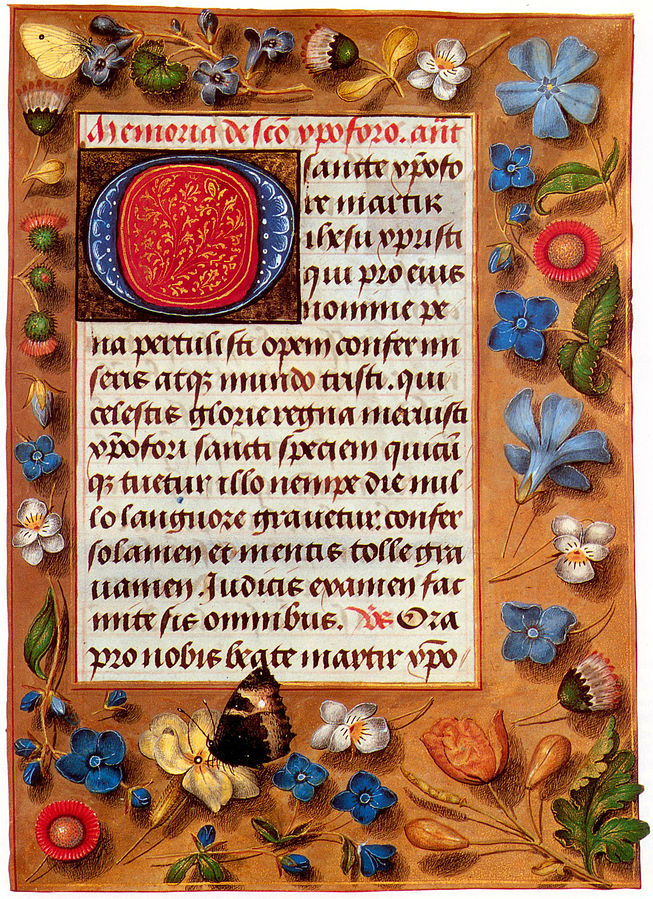
Artists have long had deep attachments to gardens. Think of the wonderful details of flowers and animals on the frescoes in Egyptian tombs. Remember the jewel-like flowers and insects adorning monastic manuscripts from the 8th century onwards, like this 1470s Hastings Book of Hours. Artists over the centuries have travelled from medieval depictions of gardens as paradise to careful scientific examinations in modern times. Rubens was well aware of gardens as erotic playgrounds.

470s Hastings Book of Hours

470s Hastings Book of Hours

But it was the 19th century artists who not only drew on gardens for inspiration in their art, but also themselves created their own very artistic gardens. Monet (whose 1900 painting The Garden in Flower is illustrated) is the most famous of these gardeners, with Giverny. (He had earlier been inspired and delighted when he visited glowing Mediterranean gardens, especially at Bordigher.)

The Garden in Flower, Giverny, 1900, oil on canvas, Claude Monet

The Garden in Flower, Giverny, 1900, oil on canvas, Claude Monet

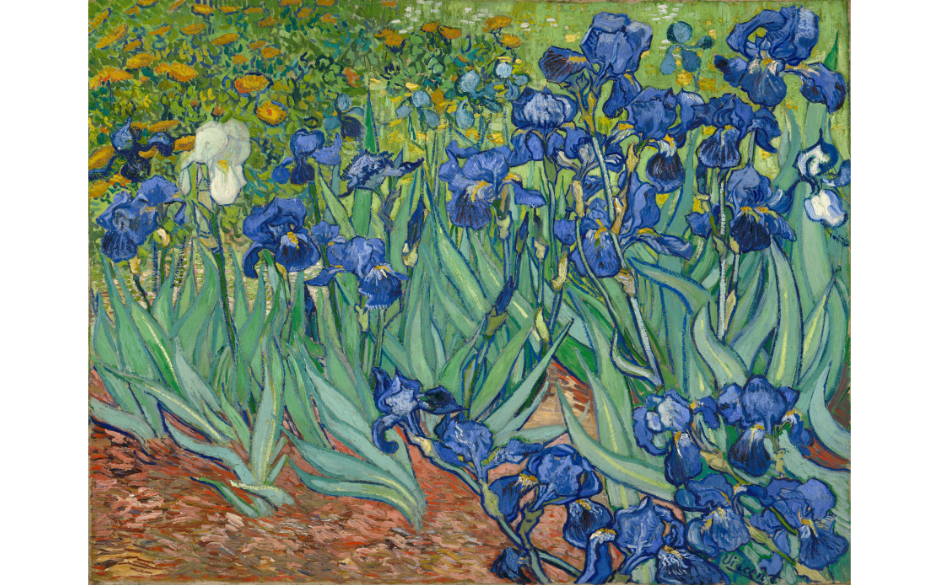
Cézanne also painted and tended his Southern French garden, while Van Gogn celebrated gardens and what grew in them from his days in Holland onwards. Many of his drawings in the south of France, particularly those done during his period at St Rémy, are quite remarkable. So too are his paintings, such as this one, done in 1889,

Irises, Vincent van Gogh, 1889, oil on canvas, (Image courtesy of the Getty Center)

Irises, Vincent van Gogh, 1889, oil on canvas, (Image courtesy of the Getty Center)

Almond Blossom, Vincent van Gogh, 1890, oil on canvas.(Image courtesy of the Van Gogh Museum)

Almond Blossom, Vincent van Gogh, 1890, oil on canvas.(Image courtesy of the Van Gogh Museum)

As the resurgence of plein air art continues, many of the artists are also celebrating gardens in their art. It is important, for as the world continues to lose natural habitats at an ever-increasing rate, we artists can play an important role in showing how beautiful, intricate and serene-making gardens and nature can be.