Landscapes and a Sense of Place by Jeannine Cook

I have been preparing for a solo exhibition I shall be having at the Southeast Georgia Health System in coastal Georgia in June, and chose the title of the show to be A Sense of Place. As I selected art to exhibit, it made me think again about how landscapes feed into an artist's sense of belonging somewhere.

Clearly, the better you know a place, the more you can enter into its inner workings. So you are better able to capture what that landscape means to you. The viewer can thus participate in and share more deeply in your experience. By grappling with the landscape as you get to know it, you allow yourself, and ultimately the viewer, to move beyond the merely representational. Your experience and knowledge become a passport for the viewer to understand and more deeply appreciate that place. Distilling one's own sense of place is an ever-ongoing activity because each landscape, natural or man made is continuously changing, developing, evolving. In many ways, this is good, because it means that an artist can return again and again to the same subject matter and learn more, thus portraying it differently each time in the art created.

Soaring over Creighton, watervolour, Jeannine Cook artist

Soaring over Creighton, watervolour, Jeannine Cook artist

Cezanne is a wonderful example of an artist who returned again and again to the same places to paint landscapes (think of his beloved Mont Sainte Victoire or the Jas deBouffan estate). He analysed a landscape, learned about the way the light moved and shaped things, organised his perceptions of form and colour. The resultant painting, in watercolour or oils, thus presents the viewer with, of course, the fundamental forms of the landscape, but beneath that veil of appearances, Cezanne captures the inner essence of that place, its soul. That is why his landscapes become so memorable, so powerful, so passionate and, at the same time, often, so intellectual and radical in their break with his contemporaries' approaches to art.
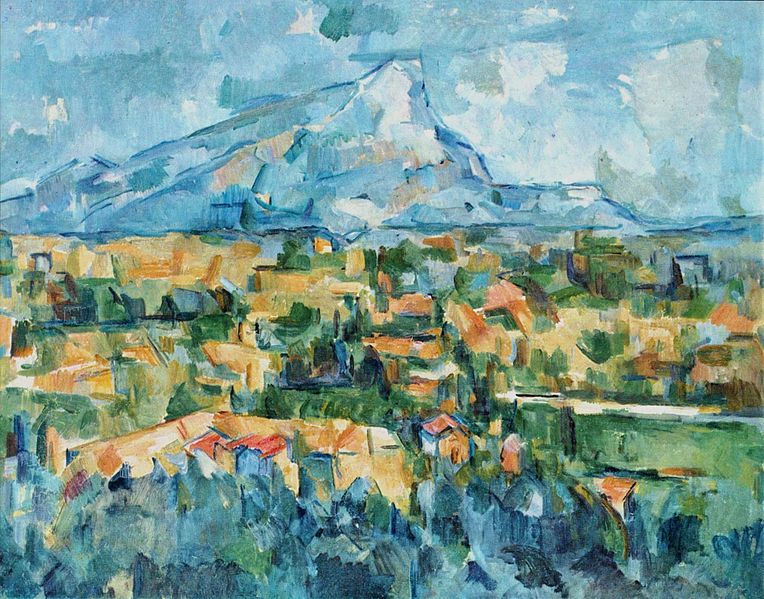
Mont Sainte Victoire, oil on canvas, 1904, Paul Cezanne (Image courtesy of the Philadelphia Museum)

Mont Sainte Victoire, oil on canvas, 1904, Paul Cezanne (Image courtesy of the Philadelphia Museum)

The longer I live in coastal Georgia, the more subtle and beautiful the landscapes seem to me. It thus becomes an endless challenge to understand and simplify their essence, so that I might share their unique beauty and importance with others.
The Music-Art Connection - again! by Jeannine Cook

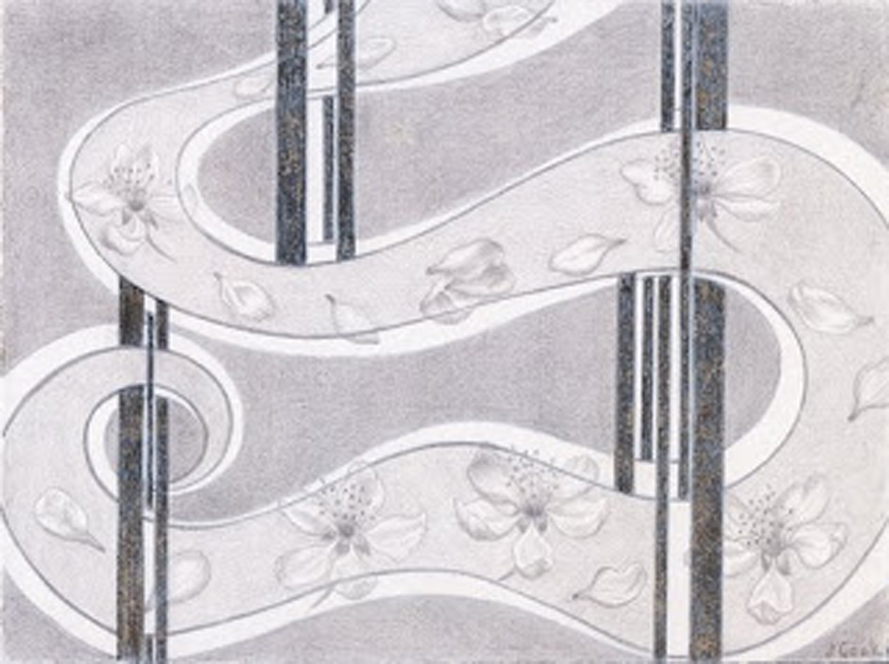
Last year, I attended a concert in Savannah, GA, where the Emerson String Quartet, with violinist Daniel Hope and friends, played a piece, Terra Memoria, by Finnish composer, Kaija Saariaho. As I sat listening, a series of silverpoint drawings began to dance through my mind’s eye. The results of this concert are slowly becoming reality on paper as I work to draw what I envisaged as the music was played.

Terra Memoria, commissioned by the Carnegie Hall Corporation, was first performed in June 2007 in Carnegie Hall, New York, by the Emerson String Quartet. The music evokes “those departed” and remembered in evolving fashion by the people remaining. My silverpoint drawings, so far three in number, address evolutions in the world between reality and abstraction. There are more still to be done, but it is a series in which I am trying to tell my subconscious to be utterly in charge, and thus I am trying not to think consciously at all as I do these drawings.

Terra Memoria I, silverpoint, goldpoint, graphite, Jeannine Cook artist

Terra Memoria I, silverpoint, goldpoint, graphite, Jeannine Cook artist

Terra Memoria II, silverpoint, goldpoint, acrylic, Jeannine Cook artist

Terra Memoria II, silverpoint, goldpoint, acrylic, Jeannine Cook artist

Interpreting passions by Jeannine Cook

Passions, in my optic, are all those interests and loves and energies that make life sing for each of us. For an artist, sooner or later, passions show up in what one is trying to create. In my case, my love of flowers, trees, birds and nature in general, dictate to a great degree what I will be drawing or painting. My sense of place, be it for coastal Georgia, Africa or Spain, also comes into play in my art-making.

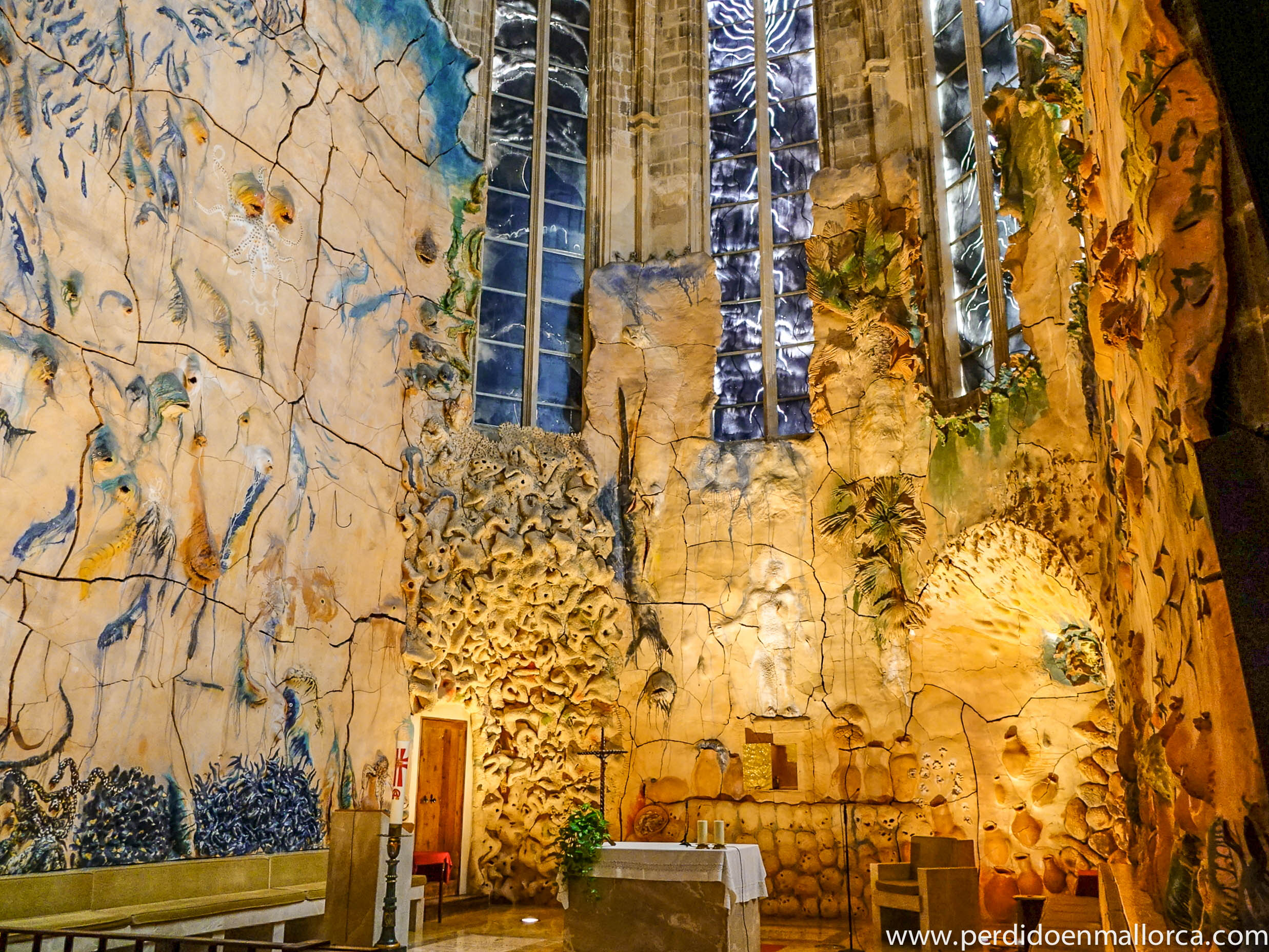
An artist about whose work I have been thinking a lot recently in this context is Miquel Barcelo, the hugely successful Spanish artist who was born in Mallorca in Felanitx in 1957 (www.miquelbarcelo.info). Ironically, he has just been written about in ArtDaily.org of yesterday, 9th April, where his latest opus magnum at the United Nations Palace in Geneva was inaugurated last November. The sea is a bedrock passion for Miquel Barcelo, and it informs a great deal of his art, it seems. I keep thinking back to his huge work in the Capilla del Santisimo in Palma de Mallorca's Gothic Cathedral. It was finished in 2007, and along with thousands of Mallorcans, I saw it on the day the King and Queen of Spain inaugurated it.

Capilla del Santissimo, Palma Cathedral, Miguel Barcelo artist

Capilla del Santissimo, Palma Cathedral, Miguel Barcelo artist

What stays in my mind, over and above the wonderful three-dimensional ceramic friezes down the walls of fishes, sponges and other denizens of the sea, is the highly evocative effect Barcelo achieved with subtle grey-blue simple stained glass windows.

Capilla del Santissimo, Palma Cathedral, windows, Miguel Barcelo artist

Capilla del Santissimo, Palma Cathedral, windows, Miguel Barcelo artist

I recall reading that he was influenced for this whole ensemble by the memories of how the Mediterranean seabed looked, with the light filtering down, as he dived off the coast of Mallorca. His use of the grey plain windows caught exactly the undersea light so typical of Mallorca. Barcelo's passion for the sea made him wonderfully creative in this vast chapel , where Biblical passages married with his own knowledge and love of the sea, its inhabitants and historical treasures deposited there over time.

Again, apparently, in the United Nations Palace in Geneva, Barcelo has returned to his passion for the sea to find a highly innovative way to interpret the continuous motion of the sea. The vast dome of the Human Rights & Alliance of Civilisations Room now represents brightly coloured sea and surf, serene and yet full of movement depending on the light and space in which it is viewed, a metaphor for the union and dialogue needed to face the 21st century challenges. Only an artist deeply passionate about the sea and all its moods could conceive of such vast works of art as Miquel Barcelo has done. A dramatic example for every artist to emulate, using individual passions as sources of creativity.

Drawing as Thinking by Jeannine Cook

In earlier posts on this blog, I alluded to the exploration and excitement of drawing. But as I try to work on a series of silverpoint drawings I am doing, I realise again how much the act of drawing is a form of thinking. I am working on a series based on a piece of music that I listened to during a Savannah Music Festival concert. The images began to flood into my mind's eye as I heard the music. Now I need actually to work out how I want to construct those images and what I am actually trying to say in the drawings.

Consequently, I am trying to think through the silverpoint stylus, in fact, as I work out the drawing.

Silverpoint marks and stylii, (Image courtesy of Anita Chowdry)

Silverpoint marks and stylii, (Image courtesy of Anita Chowdry)

The exercise makes me think of a really fascinating document I found some while ago - Aesthetic Education, Inquiry and the Imagination, written in 2007 by Madeleine Fuchs Holzer, Director of Educational Development at the Lincoln Center Institute. In this document, well worth downloading, especially if you are a teacher, nine Capacities for Imaginative Learning are laid out. The first ones, Noticing Deeply, Embodying, Questioning, Making Connections and Identifying Patterns, seem not only very germane for teachers but for artists themselves.

Every one of those concepts helps as one is thinking and/or drawing. If you are drawing something from real life, the level of observation will dictate the level of detail you show in your knowledge and thus portrayal of the subject matter. Even if you later simplify the drawing, or painting, the knowledge you have gained from noticing deeply will enrich and inform the art. The same acquired essence of the subject will permeate the artwork though your embodying it and translating it into the art. A questing curiosity and willingness to venture into unknown realms will lead you to do better art - the questioning part is very much bound up with thinking with the pencil or silver stylus. What if I do this... or that? What will that convey and what effect will it achieve? The same elasticity and openness of mind allows one to remember back to other art seen or done, other experiences, other results; the new work you are thinking about creating will be enriched by the connections you can make as you are developing the art. Even identifying patterns, visually or otherwise, can be a valuable stepping stone to thinking of the best way to go in planning the art.

Ultimately, however, after all the effort put into the initial thinking/drawing stage, there comes the time to launch yourself into what you are being driven to create. And you know full well that along the way, there will be surprises and deviations... and more thought and more drawing – before the work is finished.

Art and Gender by Jeannine Cook

When I first became an artist, (which was a fresh departure for me as I had started out in other directions), I was surprised to find how gender still mattered in the art world. I had expected that by the early eighties, the American art scene would have shed some of the bias that was disappearing in other spheres as the pioneering feminists shamed and/or educated the rest of society.

I soon discovered that the world of women's art organisations was well established and welcoming. The diversity and efficiency of opportunity offered to women artists from the Catherine Lorillard Wolfe Art Club (founded in 1876 and at http://www.clwac.org/), the National Association of Women Artists (founded in 1889 and at http://www.nawanet.org/), or the Women's Caucus for the Arts (http://www.nationalwca.org/) are really impressive. These are but three of the main groups that enable women artists to exhibit and interact as high calibre professionals. It is felicitous but somewhat ironic, I feel, that now various collections of women's art have been formed, with perhaps the most prominent being the National Museum of Women in the Arts in Washington, DC (http://www.nmwa.org/).

Catherine Lorillard Wolfe

Catherine Lorillard Wolfe

The question about whether gender matters today for an artist still often remains unanswered, I suspect. The bias has perhaps become much more subtle in some instances, and is thus hard to quantify. I decided, personally, long ago never to consider the issue in what I have tried to do as an artist. However, I do recognise that certain subject matter and certain approaches are more likely to be considered a woman's purview (such as flower paintings....). And, in many ways, the diversity of approach should enrich the art world generally. Today, there are many very successful women artists in many disciplines, but they have certainly been helped along the way by the pioneering work of artists like Judy Chicago, Faith Reingold, Louise Nevelson and many others.

The other aspect of gender in art is whether an artist should be labelled... There is an exhibition, The Rise of Women Artists, opening at the Walker Art Gallery in Liverpool, England, which apparently addresses this issue (www.liverpoolmuseums.org.uk/walker/). I would very much like to have a magic carpet to convey me there to see what they say about it. For my part, I always tend to mistrust labels of any sort. Predictability is almost akin to being boring and that is always unfortunate, particularly in the art world.

Art and Gardening by Jeannine Cook

Garden designers and gardeners have always recognised the role that design and art play in the formation of a garden, even - in some cases - a vegetable garden. The Royal Horticultural Society's Lindley Library (www.rhs.org.uk/learning/library/) is a wonderful collection of wisdom on gardening, its history and garden design. But any of us can have a great deal of fun in a garden when we regard it as a living canvas for our art.

Just as a painting has to be organised, so does a garden. Both really need structural "bones", an underlying structure on which to clad the later work of colour. Trees, foundation shrubs, permanent structures likes pergolas, columns or stone walls, all fall into this category. In the same way, it is often very rewarding to put down a totally abstract, strong under painting on canvas before you start on any image painting. For both garden or painting, it is really about creating an experience. John Dewey described in Art as Experience, "The artist selected, simplified, clarified, abridged and condensed according to his interest". Just as you plan a painting that excites, challenges and stimulates or soothes, calms and welcomes, so you can design a garden that elicits a host of reactions from anyone viewing it. Large or small, every garden soon has its own character and atmosphere.

Only after the initial underlying structure stage of creation can colour be added with success. On a canvas, yes, it is of course paint. In the garden, it is a bewildering array of plants which offer varying colour and shapes from leaves or flowers, annual or perennial, seasonality and size requirements.... all dependent on the micro and macro-climate you have. In other words, endless choices and fun. Nonetheless, in the garden, just as in a painting or drawing, the fewer the elements involved, the stronger they have to be from a visual point of view.

Gardening is in some ways more like some disciplines of contemporary art - the garden does not have to endure for a great length of time, given that you can use annuals or you know that everything will change as the seasons turn. But gardens, ideally, do share a longer term aspect of more traditional art - the trees and shrubs can potentially last for centuries, as an artist hopes his or her work on canvas, paper, clay, etc. will do....

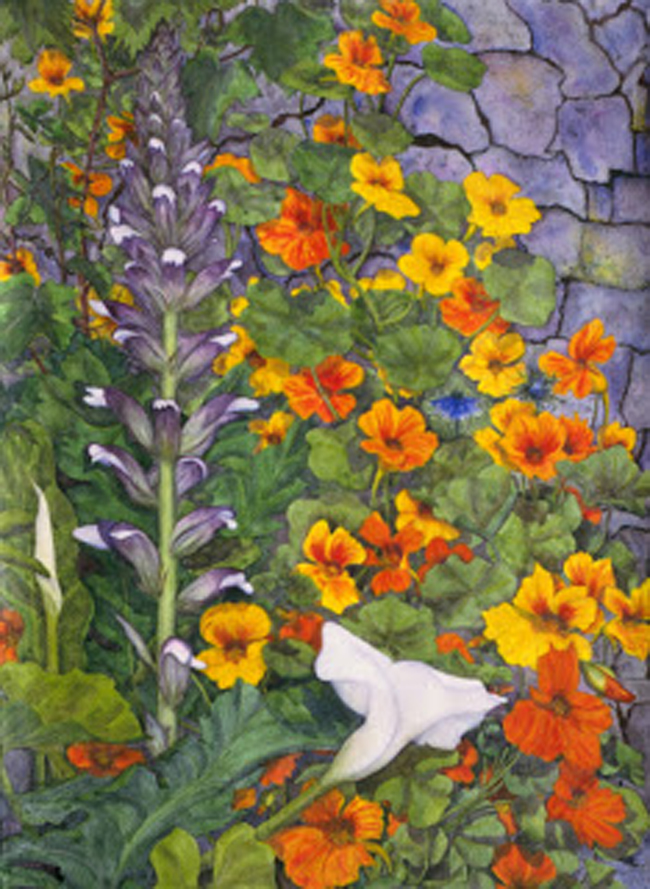
Climbing the Wall, Palma, watercolour, Jeannine Cook artist

Climbing the Wall, Palma, watercolour, Jeannine Cook artist

Whichever the creation, painting or garden, it can be the source of interest, pleasure and delight to innumerable other people. That compensates for the hours of planning and hard labour that have gone into the work... but at least in painting, you seldom get blisters!

Hidden from Sight by Jeannine Cook

Today, when the art materials industry and art instruction world have hugely increased in size, everyone can easily turn to art, either to create or to support its creation. The statistics abound to show what a beneficial multiplier factor the arts are to an area's economy, and the arts are viewed very positively.

It is, however, still, a rather solitary occupation to be an artist. No matter what the discipline, it remains a discipline requiring a person ultimately to produce something. In painting or drawing, for instance, it is mostly the artist's passion which will keep the creation going. In that dedication to creating a work, there is a lot that goes on "behind the scenes". When I conceive of a drawing or painting, there are initially decisions as to the medium (silverpoint drawing or graphite, for instance, or watercolours or acrylics), the format (horizontal or vertical, large or small), or is it going to be one piece or one in a series. Once those basic choices are made, there are then the decisions as to how to convey the concept, what to say, how to say it, why is it important?

Studies and exploratory drawings help the preparation. And it is at that stage, often, that the essence of the idea - the essence of a person's character for a portrait, or the spirit of the land in a landscape, for example - becomes paramount. What is "hidden from our sense of sight", as art consultant and author Roger H. Boulet wrote on draughtswoman Ann Kipling of British Columbia, is something that each artist needs to tap into, albeit often unconsciously. Paula Rego (see my blog entry of April 1st) was talking of tapping into this when she talked of the excitement of a voyage into the unknown each time she starts drawing. Intensity of observation, vitality of expression, a willingness to push through to evoke life itself - those are pathways to creation that each artist travels willingly, knowing they are important. And each of us, as artists, recognises that those journeys are lonely but rewarding.

Study for 'The Dance', Paula rego (Image courtesy of the Tate)

Study for 'The Dance', Paula rego (Image courtesy of the Tate)

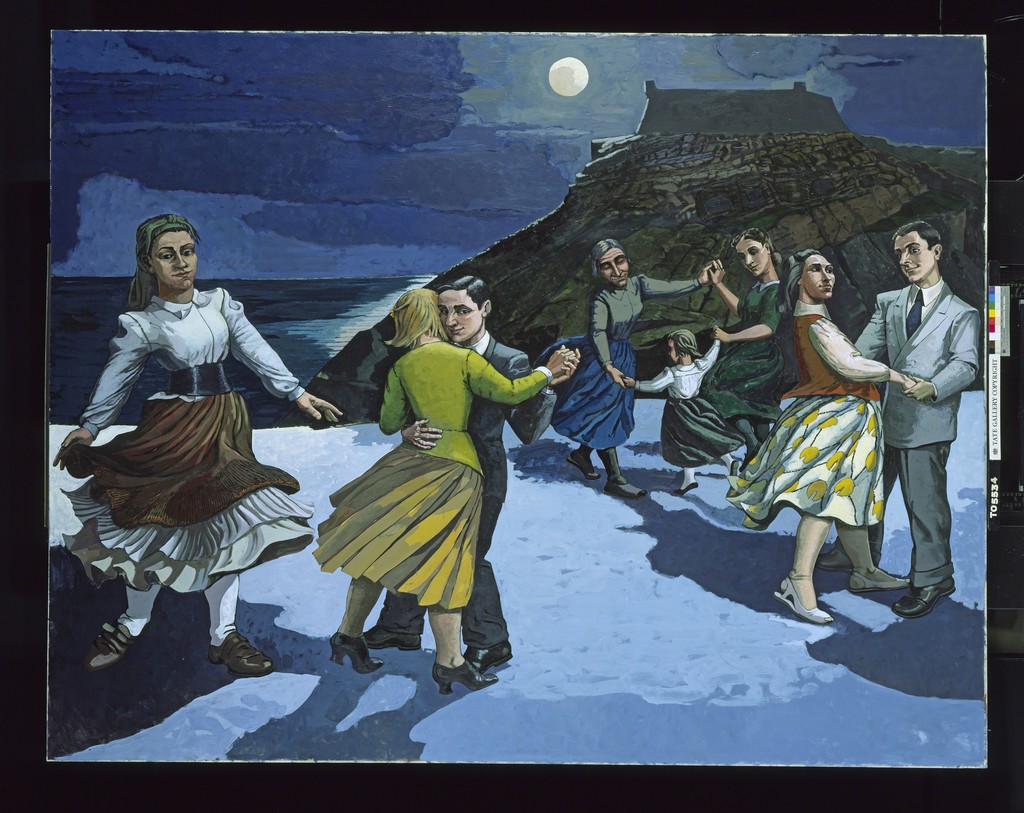
The Dance, oil, Paula Rego, 1986, (Image courtesy of the Tate)

The Dance, oil, Paula Rego, 1986, (Image courtesy of the Tate)

The Excitement of Drawing by Jeannine Cook

I have always admired Paula Rego's capacity to draw really well and also to skewer people in the political art she does so effectively. I was really thrilled when I was accepted into the New Hall Women's Art Collection at Murray Edwards College, Cambridge, (www-art.newhall.cam.ac.uk/gallery/artists) because they have some of Rego's work. Now Paula Rego is having a new museum dedicated to her in Cascais, Portugal, her home country, and she is ever more enthusiastic about drawing. In a recent interview with Andrew Lambirth in The Spectator (http://www.spectator.co.uk/), she talked about the process of creation through just getting on and doing the drawing, mindful of the changes which will probably take place. She explained, ..."when you discover what things look like from drawing them, it's most exciting. You forget everything else because your attention is totally focused on what you are doing ..."

Drawing is indeed a most exciting adventure every time you pick up a drawing instrument. You learn how things are put together and how they work, in space, in differing lights, in time. You have no idea what really will happen on the paper until you have completed the drawing (or, more accurately, when it tells you that you have finished...). The initial concept or inspiration that impelled one to launch on the drawing in the first place is never the whole story. As you look hard, at length and with increased understanding, at what you are drawing, you - the artist - are changing too. Your imagination is being stimulated and all sorts of new connections and thoughts occur. Every time one does even the briefest of drawings, life is enriched.

Pomagne, Paula Rego., 1996 (Image courtesy of the Tate)

Pomagne, Paula Rego., 1996 (Image courtesy of the Tate)

No wonder Paula Rego talks of losing track of time when she is drawing. All acts of creation are miraculous erasers of the sense of time! Just ask the patient companion of any artist who has been assured that "this will just take five minutes to do..." as the artist tries to do a quick drawing or painting; half an hour later, or more, the companion is still probably waiting, less patiently! Being totally focused on drawing or painting is incredibly meditative and often healing too. Frequently I find that my sense of "the world being in balance" is directly related to how much I am painting or drawing. It has little to do with the degree of success of the art you are doing - it is the act of creation that counts. It is back to that excitement of drawing - the next voyage of discovery.

"Seeing with new eyes" by Jeannine Cook

I am still immersed in drawing spring flowers and was thus thinking further about looking at things as if it were for the first time. Change the light that is shining, for instance, on a white azalea, and it instantly becomes a new entity. That is an aspect of working from real life, particularly en plein air, which makes for perpetual challenges and interest. You have to decide to "freeze" light at one stage or another and then try and keep to that consistent light play. Otherwise, your drawing or painting can become rather incoherent if you are hewing to realism. On the other hand, it also means that you can do a completely new work, a new "landscape", without moving from your chosen site.

It is not only in visual art that seeing things in an active way brings rewards. I came upon a statement Professor Alison Richard, Vice Chancellor of Cambridge University (www.cantab.org), made in a newsletter about fundraising for Cambridge's 800th Anniversary Campaign. In it, she quoted Marcel Proust saying, " the real voyage of discovery lies not in seeking new landscapes but in seeing with new eyes" and celebrated that the Campaign had brought new eyes to Cambridge. Fresh appraisals of all and everything are often worthwhile - from how the US Government is run, thanks to the Obama Administration's new eyes, to an interpretation by Ian Bostridge (www.ianbostridge.com) at the Savannah Music Festival (http://www.savannahmusicfestival.org) of Schubert's songs, that I have not heard since I listened to a long-ago recital by Dietrich Fischer-Dieskau. If one is open and curious, new landscapes abound.

Listening to the Schubert songs, I reverted to thinking visually, seeing colours in Ian Bostridge's beautiful sounds and interpretations. Somehow, in some of the Lieder, there were effects that Sonia or Robert Delaunay would have loved to paint, I felt. A capricious thought, possibly, but one I would not have had without metaphorical "new eyes".

Sonia Delaunay, 1914, Prismes électriques, oil on canvas, (Image courtesy of Musée National d'Art Moderne, Centre Pompidou, Paris)

Sonia Delaunay, 1914, Prismes électriques, oil on canvas, (Image courtesy of Musée National d'Art Moderne, Centre Pompidou, Paris)

Catching up with spring by Jeannine Cook

Spring in coastal Georgia comes with such a rush of beauty and imperatives that there is never enough time to celebrate it all. Suddenly there are a myriad subjects to draw in silverpoint, another vast selection to paint in watercolours - and time never suffices.

Azalea trio, silverpoint, Jeanninie Cook artist

Azalea trio, silverpoint, Jeanninie Cook artist

It is always interesting to return to a subject that one has drawn or painted before; every artist has favourite themes to visit and revisit over time. It is astonishing how a simple flower, such as an azalea, can elicit different reactions and dictate different approaches every time it is drawn or painted. No wonder museums have such diverse collections of paintings and drawings which include and celebrate flowers. Think of the heyday of Dutch flower painting in the 17th century, when so many talented artists followed Jacques de Gheyn II's example. He was one of the earliest artists (1565-1629), who depicted wonderful tulips, roses and other flowers (not all of which bloomed at the same time) to satisfy the demands of the ever-more wealthy Dutch burghers. Since then, Manet, Fatin-Latour, Monet, Renoir, Matisse and so many others have turned to flowers for inspiration again and again.

Perhaps it is because one can see in a flower the basis for realism or pure abstraction - at the same time, really - that it is endlessly interesting as a subject. Added to which, I personally find a serenity and elegant logic to a flower that delight. However, each time, there is a surprise in how the structure works and I am often reminded of Paul Valery's statement: "Until you draw an object, you realise that you have never actually seen it." And so one rushes to catch the fleeting spring glories, to try and "see" them close up and celebrate them - again!