Reactions to Art by Jeannine Cook

I have previously talked in this blog about the organisation, The Art Connection, in Boston. They accept artists' donations and then enable non-profits to obtain art for their walls. I have been working with The Art Connection for some time now, because I think it is a very worthwhile cause and is good both for artists and people who otherwise might not be able to see original art that could be uplifting and healing.

In a summer e-newsletter I received from The Art Connection, they included the following piece about reactions to art by participants who were selecting art for their agency. I found it interesting, and it is revealing in many ways. I quote it verbatim, with acknowledgement to The Art Connection editors.

"57% identified that participating in the (art selection) process was a challenge. The reasons why:

- It was challenging because it was hard to make choices when there were so many good pictures to choose from!
- It was challenging because there were a lot of beautiful choices and we could not take them all!
- It was challenging because choosing art specifically for the agency is different from choosing art based simply on personal preference.
- It was challenging because different people like different things and there were a lot of opinions in the room.
- It was challenging because there were too many to choose from!

Top three identified reasons for selecting artwork : Colour, Content/theme and Visually stimulating.

Participants also shared their interesting, and sometimes surprising, thoughts on what impact they think the art will have:

- The art will improve morale and stimulate dialogue; and hopefully impact our reputation to some extent too.
- The patients will love the art and the center will also be recognised for its unique art style.
- The art will help the building have an amazing welcoming aura.
- Homeless people deserve great art as much as anyone! It will create self-esteem and respect for the home.
- I think the clients will have a sense of pride living in a program with such beautiful artwork.
- Each piece can evoke a different reaction from different individuals. I personally think the artwork will add beauty, and get students and staff talking, whether they like the art pieces or not."

The reactions expressed in these responses to The Art Connection during the art selection process really seem to run the full gamut of reactions that the general public has to art. I have watched similar reactions during art exhibitions as well. It all underscores for me that art is really, really important in people's lives, whether they realise it or not. Art is a reflection of the health of a society, and as such, should not be short-changed in the name of economic hardship.

A Fascinating Book on Art by Jeannine Cook

Between starting to paint and draw in my new studio and rushing off to swim in the chrystalline Mediterranean, I have been savouring of a most interesting book on all aspects of art. The Art Detective: Fakes, Frauds and Finds and the Search for Lost Treasures by Philip Mould is the perfect book for summer reading. Published last year in the UK by Viking, it appeared this year in the United States.

Philip-Mould-2015-by-Travis-Simpkins-the-art-detective.jpg

Not only is the account a fascinating story of finding lost or mis-identified art, especially by early British artists, but the author is generous with his insights and knowledge about art, good art, and how artists achieve their successful effects. His familiarity with the characteristics and idiosyncracies of artists' methods of painting, especially those of the 17th and 18th centuries, is very instructive. In fact, it is a book well worth re-reading, after the summer!

Many of us will be familiar with Philip Mould from his role on the BBC's Antique Roadshow so this book is a delightful addition to the erudition for which he is already recognised. What impressed me are the layers and layers of analysis, historical and artistic knowledge, technical expertise backed up with technology, and - ultimately - gut feelings that are brought to bear on a work of art. No wonder he is called an Art Detective. And he makes it all fascinating and fun.

It's a book well worth reading.

A New Art Studio by Jeannine Cook

It's completed! I am sitting in my new art studio in Spain, marvelling in space, light and all sorts of new possibilities. I now know a little better the excitement of which I have read countless times - when an artist gets his or her new studio.

From being a dark and damp garage built in the late 50s, this studio has metamorphosed into a high-ceilinged space filled with the brilliance of Mediterranean light. White walls, large windows and a large mirror all make that difference. A speckled cream tiled floor completes the airy look. I have spent the last week or so finding simple, functional furniture to install, complemented with comfortable chairs and wide table surfaces.

Beyond, through the windows, I am watching doves sip water at a bowl shaded by gracious elms, while blackbirds are carefully inspecting the wonderfully sculptural fig tree to see how ripe the figs are after the intense heat we had last week. Not ripe enough! No matter, they and the other fig-lovers (semi-wild rowdy parakeets and humans alike) will be watching carefully, day by day. The intense luminous cerise of bougainvilleas punctuate the dappled greens of trees, while the cascade of blue plumbago flowers tumble out of cypress trees to meet the lemony white or shocking pink of oleanders. Today is cool and almost springlike, to the relief of all, save - perhaps - the northern tourists at the beach. Black caps and Sardinian warblers join sparrows in song as they flit amongst the white bougainvillea and jasmine.

The studio is such a delight that it is almost inhibiting. Will I be able to produce art worthy of this space...? Time alone will give me that answer. But at least I can now savour more fully what each artist feels when he or she moves into a new dream studio.

My first silverpoint done in the new studio, The Herald of Spring - Fig Tree, Jeannine Cook artist

My first silverpoint done in the new studio, The Herald of Spring - Fig Tree, Jeannine Cook artist

Artists' Evolution by Jeannine Cook

Every time I return to Spain and see the wonderful light, the dazzlingly blue sea and sky and the brilliance of flowers, I am jolted into excitement - I can't wait to try and work as an artist. It is not always easy to carve out the time and space to do any art, but each time, I wonder if I have evolved in my approach, learned a little more and perhaps, oh perhaps, even become a little better as an artist.

It was thus doubly interesting today to read in El Pais ( "Matisse, un radical en Nueva York" by Barbara Celis) about the Matisse exhibition opening at MOMA in New York, Matisse, Radical Invention 1913-1917. The show had apparently been exhibited first at the Art Institute of Chicago, and was the result of a five-year careful study of Matisse's work of that period. Undertaken as a result of the restoration work of the 1917 "Bathers by the River" which had shown up a series of substantial changes under the finished work, this exhibit then delved into Matisse's concurrent work of similar aspects. By dint of cleaning off layers of varnish and previous restorations, using X Rays and other advanced technologies, the team of restorers, led by curators John Elderfield and Stephanie D'Alessandro, found many surprises.

The bottom line, apparently, of all these discoveries, is that Matisse was constantly evolving in his approach to making art. Yes, that seems obvious now, when one looks at his opus, but I am sure that he found it difficult, at times, to detect this evolution. As John Elderfield is quoted in the article as saying, "The changes did not occur overnight." There were stops and starts, repetitions, deviations and halts. Nonetheless, Matisse pressed on. In some cases of the sculpture, The Back, for instance, he made different versions over a period of twenty years, but each time, he used the previous mould as the starting place from which to take off and evolve.

The Bathers on the River, Henri Matisse, 1916 (Image courtesy of the Art Insitute of Chicago)

The Bathers on the River, Henri Matisse, 1916 (Image courtesy of the Art Insitute of Chicago)

It is heartening to read again and again of artists trying out new things, trying to forge a new way forward, to grow and evolve. Matisse is certainly one to inspire us all to keep working away at our version of evolution.

Art - good for the general economy by Jeannine Cook

Earlier this year, Georgians were fighting against the State Legislature cutting to zero any funding for the Georgia Council for the Arts. One of the arguments used to show a need to support the arts in Georgia was economic, citing the multiplier effect of monies invested in the different arts. Luckily, the Arts Council managed to survive by its fingernails, for this year at least.

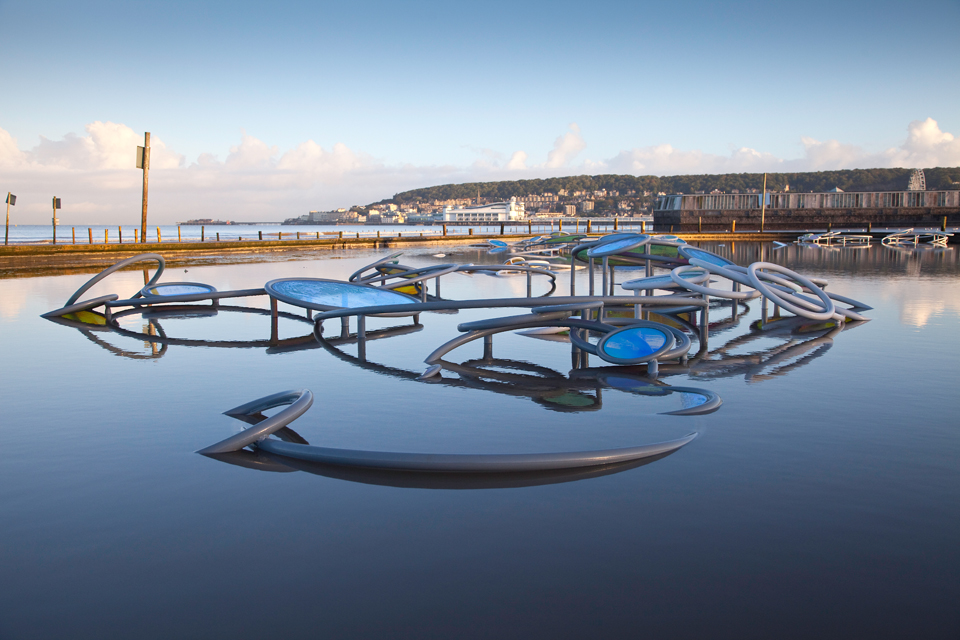
It is therefore fascinating to read of what coastal towns in England are being inspired to do, as reported in ArtDaily.org. of 5th July. They are using innovative approaches, through the arts, to regenerate the towns and bring in other economic activity. The example cited was Weston-super-Mare, in North Somerset. With a programme called Wonders of Weston, work by six international artists will be featured. Each of these will create a meeting place, a forum for discussion for Weston's inhabitants and visitors alike, an event to generate excitement and "buzz". What a good idea.

Ruth Claxton, Tim Etchells, Lara Favaretto, Tania Kovats, in association with landscape architects Grant Associates, raumlabor berlin and Wright & Sites are the artists selected. Lots of other people are also involved, all under the auspices of the Sea Change Programme, by which the North Somerset Council was awarded funds to help regenerate Weston-super-Mare. Even the public can vote on line as to which project meets with their approval.

Wonders of Weston, Weston-Super-Mare. (Image courtesy of artist at http://www.ruthclaxton.)

Wonders of Weston, Weston-Super-Mare. (Image courtesy of artist at http://www.ruthclaxton.)

Wonders of Weston, Holm, Weston-Super-Mare. (Image courtesy of Tania Kovats, artiss)

Wonders of Weston, Holm, Weston-Super-Mare. (Image courtesy of Tania Kovats, artiss)

This Sea Change programme is a national initiative by the Commission for Architecture and the Built Environment (CABE) to "place culture at the heart of the renewal of England's coastal towns, contributing to sustainable, social and economic regeneration".

Such a programme is a clear vote, I would suggest, for the power of art to improve life for us all.

Artists' Expectations by Jeannine Cook

When an artist travels to somewhere new, or goes out on location to work plein air, there is always a sense of expectation. Is that good, or does it hinder one's reactions and inspirations?

I was reminded of this frequent conundrum when I read a statement made by photographer Michael Eastman in Ivy Cooper's interesting article, "From Drive-Ins to Palazzo in ARTnews, summer 2010 issue. Eastman is considering travelling to Japan, New Zealand and Antarctica for new photographic ventures. When he mentioned this, the obvious question to ask was what subject matter will he photograph. His reply really resonated with me. "I'm not sure what I'll find there.

I think the biggest risk to an artist is expectations. (My emphasis) Whatever your expectations are, they always get in the way. If I don't have expectations, if I hit the ground running, if I move forward and start looking, I'll see new things."

When I thought about Eastman's remarks, I realised how accurate he is. I have found, time and time again, that if I switch off my brain when I arrive somewhere, and just let my subconscious 'float' and my eyes wander all over, then suddenly, bang, there is something interesting. If, on the other hand, I have envisaged some scene or object ahead of time, expecting to find that it is what I want to draw or paint, I frequently feel flat and uninspired when I get there. Totally perverse, but there it is! Of course, if one is commissioned to do a specific thing or landscape, then that is another matter. Even so, I try to feel neutral, without any preconceived idea of how I am going to tackle the commission. At least, like that, new angles, new approaches, fresh concepts can all come to mind.

If one thinks of the wonderfully spontaneous watercolours,for instance, that John Singer Sargent did when he was travelling, I suspect that he did not burden himself ahead of time of too many expectations. He just had his painting equipment to hand and let his keen eye spot the opportunities.

Artist in the Simplon, c.1909 - John Singer Sargent (Image courtesy of Fogg Museum (Harvard Art Museums), Cambridge, MA, US

Artist in the Simplon, c.1909 - John Singer Sargent (Image courtesy of Fogg Museum (Harvard Art Museums), Cambridge, MA, US

This watercolour, Artist in the Simplon shows just such an approach. Sargent was following in the footsteps of an earlier master of watercolours, Winslow Homer. He had pioneered the use of watercolours for spontaneous, fluid work that showed an opportunistic artist's eye. English "Cloud Shadows", painted in 1890, is an example of this).

Cloud Shadows, Winslow Homer, oil on canvas, (Image courtesy of the Helen Foresman Spencer Museum of Art)

Cloud Shadows, Winslow Homer, oil on canvas, (Image courtesy of the Helen Foresman Spencer Museum of Art)

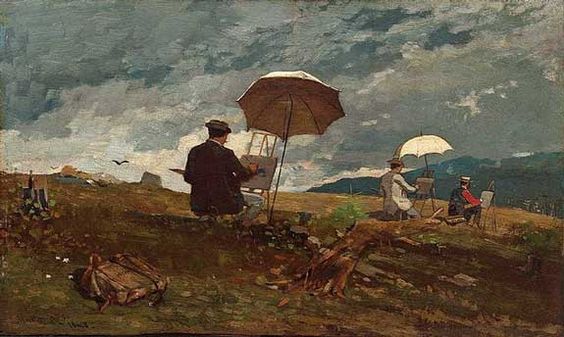
Artists Sketching in the White Mountains, Winslow Homer   (Image courtesy of Portland Museum of Art)

Artists Sketching in the White Mountains, Winslow Homer   (Image courtesy of Portland Museum of Art)

Expectations, in most situations, tend to let one down. In art, they seem to dampen, even stifle, creativity. Spontaneity, openness and an observant eye seem to be good substitutes.

What makes art valuable ? by Jeannine Cook

How do we value art? Each of us has a different scale of values and different definitions of art. But there are enough instances when everyone agrees on art being of great value and part of our cultural heritage. I was reminded of this when I heard a discussion on the BBC programme, Outlook, this week, during which there was an interview with Cori Wegener, Associate Curator of Decorative Art at the Minneapolis Institute of Art. She was talking of the efforts to save artworks made almost immediately after the earthquake struck Haiti in January. Heroic efforts were made to rescue and protect the rich and diverse cultural heritage there and they have continued ever since to try and ensure there will be artwork for future generations of Haiti.

Part school, part gallery, this Centre existed for artists  for 66 years. Here ,in 1945, Andre Breton had praised a painting's authenticity and thus put Haiti on the art-collectors' map. (Image courtesy of Alison Wright, Smithsonian.com)

Part school, part gallery, this Centre existed for artists  for 66 years. Here ,in 1945, Andre Breton had praised a painting's authenticity and thus put Haiti on the art-collectors' map. (Image courtesy of Alison Wright, Smithsonian.com)

What impels people to risk their own lives and well being to go in and rescue artworks? It is almost visceral, I suspect, for those who have a respect and love for things of beauty, which are testimony to man's - and woman's - skill, passion, culture, need to create... The list of heroic actions to save artworks of all descriptions is long. When there was the huge fire at Windsor Castle in 1992, the works of art - Master drawings, paintings, manuscripts and books - and furniture, carpets, miniatures and other valuables were rescued. Another time when Cori Wegener became involved directly was after the Baghdad Museum was looted during the Iraqi invasion. Then an Army Reservist, she was sent to help assess the damage at the Museum and help restore the situation. Floods in Florence, Prague or Venice all evoke huge efforts to save art in past years, while an earthquake situation, in Aquila, Italy last year caused enormous distress at the lost of art and architecture.

The list goes on and on, but implicit in all the stories reported in the press is the message: people do care - very much - about art of all descriptions. They consider it important enough to save, even at risk of their own well being. Indeed, there is the Blue Shield organisation, which was set up to protect the world's cultural heritage by coordinating preparations to meet and respond to emergency situations, the cultural version of the Red Cross. Its existence is an interesting assessment of the value of art to mankind.

The Eye of the Art Collector by Jeannine Cook

Thanks - once again! - to ArtDaily.org's listings, I happened on an up-coming Sotheby's sale of old Master Drawings from a private collection. I spent a fascinated hour on their site, going through the E-Catalogue of the drawings, some eighty of them, the ideal occupation for a dark, rainy day.

It is always extremely interesting to view a collection of art formed by one person, particularly a person who has a trained eye and knowledge of the media involved. I quote from the news release about this collector (who apparently spent about 25 years assembling this collection). "In his very personal forward to the sale catalogue, the collector who assembled this remarkable group of drawings wrote that he embarked on collecting “with the bold aim of looking over the artist’s shoulder”. There can be no question that he succeeded in this aim. The light that these extremely varied studies shed on the artistic creative process is both intense and wide ranging: we see every moment in the artist’s thought process revealed and illuminated."

There is a remarkable energy and life evident in the drawings this collector assembled. The artists are clearly in the throes of excitement and creativity. Famous names or not, it does not matter. The hallmarks of these drawings are immediacy, directness, sureness of touch and stroke. The collector does indeed describe well what he sought - and found - when he selected these works. Different media, different subject matter, some clearly well thought-out and planned, others on the spur of the moment, catching images almost on the fly... Some as aide-mémoires, others as exploration. In short, the collection came across to me as a most interesting selection of artists' emotions, desires, endeavours, aims... running a gamut of approaches and techniques. Little interesting items too, such as remarks about an exquisite study of a seated woman by Jean-Antoine Watteau. "It was executed in a combination of media that Watteau used only occasionally, but to striking effect: the majority of the figure is built up with a network of silvery strokes of graphite (a very rare medium in Old Master Drawings), (my emphasis) while the accents in the face and hands are in a more typical red chalk, an extremely effective juxtaposition that creates a lively yet utterly elegant figure."

When you go back and try to find out about the use of graphite before the early 18th century, it is indeed hard, as a neophyte, to find allusions to many graphite drawings. Pure graphite, first mined in Borrowdale, England, in the 1500s, seems initially to have been used for under drawing in the 16th century. It was more forgiving than metalpoint, especially silverpoint, the draughtsman's favoured medium during Renaissance times in spite of silverpoint's linear qualities and permanence of mark. Graphite does not seem to have been used much for drawing until well into the 17th century. Artists tended to favour chalks, red and black, as well as charcoal for studies and finished drawings alike. (Interestingly, the Venetian artists continued to favour black chalk, whilst the perhaps more flamboyant Florentine and Roman artists preferred the harder red chalk with which they could show off their skills!) Graphite became widespread only in the 18th century, with the increasing difficulty of obtaining good-quality natural chalks and the simultaneous production of a fine range of graphite pencils after the invention of a graphite pencil in Nuremberg in 1662.

Graphite drawings then become far more widespread: John Constable, Jongkind and later John Singer Sargent, for example, all used graphite in their work, particularly when working plein air.

Self-Portrait, 1806, John Constable, (Image courtesy of the Tate, London)

Self-Portrait, 1806, John Constable, (Image courtesy of the Tate, London)

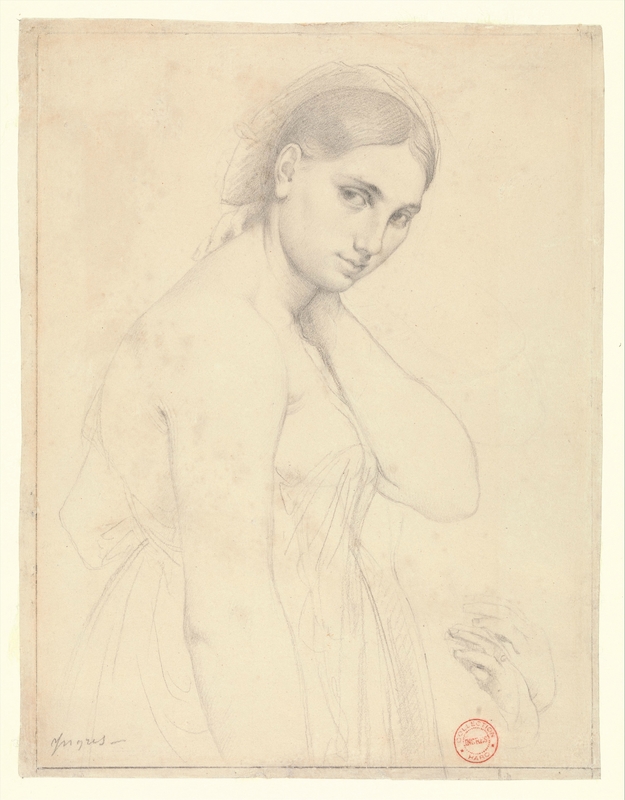
Ingres was famed for his use of hard graphite pencils when drawing his wonderful detailed portraits of people.

Jean Auguste Dominique Ingres (French, 1780-1867). Study for "Raphael and the Fornarina" (detail), ca. 1814. Graphite on white wove paper, 10 x 7 3/4 in. (25.4 x 19.7 cm). The Metropolitan Museum of Art, New York, Robert Lehman Collection,…

Jean Auguste Dominique Ingres (French, 1780-1867). Study for "Raphael and the Fornarina" (detail), ca. 1814. Graphite on white wove paper, 10 x 7 3/4 in. (25.4 x 19.7 cm). The Metropolitan Museum of Art, New York, Robert Lehman Collection, 1975

By the turn of the 19th century, Cezanne and so many others commonly used pencils, as have we all done since in the art world - often to great effect.

Paul Cézanne (1839–1906), Hortense Fiquet (Madame Cézanne) Sewing, ,c. 1880, GraphiteSamuel Courtauld Trust: Princes Gate Bequest, 1978

Paul Cézanne (1839–1906), Hortense Fiquet (Madame Cézanne) Sewing, ,c. 1880, Graphite
Samuel Courtauld Trust: Princes Gate Bequest, 1978

But back to the Sotheby E-Catalogue of the drawings that occasioned my little foray into the rarity of Old Master graphite drawings... (and by the way, the definition of Old Masters in Western art is work executed before 1800...), it is well worth going through this collection of images of drawings. It allows one to remember how interesting it can be when one sees an art collection formed by one person with the courage of his or her own convictions and erudition.

The Elegance of Imperfection by Jeannine Cook

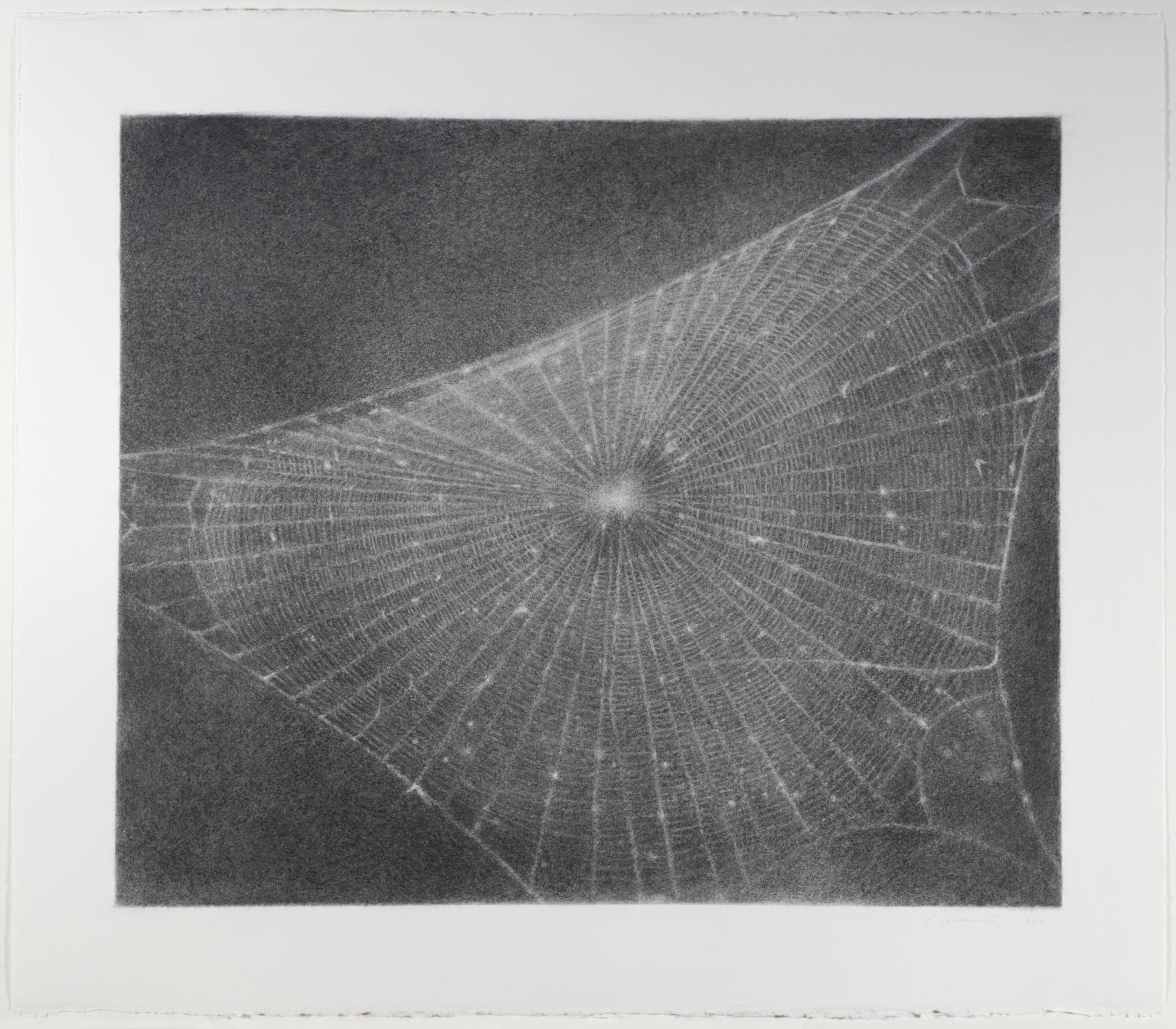
Back in May when I was in Spain, I read with interest a long article in El Pais by Antonio Muñoz Molina on the artist Vija Celmins' exhibition then showing at New York's McKee Gallery. The descriptions told of how Celmins works, in her studio, in quiet solitude, communing with objects that she has brought into the studio from walks on the beach or Western deserts, from sidewalk or garage sales in New York or where ever. Her close inspection of the objects then is translated into minutely detailed, intimate paintings and drawings of surfaces, interiors, textures, patterns. Their abstraction and depth, both in tactile effect and message, seem to reach far beyond the mere frames. But always, these images apparently allow for imperfection, as it is first in nature and real life, but more so as she creates her art. The overall effect is powerful and compelling.

Vija Celmins , Web # 1,  Charcoal on paper, Image courtesy of Tate / National Galleries of Scotland

Vija Celmins , Web # 1,  Charcoal on paper, Image courtesy of Tate / National Galleries of Scotland

Sky, 1975, Vija Celmins, Lithograph on paper, (Image courtesy of the Tate, London)

Sky, 1975, Vija Celmins, Lithograph on paper, (Image courtesy of the Tate, London)

Her work is very well considered, with awards and exhibitions in major institutions in this country. What interested me was the way she apparently deals with blacks - in paint but especially with graphite. When drawing with graphite, with all its permutations of hardness in the grades of Hs and soft Bs, a lot of skill is need to go on getting a more and more intense black. Unless you are careful, as with pastels, the paper surface gets to such a point of "saturation" that no more graphite will adhere.

What is always fun, when looking at other people's art or reading about it, is to have a sudden idea about something interesting and new to try in one's own art. Thinking about Celmins' work brought back to mind a wonderful goldpoint/platinumpoint drawing I saw in the Telfair Museum of Art metalpoint exhibition, The Luster of Silver, in which I was involved in 2006. Dennis Martin, now sadly deceased, had done the most sensitive and beautiful portrait of his wife. He then surrounded this delicate, almost ethereal three-quarters-size portrait with deep, dark, lustrous graphite. The contrast with the goldpoint drawing was dramatic and most effective.

All these thoughts about artists' skills with graphite are tempting me. Now if the temperatures outside would just diminish a little, I could go off and start doing some drawing plein air!

The Tree Museum by Jeannine Cook

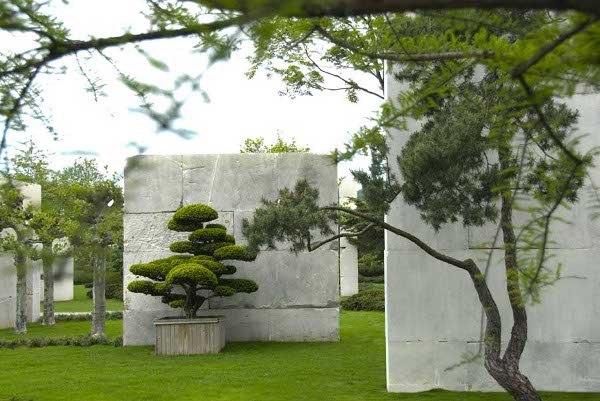
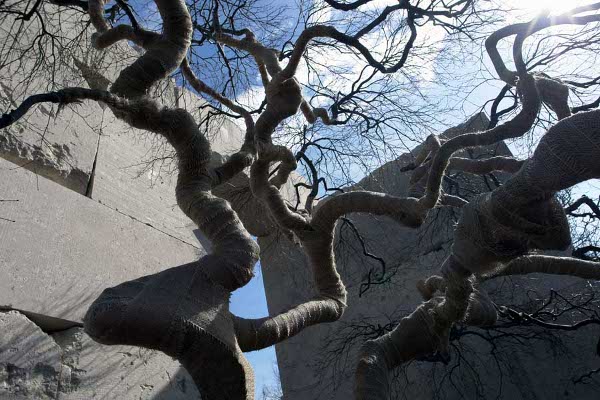
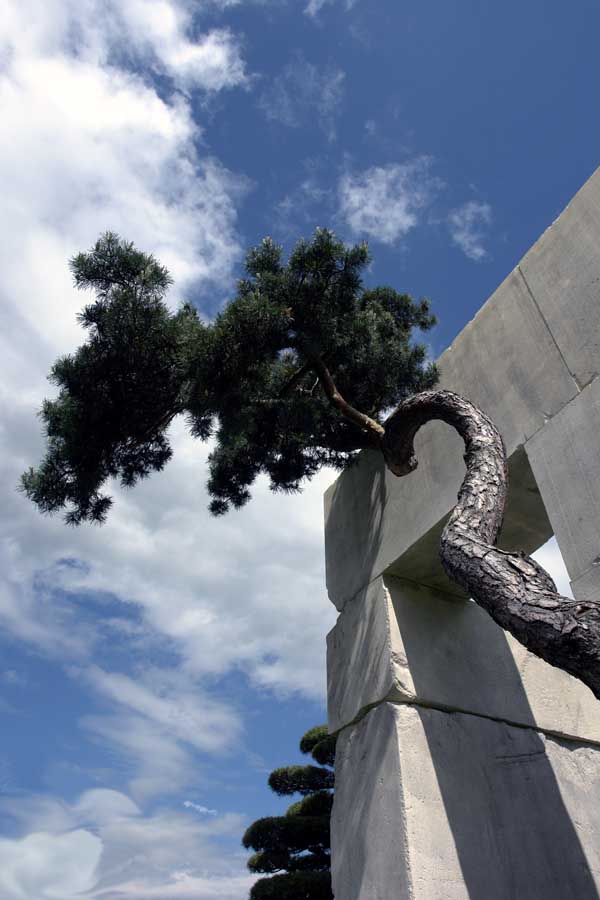
When I first read of the announced opening of the Tree Museum in Zurich, Switzerland, in Art + Auction, I was intrigued with the concept. Now that the Museum is actually open, it sounds more than enchanting. As an artist who adores trees and is for ever drawing them, a Tree Museum seems the ultimate in logic and totally civilized.

Th Tree Museum, Zurich

Th Tree Museum, Zurich

Enzo Enea, a Swiss landscape garden architect, has been saving venerable, important trees for the past seventeen years, often using bonsai techniques to ensure their safe transplantation and survival. His considerable collection of trees indigenous to the region are now displayed in the Museum, often with enclosures to enhance their presentation but also to ensure the micro climate they require. Peace and contemplation are words used about the displays. They also evoke, I am sure, a sense of time spans that are different, and differently-paced, to our human rhythms of life. I know that when I look at the massive live oaks growing along the Georgia coast, I feel humbled by their majestic span of time and space. Trees allow one to become more centered, more in tune with the natural world, more aware of the need to be good stewards of the environment.

The Tree Museum

The Tree Museum

The Tree Museum

The Tree Museum

The Tree Museum

The Tree Museum

For artists who love drawing and painting trees, this Tree Museum will be of great interest. Nonetheless, we don't have to go to museums to marvel at trees; just look around you, where ever you are, and there will probably be a tree that can stop you in your tracks. Depicting it on paper or canvas can be a fascinating exercise in observation. It also allows one better to appreciate the amazing "engineering" of a tree that permits it to grow and stretch and flourish in beauty.

Clearly Enzo Enea has a deep understanding and love of trees. His collection of more than two thousand specimens in his Tree Museum will be a wonderful place to visit.

(The images have been downloaded from the Tree Museum website, with my thanks.)