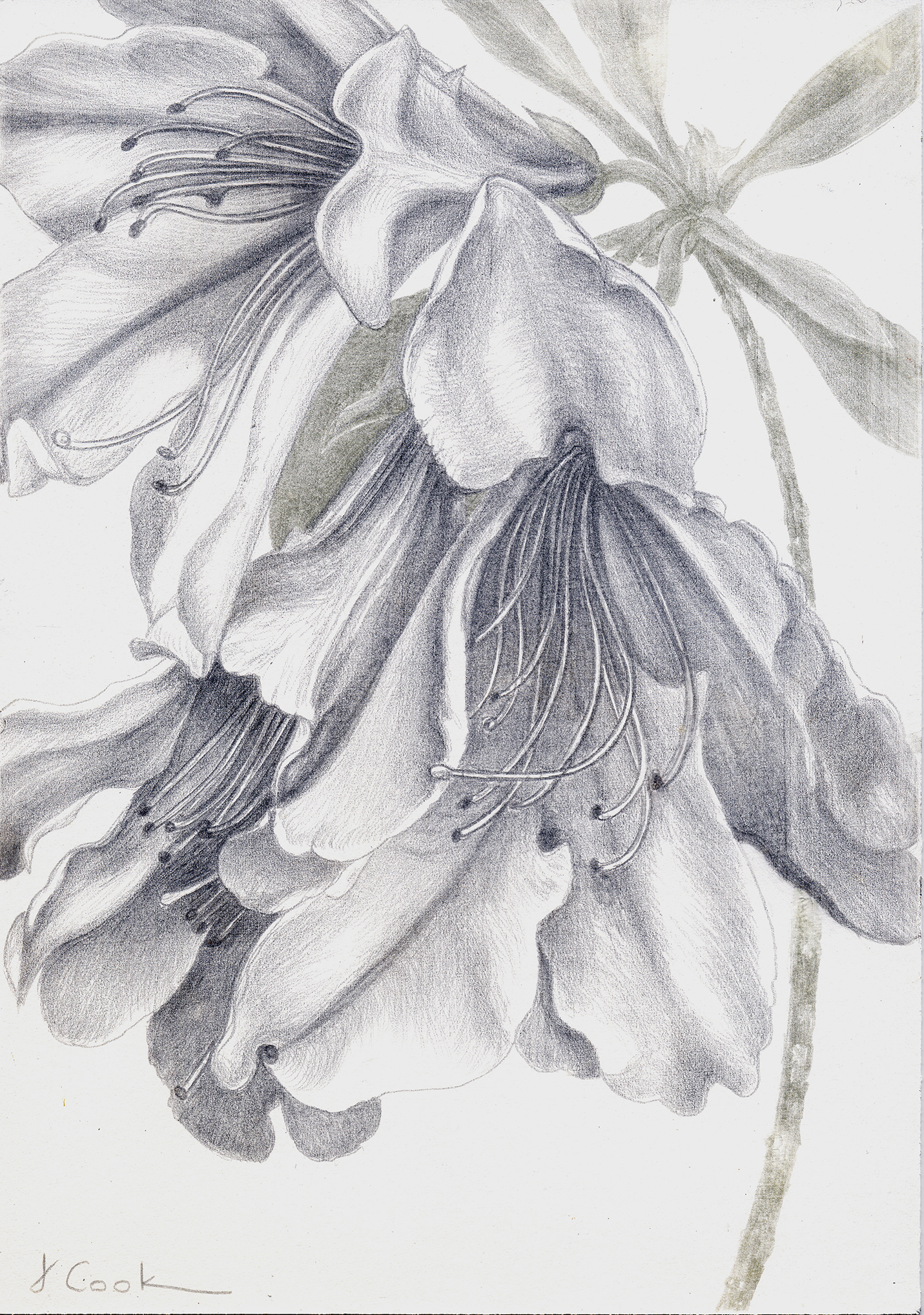
Sharing a Love of Drawing by Jeannine Cook

One of my private delights in life is constantly finding links and a serendipitous "circularity" in life. I have just had a delicious example of such a coincidence.

When I was flying back from Spain this week, I used the trip as time to catch up on reading various magazines. In a number of the Spectator magazine, I noticed an advertisement for a guided tour by Curator Hugo Chapman for Spectator readers of an exhibit at the British Museum. The exhibition is entitled "Fra Angelico to Leonardo. Italian Renaissance Drawing" and features about one hundred master drawings from the British Museum collection and that of the Uffizi Gallery in Florence. I kept the magazine page to check out the British Museum website when I got home.

Today, I open up my e-mail for the first time, and what should I find but a delightful message from my friend and blog-follower in the United Kingdom, Marion Brown, alerting me to the same exhibition and its marvels. A wonderful coincidence. One that also makes me wish I could hop over to London to see it before the exhibition closes on 25th July.
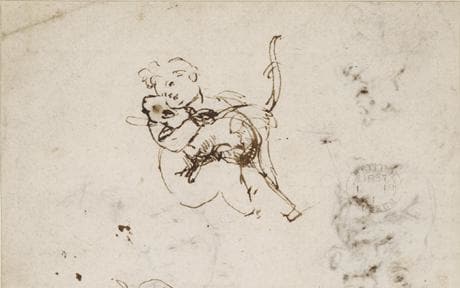
Leonardo da Vinci, Studies of the Infant Christ and a cat, c. 1478-81.  Photo: TRUSTEES OF THE BRITISH MUSEUM

Leonardo da Vinci, Studies of the Infant Christ and a cat, c. 1478-81.  Photo: TRUSTEES OF THE BRITISH MUSEUM

Even browsing the BM website makes me realise that the drawing medium I love so much, silverpoint, is key to such an exhibition. The changing attitude to drawings, the role they began to play in artists' working methods and the intimate links back to classical time in Greece and Rome are apparently demonstrated by Hugo Chapman's choice of works to display. The characteristics of paper, too, are brought out in Dr. Chapman's blog, in that the drawings, when they arrived from Florence, needed to "rest" and acclimatise to their new environment. Since paper is a living organism, it adapts and changes when it is moved. Any artist who works on paper finds this out, almost the hard way, when a finished work suddenly develops undulations, for instance, even under glazing. Given time, the work will adapt to the new conditions and revert to its normal appearance.

Thank you, Marion, for telling me about this exhibition. It is interesting to watch how many more museums are mounting master drawing exhibitions, many of which are featuring silverpoint more prominently. The power exercised by drawings is eloquent. The directness and honesty of this medium - or media, given that there are pen and inks, metalpoints, chalks and later graphites - allow today's museum visitors almost to feel as if the artist is working in front of them, trying out ideas, peering closely at the human body, altering and correcting things. The span of centuries means nothing as one looks at a drawing; its voice is singular and commanding, eloquent of the artist's vision.

If you are lucky enough to be in London, I suspect this exhibition will be well worth a visit. Failing that, the catalogue, Fra Angelico to Leonardo. Italian Renaissance Drawings", would be a lovely possession, I know. Now to order it.

Single-mindedness by Jeannine Cook

I recently alluded to a wonderful book I am reading, The Age of Wonder by Richard Holmes, about the 18th century Romantic generation's discoveries and accomplishments in science, exploration, literature and many other disciplines. The account of astronomer William Herschel's sister, Caroline, interested me deeply. She must have been a pint-sized (about five foot in height) force, highly intelligent and extremely self-disciplined. She was her brother's invaluable astronomical assistant, noting down all his observations as he peered through his wonderful telescopes at outer space, night after night. During the day time, for countless years, she ran his house, kept accounts, received eminent visitors and made the necessary calculations to complete William's observations.

However, in due course, she herself became a fully fledged astronomer, with her own beautiful telescopes which her brother designed and made for her. With single-mindedness, she began to sweep the skies, looking for comets. Like her brother, she became sufficiently familiar with the patterns of the night sky that she could almost "sight read", and thus more easily spot anything different. She became famous as the first lady astronomer, discovering a number of comets and garnering respect and acclaim in the international scientific community. She was also awarded the first professional salary every paid to a woman scientist in Britain when King George III granted her an annual stipend for life. Her single-mindedness, during those long, lonely nights spent looking through her telescope, brought her not only personal satisfaction, but much deserved respect.

Single-mindedness is an ingredient that I believe every creative person needs - whether in science, literature, art, music... Take a much respected and successful author, such as Robert Coram. His non-fiction books range from Boyd to American Patriot or Nobody's Child, while his fiction writing is extensive. His remark, during a lunch we were all sharing, was that for him, ten-hour days were followed by watching a film, by way of relaxation, before bed. That takes single-mindedness - ten-hour days, working on a project that normally takes about three years from start to publication. I mentally compared that with my time spent drawing and painting, and decided I needed to juggle personal and professional life more successfully!

I also had a reminder of another form of creative single-mindedness, as I listened today to NPR's Susan Stamberg talking about the current exhibition at the Smithsonian's Renwick Gallery in Washington, The Art of Gaman. This is apparently an exhibition of the art and crafts created by the Japanese Americans interned in camps here in the United States during World War II. Since they were simply dumped in these camps with no more for each family than four walls, lit by a light bulb, a pot-bellied stove in a corner and cots, they had to fashion anything else they needed out of any scraps they could find. But they went further than just utensils and furniture. Their single-minded courage led many of them to create art, jewellery and other pieces which are now on display. "Gaman" in Japanese means the ability to "bear the seemingly unbearable with dignity and patience".

Bearing the Unbearable: The Art of Gaman , Iseyama teapot

Bearing the Unbearable: The Art of Gaman , Iseyama teapot

Another manifestation of such single-mindedness was the art created by Jewish children and adults sent to Theresienstadt in World War II or, indeed, the drawings and paintings created in Auschwitz or Buchenwald or elsewhere. Think too of the dedication of those who were in Theresienstadt to composing and creating music. Faced with such appalling conditions, it must have required almost superhuman single-mindedness to continue creating beauty and uplifting manifestations of the best of the human spirit.

Patterns that have implications by Jeannine Cook

Well! I blogged about patterns yesterday, but nature is supplying the basis for some patterns that I - and countless other air travellers - could do without. The Icelandic volcano with the unpronounceable name is supplying Spain with its own art form of patterns.

Icelandic volcano eruption, (Image courtesy of Imgur: The magic of the Internet)

Icelandic volcano eruption, (Image courtesy of Imgur: The magic of the Internet)

How about tomorrow's predictions, courtesy of the British Met Office's Volcano Ash Advisory Centres? The airports are juggling flights, and I have already had one flight to Spain cancelled, so the patterns made by volcanic ash drifting who knows where are of considerable interest! El Pais, the Spanish daily newspaper, is full of lovely designs, none of which bring much comfort. Perhaps I had better find another type of subject about which to write in the art world. I seem to have been inviting the fates with the choice of patterns as a topic!

Patterns by Jeannine Cook

In my previous post about William Herschel, I mentioned that his ability to scan the night sky was helped by his knowledge and familiarity with music and more especially with sight-reading. Underpinning both skills was the honed ability to recognise patterns, and thus note any difference in those patterns, especially in the stellar nebulae.

In the same way, patterns are frequently a very important part of art-making. Nature is full of such examples, from alto-cirrus clouds to ripples on the water, from a millipede's many footprints in the sand to the distinctive feathering on a bird that flashes from tree to tree.

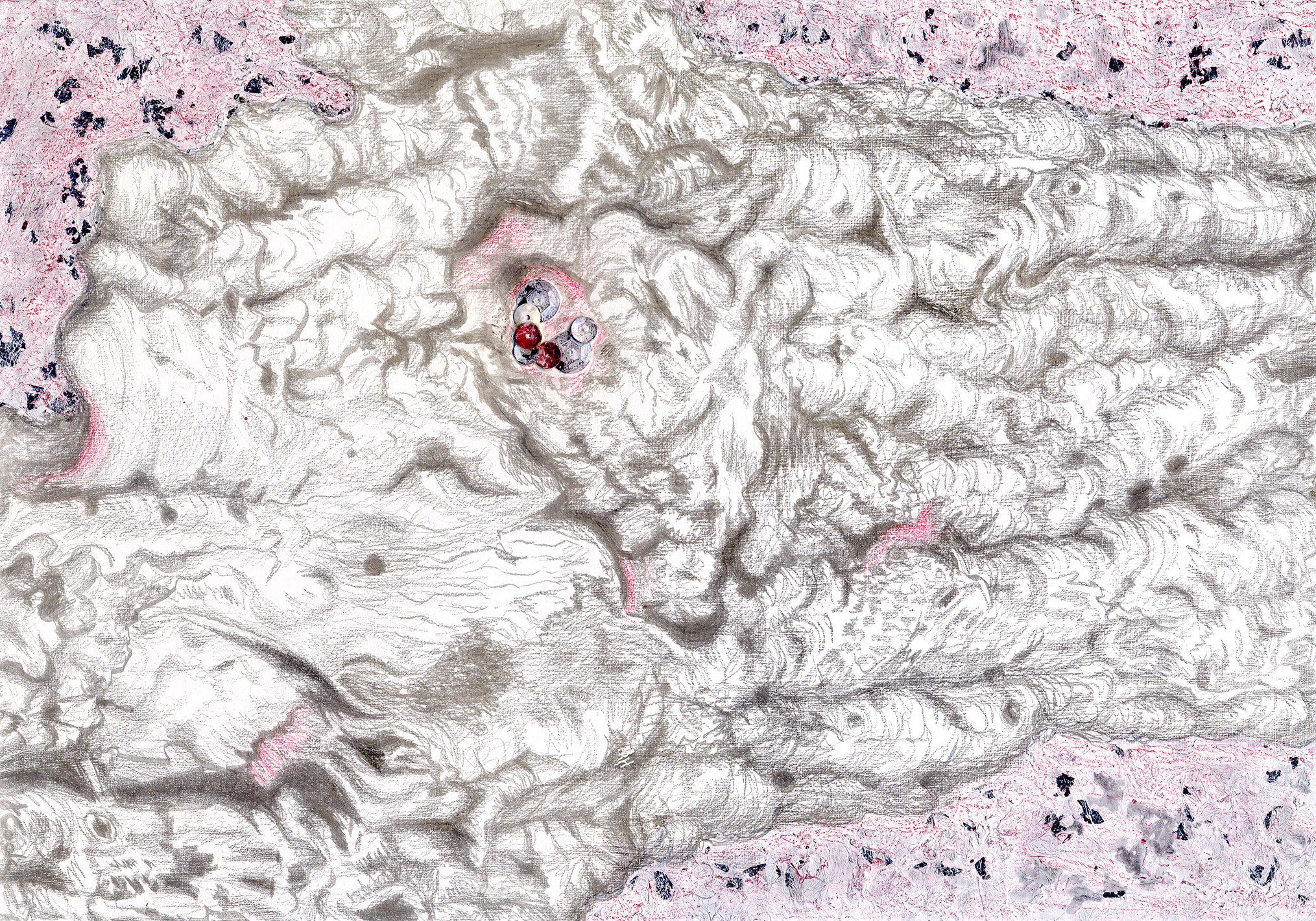
Tree bark offers a magical multitude of patterns, each distinctive to the tree species. The silverpoint, watercolour and sequins I used to depict The Life Within seemed appropriate for the live oak bark I picked up on a walk one day. Shaped by wind and rain, sun and shade, the tree's bark is a wonderful indication of the energy and resilience of that tree.

The Life Within, silverpoint, watercolour, sequins, Jeannine Cook artist

The Life Within, silverpoint, watercolour, sequins, Jeannine Cook artist

A walk along any beach yields countless examples of nature's patterns in shells. This silverpoint I did of an Angel Wing came from Sapelo Island. Its patterns show how nature reinforces the delicate shell to withstand the sea's relentless tossing and pounding. For an artist, it is endless fascination and a considerable challenge to draw!

Angel Wing shell, silverpoint, Jeannine Cook artist

Angel Wing shell, silverpoint, Jeannine Cook artist

Patterns play a huge role in many approaches to art. One type of work that I have always found powerful is Australian aboriginal art , in which their visual and Dreaming worlds are united. Patterns reach an apogee of complexity, beauty and subtlety in these paintings. . Dots, dashes, stripes - they become the ultimate collection of patterns, even though they are in truth symbols of their sacred Dreaming world. This is especially the case with the art produced from 1972 onwards in the North West Territory at Papunya, when the tribal elders began to paint on Masonite and later canvas, rather than on rock faces and sand, as they had done for the last 20,000 years.

MAWALAN MARIKA, Sydney from the Air, 1963, National Museum of Australia.

MAWALAN MARIKA, Sydney from the Air, 1963, National Museum of Australia.

Another version of patterns in art was sent to me the other day by a fellow silverpoint

and graphite artist, Cynthia Lin, . It was the announcement of a current collective exhibition, Observant, at New York's  ISE Cultural Foundation, in which her large-scale graphite drawings of skin are featured. This is one of her works, entitled Crop3 DSnosemouth (detail), 2008, graphite on paper, 66 x 71".

Whether realistic or abstracted, patterns are the underpinnings of most art. It is fun to observe nature's patterns and even more fun to incorporate them in art.

The Rewards of Practice by Jeannine Cook

In a marvellous and most fascinating book, The Age of Wonder by Richard Holmes (Pantheon Books, New York , 2008), I have been reading about the eighteenth century astronomer, William Herschel.

William Herschel, 1785, oil,  Lemuel Francis Abbott  (Image courtesy of National Portrait Gallery)

William Herschel, 1785, oil,  Lemuel Francis Abbott  (Image courtesy of National Portrait Gallery)

His extraordinary dedication to making better reflector telescopes and extending astronomical knowledge led to his being appointed King George III's Personal Astronomer. He discovered Uranus, the seventh planet and the first to be discovered since the time of Ptolemy, and became a most celebrated member of the Royal Society.

His original profession was not astronomy but music, which he learned mainly from his father in Hanover. He was a gifted musician, composer, and music teacher, who met with considerable success in England, especially in Bath. However, his passion was amateur astronomy to which he dedicated more and more time. And this is where I found it so fascinating: his prior skill in sight reading in music and his dedication to practice in music-making helped make him, he believed, a far better astronomer.

Some people claimed that his finding another planet was mere chance, and he reacted defensively. He wrote on 7th January 1782, "I do not suppose there are many persons who could even find a star with my (magnifying telescope) power of 6,450, much less keep it if they had found it. Seeing is in some respects an art, which must be learnt. (My emphasis). To make a person see with such a power is nearly the same as if I were asked to make him play one of Handel's fugues upon the organ. Many a night have I been practising to see, and it would be strange if one did not acquire a certain dexterity by such constant practice." (Again, my emphasis.)

Richard Holmes further wrote of Herschel's skill in identifying stellar patterns as being honed by his many years of sight-reading musical scores. "Or more subtly, the brain that was trained to recognise the highly complex counterpoints and harmonies of Bach or Handel could instinctively recognise analogous stellar patternings." (page 115)

This fascinating account drives home to me the value of practice in whatever artistic venture in which one is engaged. The eye, the ear, the hand and thus the brain all improve with constant training . Herschel was indeed a shining example of the virtues of practice.

The Age of Wonder is a marvellous book through which to be reminded of these virtues.

The Role of Art in Healing by Jeannine Cook

I was so delighted when I was able to start drawing and painting again recently, after I recovered enough from surgery. I instantly felt much better, and instinctively I knew that I would continue to make progress in healing at a quicker rate, thanks to the art.

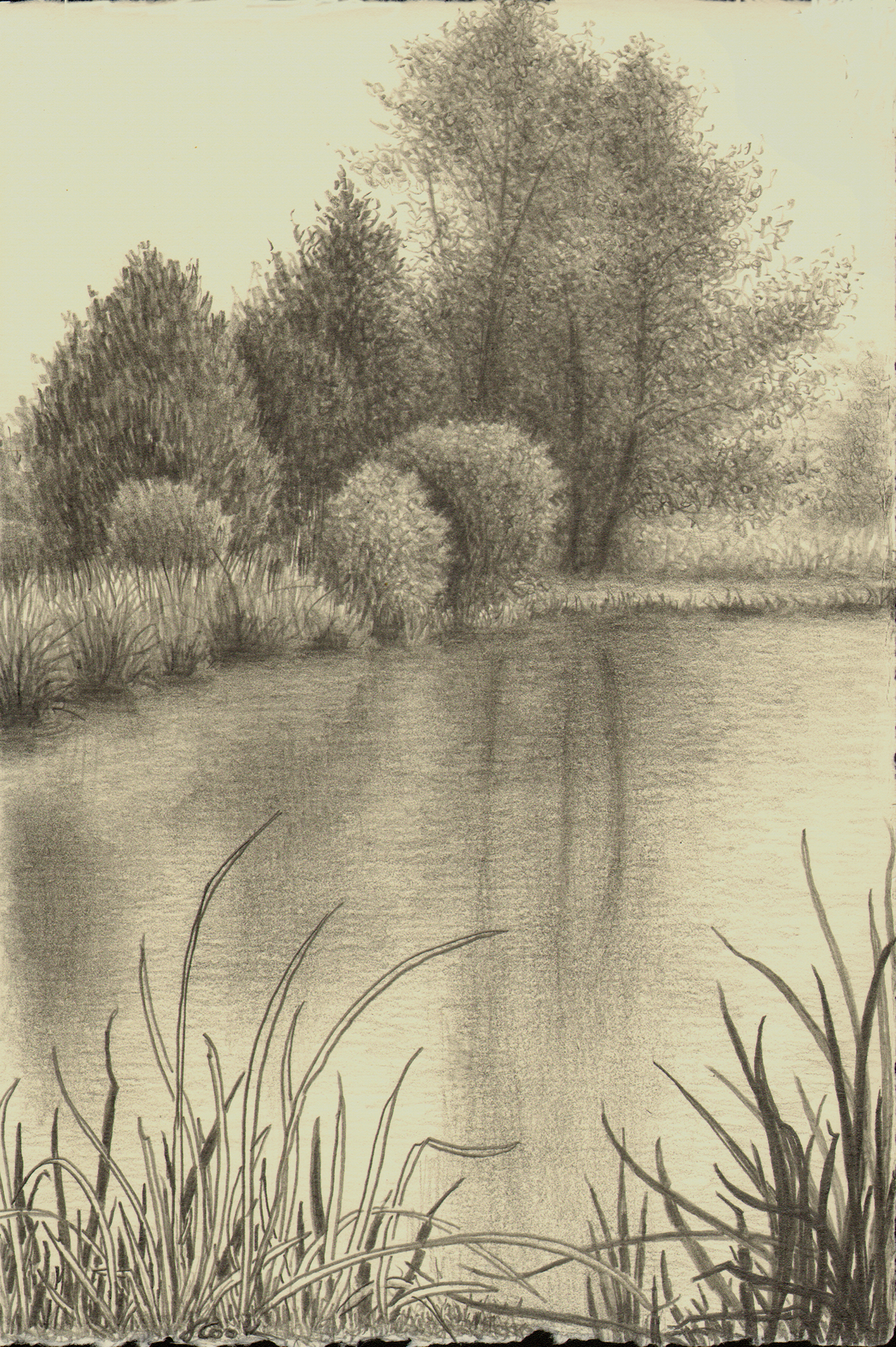
March at Butler Island, graphite, Jeannine Cook artist

March at Butler Island, graphite, Jeannine Cook artist

Even more important to me was getting to the stage where I could try to incorporate the surgery in a drawing so as to exorcise the whole event and move on in life.

recovery from Surgery, silverpoint, Jeannine Cook artist

recovery from Surgery, silverpoint, Jeannine Cook artist

My feeling that my world was becoming more serene and coherent again through art was echoed recently by a remark made to me by a fellow artist. She had just returned to art-making too, after a hiatus of two years. During that time, she had battled cancer. Her conviction, she told me, was that the fact she had left off creating art two years ago had somehow contributed to her getting sick. Now that she is painting again, she feels much better. Her story impressed me with the power that art can have, not just for viewers, but for artists, as a healer.

I have written before about the powerful, if subtle, effect art can have in hospital and other medical settings. The role of helping artists heal themselves seems less well explored publicly, yet one knows of many artists who have dealt with important issues in their lives through art. I remember, many years ago, seeing a series of paintings of a black crow lying in snow that stopped me in my tracks. It was apparently a series of works done by an artist who had been recently widowed. She had found this dead crow, and it became the vehicle through which she could come to better terms with her bereavement. They were memorable, powerful paintings.

Thoughts about this important role of art as healer for artists themselves were running through my mind when I was listening today to a delightful interview on the BBC World Service with singer/musician/writer Salman Ahmad of Junoon. He was talking about his recently published book, A Muslim Rock Star's Revolution, and the accompanying disc which is soon to be released. This balanced, thoughtful Pakistani-American citizen of the world, who comes across as joyously constructive about matters of peace and understanding, used a phrase which caught my attention. It was "whispers of the heart".

Somehow this phrase expresses perfectly the subtle role that art plays in each artist's life, through music, visual art, poetry, drama or any other medium. Not only does an artist hear these whispers of the heart when creating art, but the expression seems to explain wonderfully what happens when the art is helping to heal the artist while he or she is working.

Rewards of "Look Closely, Look Often" for Artists by Jeannine Cook

Every artist who works from real life intuitively knows that familiarity with a subject brings rewards. A wonderful plein air artist from California, Marcia Burtt, written about in a June 2010 American Artist article, made a remark which really resonated with me about this. When talking about working on location, she said, "choosing a location is based on many variables. If I haven't been painting much, I can spend whole days driving around looking for a subject. If I've been painting regularly, everything looks beautiful. That's the reward for spending hours intensely observing nature - you start seeing beauty everywhere." (my emphasis)

There is a quiet and insistent alchemy at work when one is involved in depicting natural objects in the studio or painting plein air. The more one observes, the more one sees. The light changes the forms, the colours, the sense of space. The world seems to become quieter, more intense. And the more you paint or draw, it is true, beauty appears at every turn. It is as if nature becomes generous with her bounty, allowing the artist to slip on another set of eyes that are keener in perceiving beauty in all its definitions. Perhaps we know the subject matter better in all its complexities after working intensely, but it does often seem that such familiarity allows the brain to relax and see beauty more and more.

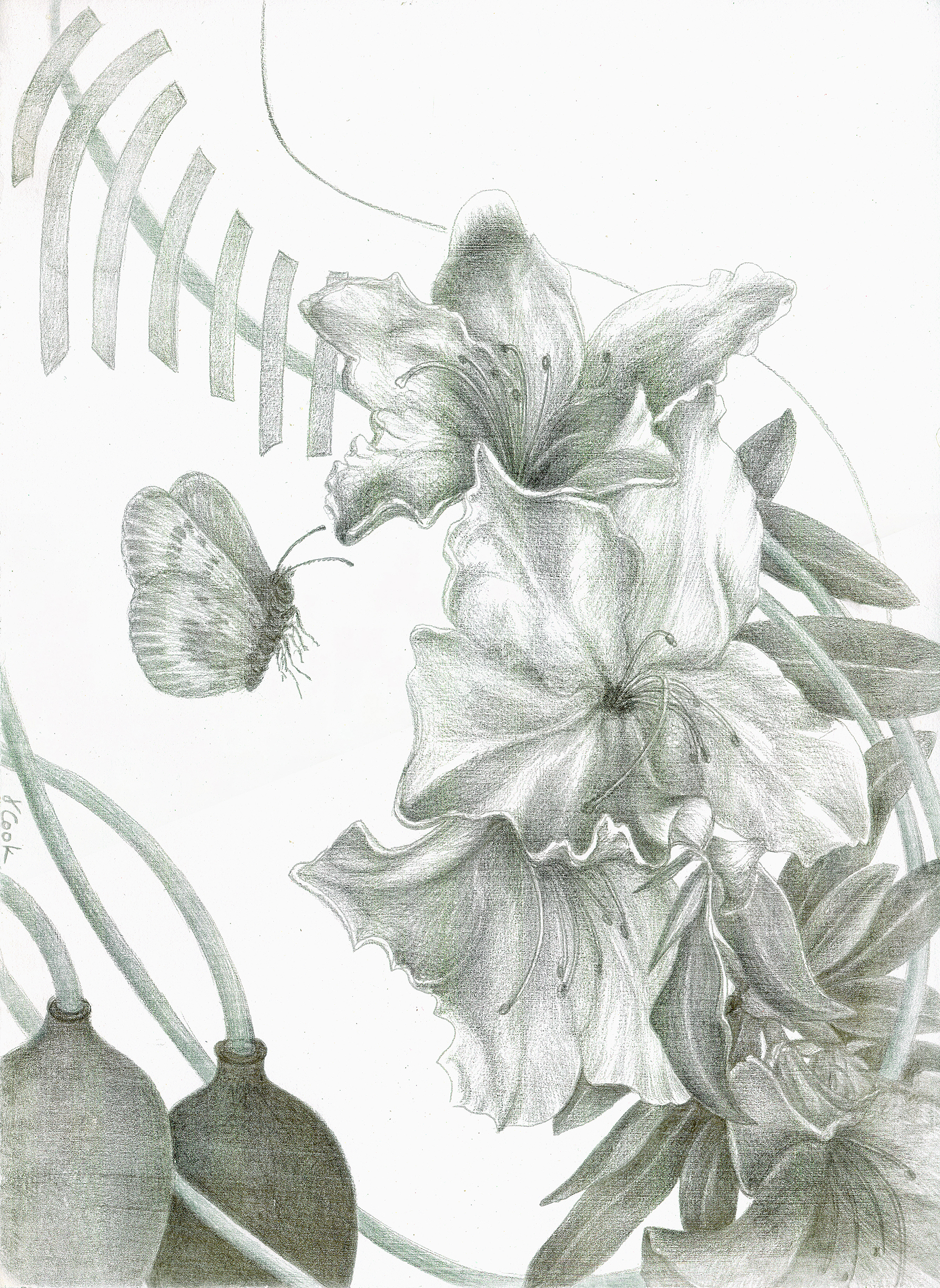
I found this generosity of nature at work recently as I started painting and drawing the wonderful Southern Azaleas (A. indica) that have been blooming on our area. I started by a large watercolour triptych, but then found the azaleas' beautiful shapes and purity kept "talking" to me. So I did another smaller watercolour. Finally, before the azaleas disappeared for the season after their brief burst of glory, I turned to silverpoint to depict their beauty again, combining it with other issues I wanted to address.

Azalea indica, silver-copperpoint, Jeannine Cook artist

Azalea indica, silver-copperpoint, Jeannine Cook artist

It was as if the azaleas were rewarding me for my close attention to them, as I studied the intricacies of their flower forms, the play of light that described each petal, the individual quirks of each flower and leaf.

This generosity of nature is consistently available to every artist, I believe. If we can spend enough time becoming immersed in nature, in whatever way we chose to depict its aspects, the rewards of beauty and inspiration, of delight and fascination, of awe and a sense of the marvellous are all there for us if we wish. Our role, our quid pro quo with nature, is to share with others this beauty through our art, to become ambassadors and passionate advocates on behalf of nature. Not such a bad exchange!

Prayers answered - for now - with Georgia Council for the Arts by Jeannine Cook

For this year, at least, the Georgia Council for the Arts exists, albeit in leaner form. The last day of the Georgia legislative session saw the passage of a 2011 budget which included funding for the arts. Hallelujah!

In fairness for having used this blog to inveigh about the dangers to the arts in Georgia, I will quote the open letter that the Head of Georgia Council for the Arts, Susan Weiner, has just sent out.

An Open Letter to Georgia’s Artists, Arts Organizations, and Arts Patrons

Congratulations! Your efforts kept Georgia Council for the Arts (GCA) alive. Your exercise of political will is responsible for our state continuing to have a state arts agency. GCA was the recipient of thousands of emails and telephone calls from you and fellow Georgians. And, we received scores more from around this nation.

We know what Georgia would be like without the arts. We must remember to tell others, because the State of Georgia will face at least another year of fiscal constraints due to this recession. Yes, it is possible that GCA could be threatened again next year.

What would Georgia be like without the arts? Here are some of the answers we read in your emails.

Economic Impact
· GCA awards in FY 2009 of $3.9 M returned over $6.1 M to our counties and cities sales tax revenues. GCA grantees made money for Georgia.
· The Pricewaterhouse Coopers LLP study showed a $376 M economic impact to the state, with only 98 GCA grantees participating

Community Development
· A nonprofit arts organization is the fifth-largest employer in Miller County; the home of the state’s beloved Swamp Gravy
· Renovation of downtown buildings for the non-profit Averitt Arts Center motivated the private investment of an additional $14 M to that city’s vitality
· Last Sunday, the Morris Museum offered free entrance to 1,000 visitors made possible because by its GCA award

Federal & Regional Dollars
· Some of Georgia’s taxpayers’ dollars going to Washington DC will return to be invested at home
· NEA State Partnership Grant and South Arts regional grants to artists and arts organizations will continue to provide support

Arts Education
· Davidson Arts Magnet School ranked 1st in the state in SAT scores 4 of last 5 years and demonstrates the value of arts education
· Over 30,000 students benefited from in-school and after-school arts education by the Alliance Theatre because of the GCA award; tens of thousands of students across the state enjoyed similar benefit
· Georgia was ranked second in the nation for student participation in the national Poetry Out Loud competition

Arts Industry
· Georgia is ranked third in US for arts employment, almost 90,000 artists
· There are almost 20,000 arts-related businesses Georgia based on Dunn & Bradstreet, Inc. research
· Georgia’s art industry is in the for-profit, not-for-profit, and self-employed sectors of our economy; our state’s artists work in all three sectors

Tourism & Film Industries
· Cultural Heritage Tourism is the fastest growing and most revenue-generating form of tourism
· Georgia has benefited from recognition through the Emmy, Oscar, Grammy, and Tony awards won by Georgia’s artists
· Without Georgia’s artists (ex., actors, graphic designers, lighting and scene painting artists and technicians, film editors, animators, costumiers, writers), would our state have a tourism, film, and digital industry?

We owe a debt of gratitude to those legislators who understand these reasons and one more: it is the arts that cultivate our ingenuity, creativity, and humanity. It is these traits will lead Georgia into a more prosperous future.

Susan

I think the letter makes an eloquent case for the arts, not only here in Georgia but anywhere in the world. We would all be enriched greatly if the arts were regarded more as society's lifeblood and sustainer of civil discourse.

Prayer for the health of the Arts, Georgia style by Jeannine Cook

It seems that lots of prayers and incantations still need to be offered if the Georgia Council for the Arts is to survive in Georgia. The fate of the arts apparently hangs by a single thread in the review of the budget, and that thread is reportedly Representative Jerry Keen, from St Simons Island, Georgia.

In an area where the arts not only form an integral part of the community (for both local residents and retirees who have made this area home) but are a lifeline to young people who would otherwise be frequently handicapped in terms of art experiences, this is sad and amazing. I find it so strange that politicians deem it "wise" and "responsible" to impoverish the quality of their fellow citizens' lives, particularly at a time when any uplifting experiences that the arts could bring are needed to offset daily economic concerns. How short-sighted!

The fact that Georgia would become the only state in the US without any state arts agency, thus foregoing any federal supporting dollars, would seem to be very poor business sense as well. Bad publicity for Georgia, bad investment policies in terms of attracting tourists to the state, terrible messages to Georgia's youth about elected officials' concerns for their future success. How does one attract investments and new business to come to Georgia when the quality of life is manifestly of no importance whatsoever?

It is time that Representative Jerry Keen and his fellow elected politicians think a little more as statesmen and remember that life in Georgia is more than just the next election cycle. Particularly when the next election for Representative Keen falls due this year...

The Artist's Eye by Jeannine Cook

When I was talking to an artist friend recently, she commented on her diffidence about drawing. She said that she had difficulty perceiving things spatially sufficiently accurately to draw them. I reminded her that each artist's eye is personal, and that each of us perceives things in a different fashion. There is no one correct way to organise space in art, especially today.

As I was talking to her, I kept thinking of the Fauves, and the recent art treasures that are coming to auction as a result of famous art dealer Amboise Vollard's personal art collection being released from its long-held Société Générale safety deposit box, where it lay from World War II until 1979.

Amboise Vollard

Amboise Vollard

Sothebys is to auction off famous, brilliantly vibrant paintings such as André Derain's Arbres à Collioure, one of his most emblematic paintings.

Arbres à a Coullioure, 1905, oil on canvas, Andre Derain

Arbres à a Coullioure, 1905, oil on canvas, Andre Derain

It is the perfect example of the artist's eye being individual, bold and really unique. Organising space can be highly original, as Derain showed. The trees in this 1905 painting are patterned, with pure colours juxtaposed to convey the pulsating, brilliant Mediterranean light. The landscape is pure energy, the space organised for maximum dynamic impact. Indeed, Derain himself remarked, "Le Fauvisme a été pour nous l'épreuve du feu. Les couleurs devenaient des cartouches de dynamite; elles devaient décharger de la lumière." (Fauvism was the trial by fire for us. Colours became charges of dynamite; they had to explode with light.) The Fauvists needed to have an eye that was radically different, for instance, from that of the Impressionists who had proceeded them.

Perhaps Odilon Redon summed up the "artist's eye" situation the most eloquently. He said, "The artist will always be a special, isolated, solitary agent with an innate sense of organising matter." That means that each of us, as an artist, basically has license to organise our art as we deem fit on the painting or drawing surface. That is both a luxury and a challenge!