More Thoughts on Creative Passion by Jeannine Cook

I was fascinated to listen, this morning, to Krista Tippett's programme, Speaking of Faith, during which she was interviewing Adele Diamond, a cognitive developmental neuroscientist who currently teaches at the University of British Columbia in Canada.

During the wide-ranging conversation, Dr. Diamond alluded to passages of various books which she had assembled in a book to present to the Dalai Lama whom she saw at Dharamsala, India, during a Mind and Life Institute dialogue. She cited one that made me reflect on what I had been saying in my blog yesterday about passion driving artists in particular. She quoted Rabbi Abraham Joshua Heschel from his book, "God and Man" and whilst the passage talks of a poet or a musician, the excerpt applies absolutely to visual artists too.

"Deeds set upon ideal goals, deeds performed not with careless ease and routine but in exertion and submission to their ends are stronger than the surprise and attack of caprice. Serving sacred goals may change mean motives. For such deeds are exacting. Whatever our motive may have been prior to the act, the act itself demands undivided attention. Thus the desire for reward is not the driving force of the poet in his creative moments, and the pursuit of pleasure or profit is not the essence of a religious or moral act. (My emphasis.)

At the moment in which an artist is absorbed in playing a concerto the thought of applause, fame or remuneration is far from his mind. His complete attention, his whole being is involved in the music. Should any extraneous thought enter his mind, it would arrest his concentration and mar the purity of his playing. The reward may have been on his mind when he negotiated with his agent, but during the performance it is the music that claims his complete concentration. (My emphasis again.) Man’s situation in carrying out a religious or moral deed is similar. Left alone, the soul is subject to caprice. Yet there is power in the deed that purifies desires. It is the act, life itself, that educates the will. The good motive comes into being while doing the good.”

What caught my attention was the issue of being totally involved in the act of creation, and not thinking of anything else like monetary reward, for instance.

Self-Portrait, 1659, Rembrandt (Image courtesy of the National Gallery)
Self-Portrait, 1659, Rembrandt (Image courtesy of the National Gallery)

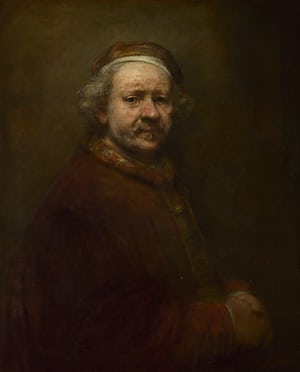
Self-Portrait at the age of 63, Rembrandt.1669, (Image courtesy of the National Gallery)

Self-Portrait at the age of 63, Rembrandt.1669, (Image courtesy of the National Gallery)

So often one hears of artists caught up in having to paint in a certain fashion because previous versions of the painting/drawing or whatever have sold well, and pretty soon, the art being created ceases to have the same impact and nears the situation of "pot boiler". Yes, of course, there are definitely economic considerations, especially now, but nonetheless, there is always this danger lurking of "arresting concentration and marring purity". In other words, the passion for creation has been dissipated.

Branding, images and self-promotion by Jeannine Cook

Just recently, it seems that every programme I listen to on National Public Radio or any magazine I read alludes to the necessity of branding in these times of high unemployment and economic woes. Very understandable, but as an artist, this is a topic that comes up, right from the moment one starts being an artist.

Listening carefully to the advice proffered and stratagems advised, I am often left thinking that the one thing I don't hear much talked about is passion. And yet, in the art world, without the passion to dream, plan, create and - frequently - promote, it is very hard and difficult sledding. So often, too, the passion that an artist feels is the best platform for other people to connect with the art created, making the artist the best sales person for him or herself. "You exist only in what you do" is a true observation when it comes to branding yourself in the economic and creative marketplaces. Federico Fellini, the wonderful Italian film maker, was very accurate in this observation.

Frederico Fellini in the 19560s

Frederico Fellini in the 19560s

Being true to a vision and belief in oneself means that there has to be a dialogue with that small inner voice that each of us has. The magic of any creative venture is that since each of us is different, responding to different experiences and environments, the art produced will most likely be individual and distinctive. That art can become a branding vehicle to make that artist's work recognisable, a vehicle to promotion if need be. In some strange way, too, an artist who is passionate and committed about making art creates work that rings true to the viewer, no matter what the type of art. Passion is one of the most fabulous attributes of a human being, it seems to me – in every realm of life – the essence of being alive. As Fellini also remarked, "There is no end. There is no beginning. There is only the passion of life."

Back to drawing - hooray! by Jeannine Cook

How nice it is finally to get back to drawing after travels and the imbroglio of daily life! Life drawing is a passport to sanity for me and makes me feel more centered again. That hush in the room as a dozen or so artists concentrate on drawing is like a benediction; it reminds me that there is this whole union of artists out there all over the place, quietly doing their best to create art in all sorts of versions and visions, all intense and passionate. A nice universe of which to be a part!

Time and time again, I read in the press the comment from an artist that only when he or she is actively involved in art-making is there a sense of coherence, even harmony, in that artist's world. When one is not drawing, painting or whatever the creation involves, then there is a feeling of disquiet, dislocation. It is true in my case.

As I peer at the intricacy of fingers clasped, or the play of light on muscles on an arm or across a back, time becomes meaningless, for a while. That is a good feeling. It makes me think of the quote I read the other day from Antoni Gaudi, the great Catalan Modernist architect from the later 19th and early 20th century (think of la Sagrada Familia church in Barcelona): "Everything comes from the great book of nature." Life drawing is certainly part of that enormous and endlessly fascinating tome.

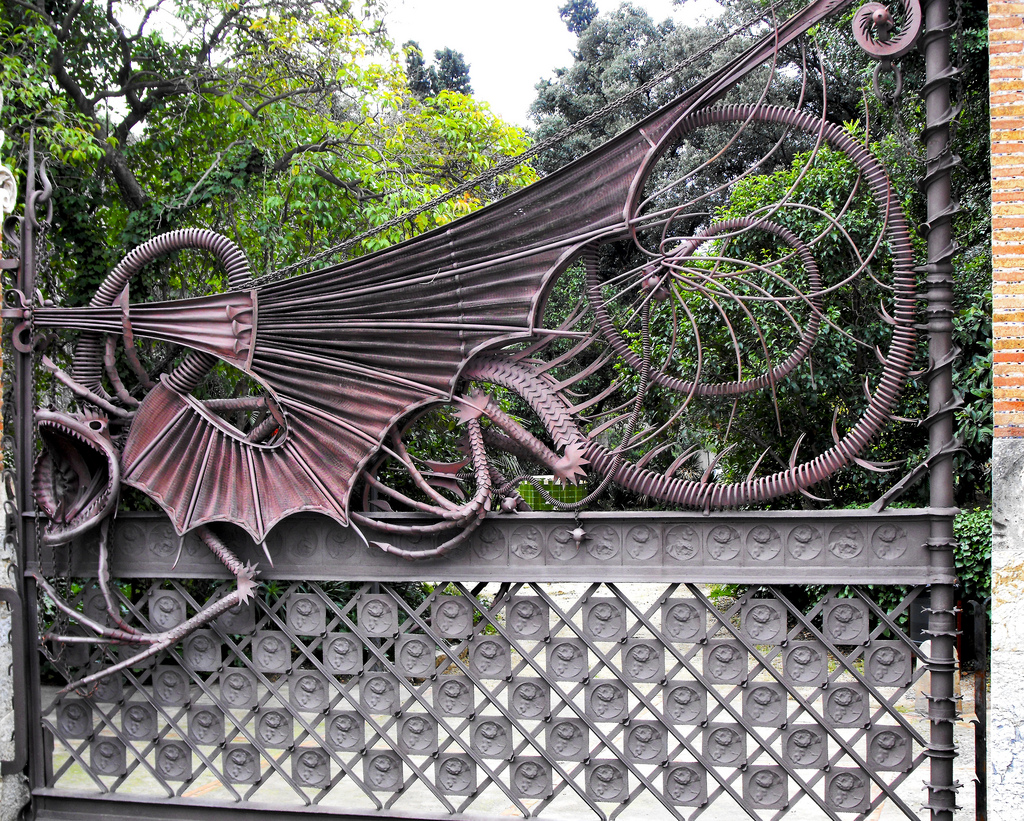
Main Gate, Dragon, Antoni Gaudi, Guell Park, Barcelona

Main Gate, Dragon, Antoni Gaudi, Guell Park, Barcelona

Another museum worth visiting in Mallorca by Jeannine Cook

There is another small museum which has recently opened in Mallorca which offers a delightful focus to a visit to the town of Soller, nestled in a grandiose valley beneath towering mountain ranges, to the north of the island. Can Prunera is a small museum of modern art, housed in a refurbished Modernist building built between 1909 and 1911, in the era when Antoni Gaudi's influence was paramount. 

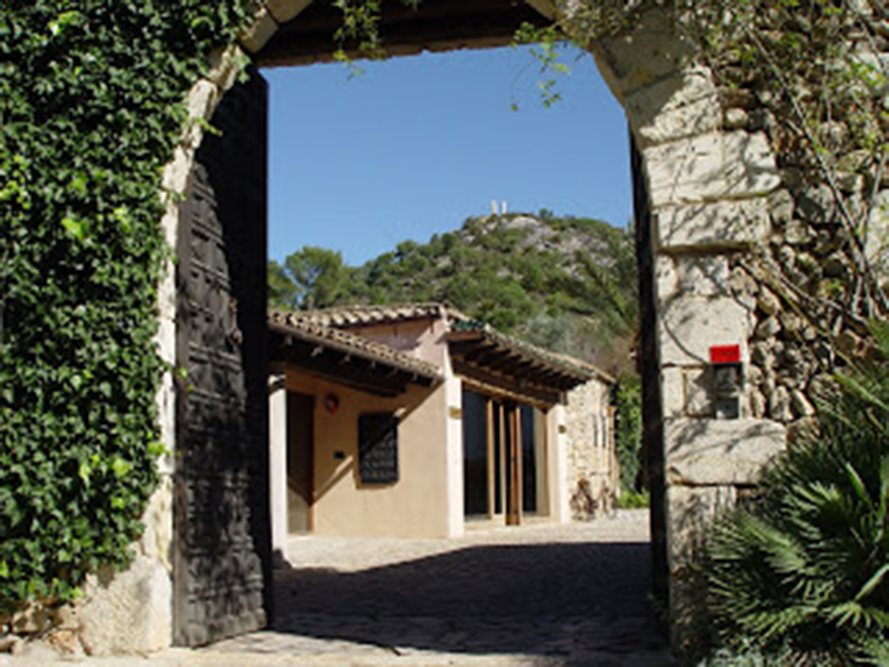
Facade of Can Prunera, Soller, Mallorca (Image courtesy of Can Prunera)

Facade of Can Prunera, Soller, Mallorca (Image courtesy of Can Prunera)

Many of the restored details of the house are delightfully typical of that time. Gaudi had indeed been working in Palma, restoring and improving the interior of the Seu, the wonderful Gothic Cathedral overlooking the sea. He had started work there in 1902 but by 1914, he had fallen out with the ecclesiastical authorities and stopped the work.  His influence, however, showed up in many Mallorcan Modernist buildings, and especially in Soller.

Can Prunera's staircase (Image courtesy of Can Prunera)

Can Prunera's staircase (Image courtesy of Can Prunera)

Can Prunera houses part of the art collection of newpapers owner, Pedro Serra, who has been instrumental in the refurbishment and launching of the museum through his Fundacion Tren de l'Art and Fundacion d'Art Serra.  His father apparently worked for the Soller-Palma train company for a time, and his son has completed this circle in time.

The day I visited the Museum, only a few rooms were open. Miró acquatints gladdened three galleries, and a collection of Picasso ceramics was exhibited in two other galleries. The connections between Picasso and Miró were underlined by big photo reproductions of the two of them together on different occasions. Apparently, most of the art planned for exhibition will have some connection with Mallorca. 

Off the beaten path in Mallorca by Jeannine Cook

There are plenty of hidden gems in Mallorca that reward the explorer.  One of them that had long tantalised me is the Yannick and Ben Jakober Foundation at Sa Bassa Blanca, just outside Puerto de Alcudia, on the eastern coast.

En route to Sa Bassa Blanca, Mallorca (Rundle Cook photographer)

En route to Sa Bassa Blanca, Mallorca (Rundle Cook photographer)

Nestled on long slopes sweeping down to sapphire waters, the buildings and gardens that form the exhibition spaces are an interesting mixture of foreign exoticism and Mallorcan architecture.  The house and partial exhibition spaces were built by Egyptian architect, Hassan Fathy, with white crenellated walls and an interior courtyard that harks back to the Alhambra.  Latticed windows and elements from Morrocco, Turkey and Andalucia all mingle to form an abode of great character, the backdrop to a collection of art and sculpture that underline Yannick and Ben Jakober's status of artist-citizens of the world.  Outside, oversized sculptures executed in Asia via Internet supervision by Yannick and Ben Jakober are scattered through the landscaped gardens.

View at the Fundación Yannick y Ben Jakober, (Rundle Cook photographer)

View at the Fundación Yannick y Ben Jakober, (Rundle Cook photographer)

The core collection that attracts visitors down the four kilometer country lane to the Foundation is hidden elsewhere.  Deep underground in a wonderfully converted Mallorcan "aljibe" or cistern is housed the "Nins" collection of children's portraits dating from the 16th to 19th century. 

The collection began when Yannick purchased a 19th century Mallorcan work by Joan Mestre, "Portrait of a Girl with Cherries" in 1972.

Joan Mestre i Bosch (Escuela mallorquina), Retrato de una niña con cerezas, c. 1843, oil on canvas, Fundación Yannick y Ben Jakober, Mallorca

Joan Mestre i Bosch (Escuela mallorquina), Retrato de una niña con cerezas, c. 1843, oil on canvas, Fundación Yannick y Ben Jakober, Mallorca


The collection has slowly grown to over a hundred works, mainly of the 16th and 17th century, mostly of children of important historical figures.  There are portraits from most European centres, from England to Italy.  About a third of the collection is on exhibit at any one time in the spacious "aljibe" galleries.

As you walk into the galleries, it is an introduction to aspects of art that are seldom underlined.  Not only are there lovely portraits, of all sizes and styles, many by well-known artists, but you learn how children were cared for, clothed and regarded down the ages.  Swaddled children are depicted, several times.  Little "adults" bedecked with elaborate accoutrements telling of their social status stare out seriously at the viewer.  Later, there were more informal portraits, when children were allowed to be a little more their real age.  Fashions changed, jewels evolved. Dogs come and go as companions, while birds often act as symbols.  Landscapes began to be introduced as backdrops to the portraits, rather than elaborately curtained interiors.  Some close-cropped head studies, particularly from the Netherlands and Spain, are poignant in their directness.  Others hint at illness and a complicated destiny.  Willy nilly, as you walk around the galleries, you find yourself caught up in the dramas and rarified atmospheres of these little children whose positions were often of such privilege that we know today of their existence in exquisite detail.  It is a unique experience to view this "Nins" collection.

Not only are there all these interesting aspects of art to savour, but in May, there is also a rose garden full of heritage roses of great beauty to enjoy.  Planted by Yannick Jakober, it is a perfect complement to everything else to visit at Sa Bassa Blanca.

The photographs above were taken by my photographer husband, along the road to the Foundation, and at the entrance to Sa Bassa Blanca.  Thank you, Rundle.

Back from Mallorca by Jeannine Cook

I can hardly believe that time does not pass at double speed when I am in Mallorca, but seeing the date of my last post here confirms that the weeks have indeed passed in due fashion. Now that I have left behind the brilliant crisp light of the autumnal Mediterranean, clean-washed and windswept, and returned to the soft golden scintillations of coastal Georgia's marshes, I have to refocus my eyes and my mind.

Palma's diversity of music, art and dance was as beguiling as ever, and there are places about which I will write more in depth. However, there was a quote I found from Vincent van Goh, writing to his brother, Theo, which somehow seemed very apt for this visit home to Mallorca. I was in a very lovely place, Son Brull, watching the light play over the mountains in the late afternoon. Above me were wondrous old gnarled olive trees, possibly some of those planted by the Romans who lived in the Pollentia area twenty-two centuries ago. There was a soft tinkling of bells as a flock of sheep drifted into sight as they slowly but deliberately climbed the terraces higher and higher to grazing up the mountain's flanks. The grey dry stone walls and the warm golden brown of the olive tree trunks served to emphasise the subtle green of the olive leaves as they shimmered in the slight breeze. Below, the last glow of pink summer oleanders warmed the foreground and caught the evening sunlight.

In the same tones of delight and wonder, Van Gogh wrote, "Ah, my dear Theo, if you could see the olive trees at this time of year – The old-silver and silver foliage greening up against the blue. And the orangeish ploughed soil. It’s something very different from what one thinks of it in the north – it’s a thing of such delicacy – so refined. It’s like the lopped willows of our Dutch meadows or the oak bushes of our dunes, that’s to say the murmur of an olive grove has something very intimate, immensely old about it. It’s too beautiful for me to dare paint it or be able to form an idea of it. The oleander – ah – it speaks of love and it’s as beautiful as Puvis de Chavannes’ Lesbos, where there were women beside the sea. But the olive tree is something else, it is, if you want to compare it to something, like Delacroix." (Ah mon cher Theo, si tu voyais les oliviers à cette epoque ci – Le feuillage vieil argent & argent verdissant contre le bleu. Et le sol labouré orangeâtre.– C’est quelque chôse de tout autre que ce qu’on en pense dans le nord – c’est d’un fin – d’un distingué.– C’est comme les saules ébranchés de nos prairies hollandaises ou les buissons de chêne de nos dunes, c.à.d. le murmure d’un verger d’oliviers a quelque chose de très intime, d’immensement vieux. C’est trop beau pour que j’ose le peindre ou puisse le concevoir. Le laurier rose – ah – cela parle amour et c’est beau comme le Lesbos de Puvis de Chavannes où il y avait les femmes au bord de la mer. Mais l’olivier c’est autre chôse, c’est si on veut le comparer a quelque chôse, du Delacroix.) Van Gogh was writing on April 28th, 1889, while he was staying in Arles.

Olive Trees, Saint-Rémy, November 1889, Vincent Van Gogh,, (Image courtesy of the Minneapolis Institute of Art)

Olive Trees, Saint-Rémy, November 1889, Vincent Van Gogh,, (Image courtesy of the Minneapolis Institute of Art)

The Olive Trees, 1889, Vincent van Gogh, (Image courtesy of MOMA)

The Olive Trees, 1889, Vincent van Gogh, (Image courtesy of MOMA)

I could understand his inhibitions about trying to paint the olives - they are such extraordinary trees that they defy many attempts by artists to depict them. I have preferred to draw them in silverpoint, because of that oxidised silver green Theo talks of, but I never seem to have sufficient time to sit down and try to do them justice when I am in Mallorca. Manaña!

Hurray for exhibitions of Master Drawings! by Jeannine Cook

It always delights me when I see that another exhibition of Master Drawings is on display, to celebrate this extraordinarily simple, yet sophisticated, diverse and direct medium.

I see that the Kunstmuseum in Basel, Switzerland, is opening a survey of 101 drawings from their huge collection in an exhibit entitled From Dürer to Gober. The earliest is apparently a 1400 silverpoint from the French/Burgundian court, where drawings of stylised, elegantly clad men and women seem almost to step from pattern books. Other silverpoints use the favourite method of the artist drawing on tinted grounds, which allows a wonderful play of highlights done in white gouache - often a perfect way to get rhythms going in the drawing and basically have some fun. On the Kunstmuseum's website's main page, the silverpoint portrait on green-turquoise ground has the most wonderful fur hat mostly done in white gouache. I can really relate to this white gouache highlighting - it is occasionally hugely satisfying to use when drawing in silverpoint!

The Heads of the Virgin and Child, by Raphael, ca. 1502, silverpoint on warm white prepared paper, 10 x 7. (Image courtesy of The Trustees of the British Museum, London

The Heads of the Virgin and Child, by Raphael, ca. 1502, silverpoint on warm white prepared paper, 10 x 7. (Image courtesy of The Trustees of the British Museum, London

Standing Woman,1460-69, by Fra Filippino Lippi. (Image courtesy of The Trustees of the British Museum, London)

Standing Woman,1460-69, by Fra Filippino Lippi. (Image courtesy of The Trustees of the British Museum, London)

Another important Master Drawing exhibition is now also on display at the National Gallery of Art in Washington, DC. From Renaissance to Revolution: French Drawings from the National Gallery of Art, 1500-1800. 120 drawings done by French artists and foreign artists working in France - what a feast for the eyes! Great, well-known artists, but apparently, also less-known ones, so it means that there is a richness and depth that will reward any lucky visitor to the show. I was fascinated to see that the earliest work is done about 1500 and that it is a landscape done in watercolour, of all media. "The Coronation of Solomon by the Spring of Gihon", it was done by the miniaturist Jean Poyet, who worked for Anne of Brittany, Queen of France.

I remember, not so long ago, when it was very unusual to find an exhibition of drawings, let alone Master Drawings. Now that the Drawing Center and other such institutions exist, and that both the public and artists themselves are appreciating much more the intrinsic interest and beauty of drawings, in all their diversity, there are so many more opportunities to see drawings displayed. It used to be that The Morgan and the Metropolitan Museum in New York, the Getty, the Louvre, the British Museum and others in European capitals were the bastions of such shows. Now, that has changed. A list in a spring 2009 issue of the Berkshire Review for the Arts is eloquent - lots of drawings on which people could feast their eyes earlier this year.

Vive le dessin!

Dutch Utopia exhibit at Telfair Museum by Jeannine Cook

Savannah's Telfair Museum of Art has just opened an unusual and most interesting exhibition, Dutch Utopia. Using art already in the Museum's permanent holdings as a springboard, curator Holly Koons McCullough and her team have assembled a large number of works by American artists who worked in artists' colonies and small unspoiled villages in the Netherlands during the second half of the nineteenth century.

There are plenty of canvases large and small by artists who remain well known today, from John Singer Sargent to Robert Henri and William Merritt Chase. Then there are the delights to be savoured thanks to many artists whose names are less familiar today, from George Hitchcock to accomplished women artists like Anna Stanley and Elizabeth Nourse. Traditional compositions of landscape or interiors suddenly change to daring works which feel much more contemporary to us today. Watercolours hold their own with oils on canvas, some huge. It is an interesting mix of works and takes one to a totally different time and place, in a tight society living beneath amazingly luminous Northern skies, where wind and sea dictate every aspect of life and, according to one contemporary comment, there is a great deal of the colour blue in sunlight. The American artists lived there for varying lengths of time, but they all seemed to concentrate on eliminating from their work any hints of the changes that Europe had been undergoing as the Industrial Revolution reached its zenith. The Holland they portray had barely changed from the work Rembrandt and Franz Hals knew.

I found myself contrasting many of the scenes of Dutch women, be-coiffed and be-clogged, monumental and utterly Northern, with those by the Pont Aven school of artists who were depicting the Breton women with their typical coiffes and, yes, clogs too, on occasion. Working at about the same time, Gaugin, Sérusier, Emile Bernard and a host of other French artists were working in the sleepy little Brittany towns of Pont Aven or Le Pouldu. They were, to my eye, far more adventurous in their approaches than the Americans in the Netherlands, but each community produced some wonderful art.

The Ghost Story, 1887, Oil on canvas, Walter MacEwen , (Image courtesy of The Cleveland Museum of Art, Cleveland, Ohio)

The Ghost Story, 1887, Oil on canvas, Walter MacEwen , (Image courtesy of The Cleveland Museum of Art, Cleveland, Ohio)

In Holland, 1887,Oil on canvas, Gari MelchersGari Melchers Home and Studio, Fredericksburg, Virginia

In Holland, 1887,Oil on canvas, Gari Melchers
Gari Melchers Home and Studio, Fredericksburg, Virginia

The Telfair's exhibition runs until January 10th, 2010, before moving to the Taft Museum of Art in Cincinnati, the Grand Rapids Art Museum and the Singer Laren Museum in the Netherlands.
It is well worth seeing at one of its venues.

Different eyes, same area by Jeannine Cook

Yesterday, I talked of artwork that Marjett Schille and I created as Artists in Residence on Sapelo Island, courtesy of SINERR, the Sapelo Island National Estuarine Research Reserve.

Sitting virtually side by side, we created very different views of the same Green Pond area, because we are individuals, each bringing to the subject matter our own life and artistic experience and our artistic eye.

Another example of our different reactions to the same scenery is shown by two other pieces of art we created on the wonderful wild sand dunes fronting the Atlantic Ocean along Sapelo. We both focused on these sand dunes with their special ecology, so valuable to the protection of the island lying to their west. But these images show up the differences in approach.

Mafrjett Schille, Sapelo Dunes, mixed media (Image courtesy of the artist)

Mafrjett Schille, Sapelo Dunes, mixed media (Image courtesy of the artist)

 Sand Dune Colony, Sapelo, silverpoint, Jeannine Cook artist

 Sand Dune Colony, Sapelo, silverpoint, Jeannine Cook artist

My silverpoint of A Sand Dune Colony, is a huge contrast in approach to Marjett's lovely watercolour of the sand dunes themselves. Just looking at her image reminds me of the sea breezes softening the hot, hot sun beating down on us as we worked.

Each of us artists can produce a wondrous diversity of work from the same material. It really allows one to echo the French, "Vive la différence"!

Same place, different eyes by Jeannine Cook

I was preparing a CD of artwork images for an exhibition proposal yesterday and found it fascinating to look again at the art. The work was done by my dear artist friend, MarjettSchille, and me while we were Artists in Residence on Sapelo Island on the Georgia coast. The Sapelo Island National Estuarine Research Reserve (SINERR) staff had generously awarded us these stays on the magical barrier island.

Sometimes, working plein air, Marjett would go off in one direction and I would find something else to paint or draw. Other times, we would settle down side by side to depict basically the same scene. And as I was reminded again, the results are so different. See for yourselves.

The Green Pond, Sapelo, watercolour, Jeannine Cook artist

The Green Pond, Sapelo, watercolour, Jeannine Cook artist

the Green Pond, Sapelo, watercolour, Marjett Schille (Image courtesy of the artist)

the Green Pond, Sapelo, watercolour, Marjett Schille (Image courtesy of the artist)

The different approach between us points up the innate individuality of each artist. Each of us brings to a work our own experience, choices, eye, technical expertise and individual passion and concern. We thus make different choices as to what to feature, what to emphasise and highlight, what mood to portray. Some of these choices are subconscious, deriving from knowledge of the area and concerns about it. Others are very conscious and fall into the domain of artistic technique and skill.

Such diverse results enrich the public discourse about art, individuality and each artist's unique eye. The artist's eye, or - in essence - hallmark, enables that artist to produce work that is recognisable and coherent for the viewing public, even with diversity of subject matter. I loved being able to measure the divergences and convergences in Marjett's and my work as we both celebrate Sapelo's peaceful Green Pond.