Travels and art by Jeannine Cook

In the August edition of Arte, published in Spain, there is an interesting series of articles about travel's transformative power for artists, which ranges from David Roberts (Egypt) and Velaquez (Italy) to Klee (Tunis), Brassai (Paris)or David Hockney (California). Historically, artists have travelled to learn, to enquire, to expand their horizons or sometimes to flee. Think of Albrecht Durer, who so assiduously recorded his 1520-21 trips to the Netherlands in silverpoint journals. Remember Gauguin's trips to the South Seas, with extraordinary results in his art. But in more modern times, journeys have become easier and often swifter. Sometimes, that is all that suffices to allow an artist to make quantum leaps in his or her development. Other times, the results are not so felicitous.

It perhaps all reverts to that issue of a "sense of place". If you are somewhere new and trying to grapple with different conditions of light, topography, culture, colours..., it takes time to filter all that information into one's subconscious. The resultant art often shows up the learning curve, willy-nilly. In the Arte article entitled "Viajes Pintados" (Painted Journeys), the author, Raquel Gonzalez Escribano, posits that in the past, the slower tempo of journeys to other places allowed for a transformative depth and transcendence in work - paintings, architecture or sculpture - that is often absent today. She reminds us that Delacroix made one major trip in his life, through Spain to North Africa in 1832, and that time spent painting and drawing indelibly transformed his subsequent work. Indeed, Delacroix' journey influenced artists who followed him, and consequently changed the way we all view the world to some degree.

Two Moroccans Seated In The Countryside , watercolour,  Eugene Delacroix, Private collection

Two Moroccans Seated In The Countryside , watercolour,  Eugene Delacroix, Private collection

Ms. Gonzalez makes a persuasive case for all of us artists slowing down when we travel, allowing ourselves time to absorb and understand new horizons. Then, one hopes, we will be able to produce work of depth and quality. Returning to a place one enjoys and grows to know makes sense, in this context, even if it is travelling from one's home base. (Think of the summer art colonies in the North East for New York artists, for instance, which flourished from about 1900 onwards.) Plus ca change, plus ca reste la meme chose... Despite all our technology and speeded-up world, artists today still function mentally in the same way as in previous times. We still need to develop that sense of place.

Fragility in Time - an exhibit of antique glass by Jeannine Cook

In Palma de Mallorca, at the Sa Nostra Savings Bank Foundation headquarters, there is the most exquisite and fascinating exhibition currently on display of antique glass from collections in Catalonia and from Sa Nostra's own collection. Diminutive, elaborate or simple vessels, of great variety and elegance, they spoke to one of an enormous span of time, made all the more eloquent by their fragility. Looking at these diverse pieces of glass, it seems nothing short of miraculous that such artistry could endure so long in pristine form.

As I find so often the case when looking at such an exhibition, this span of time brings one up short in salutary fashion about the so-called importance and skills of our own times. Glass was one of the very first materials that man elaborated - from earth, fire, air and water, the four basic natural elements. Not only does glass possess beauty, but it has certain unique characteristics - it is odourless, it does not confer any taste whatsoever, it is reusable and frequently can be recycled. The fact that glass was probably discovered, by chance, about 5000 BC and has not really changed at all, in its diverse possibilities of use, is an astonishing fact.

Pliny (AD 23-79) recounts that Phoenician merchants transporting stone were the first to discover glass, when they would go ashore and cook their food on circles of stones. The nitrate stones would melt in the fire's heat, mix with the beach sand and water to form an opaque liquid, the first glass. Stone Age man was also using natural glass or obsidian for his arrow heads. In the Book of Job, chrystal and gold are mentioned in the same verse (Job 28.17) as of great value. Cuneiform texts from Mesopotamia also talk precisely about how to make glass.

Certainly the first beautiful beads in the Sa Nostra exhibit were indicative of the luxury and value of these opaque small beads, made in Egypt and East Mesopotamia by 3.500 BC. Slowly, the glass makers developed hollow glass, and pieces from 1,600-1,500 BC have been found in North Syria and Mesopotamia, often using blue glass, with coloured glass strands applied, in their vases and other small pieces that imitated the shape of clay vessels. Apparently, there was already an example of the coincidence of discovery, so often seen since in many disciplines: hollow glass was independently being produced in Mesopotamia, Mycenae, China and the North Tyrol about 1.600 BC.

History does indeed repeat itself : Thoutmosis III, Pharaoh of Egypt (1504-1450 BC), brought Asian glass makers to Egypt as prisoners to develop the glass industry. His seal has been found on glass pieces. Glass remained a luxury item, however; it was regarded as important enough a commodity to have a glass making manual included in Assyrian King Ashurbanipal's magnificent library in 650 BC. From the archaeological finds and these documents, we know that the Eastern Mediterranean, was a major glass making centre, but that until about the first century BC, vessels were formed by rolling molten glass onto a clay/dung core. Despite that laborious process, the results are just as delicate and elegant as the later versions of blown glass. Glass blowing was developed in Syria and Babylonia during the period 27 BC - 14 AD, with glass blown through a tube, as today, but also blown into a mould. Sa Nostra's examples of both methods were memorable, mostly small but wonderfully diverse in colour and form.

Phoenecian glass vessel

Phoenecian glass vessel

The Romans of course were the magnificent propagators of the glass industry, spreading glass and glass making knowledge far and wide though their empire. Many of the pieces in the Sa Nostra collection came from finds in the neighbouring Balearic island of Ibiza, as well from the Spanish mainland. Sidon and Alexandria remained important glass centers and many of the pieces in the exhibition came from those cities. Blown glass permits more diversity of shape and thus allows glass to compete much more directly with metal and ceramic vessels, heretofore the only ones widely used in daily life. Glass became less of a luxury item, more useful for all, diverse yet standardised, and rapidly produced. As the Roman Empire waned, glass manufacture became more utilitarian and less diverse, whilst elsewhere, its elaborate manufacture continued, eventually to flower again in the Muslim world.

Roman glass : Miniature light green glass bottle with a rectangular shaped body, indented base

Roman glass : Miniature light green glass bottle with a rectangular shaped body, indented base

The 13th and 14th century saw the apogee of Muslim glass manufacture and then glass making skills declined to the utilitarian once more. Later centuries brought more peaks and valleys in glass manufacture, until the revival of recent centuries. Today's wonderful glass artists, from Murano to Mallorca itself to individuals like Dale Chilhuly, William Morris and many others, have become the new alchemists of the glass world, fantastic heirs to those long-ago Mesopotamian and Egyptian artists of the small, the exquisite and the fragile. Go and see this exhibition at Sa Nostra if you are in Palma de Mallorca before August 26th. You will be entranced.

Art and the Sense of History by Jeannine Cook

The brilliant sunshine and azure Mediterranean skies in Mallorca seemed to belie the strange atmosphere of a holiday island targeted again by ETA bombs, twice in two weeks. A subtle undertow to my daily life reminded me that Spain has seen many such instances of violence from ETA in the last 50 years. So many people have come down south from the Pyrenees and northern regions of Spain over time to bring amazingly positive developments and some terrible events.

Another example of people moving a long, long time ago from the north was publicised while I was in Palma. Apparently the oldest known map has been deciphered and the news published this month in the Journal of Human Evolution, but I read of it in El Mundo in Spain. The 13.660 year-old stone map, incised on a marl stone (soft outside and harder inside), was created by hunters coming into Navarra in Northern Spain and sheltering in a cave in Abauntz. The stone, some 7" x 5" by less than an inch thick, was found in 1993, but the University of Zaragoza team did not realise what it was until, by chance, Pilar Utrilla, saw that one of the details was the silhouette of a mountain visible from the mouth of the cave, Monte San Gregorio. Not only was the mountain recognisable, but the early artist had also drawn herds of ibex on the mountain. From this realisation, the researchers were able then to understand the layers of information that had been incised, for the benefit of future hunters coming to the area. The map shows mountains, meandering rivers, meadows and areas of good foraging and hunting, a real treasure map in essence.

Image of the rock found in Abauntz cave with a map etched on it

Image of the rock found in Abauntz cave with a map etched on it

The Magdalenian artist, who was working about three thousand years after the Altamira cave paintings were created, knew how to work in perspective. The nearer animals are larger and more detailed than the distant ones which are more schematic. There are even incised dots which may represent the bellowing male deer trying to attract the does. The map clearly shows the skills of spatial awareness and planning, to say nothing of the artist's hunting skills and knowledge of the animals. Near the map, the archaeologists also found a stone lamp and another stone representing a horse's head.

Somehow, as I read about this fascinating find from nearly 14,000 years ago, I found it made the current violence and political frenzies surrounding us pale in significance. Once again, a long-distant and anonymous artist had, by simple, decisive skill in incising a stone, reminded me of the arc of time and the magical transmission of knowledge and beauty. It is like a bell that rings true: we all know that these are small but extraordinary links, human to human, down time. And how suitable that such a map, the only complex depiction of a landscape known in Europe, should be discovered in our era of space exploration. Again, things are put in perspective.

Trusting your Eyes by Jeannine Cook

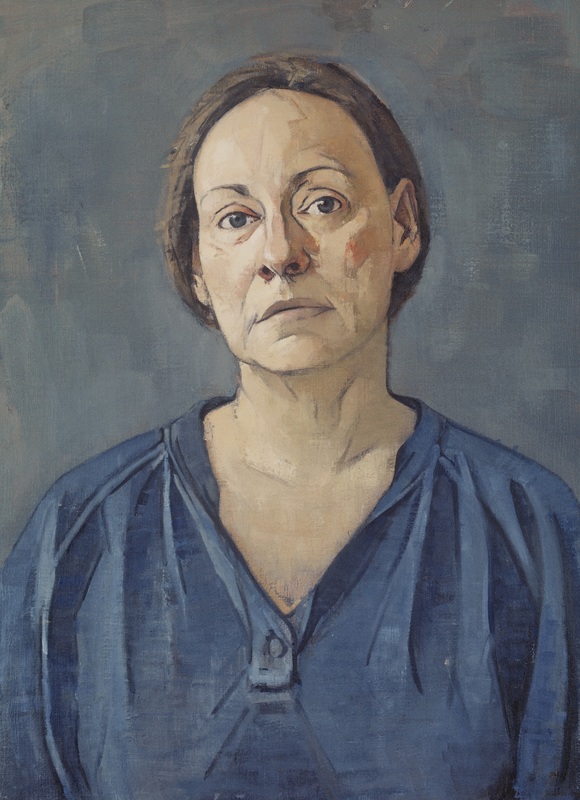
Mary Beth McKenzie, the highly acclaimed figurative artist observed, "Artists make things so much easier for themselves when they learn to trust their eyes".

Self Portrait, Mary Beth McKenzie (Image courtesy of the artist)

Self Portrait, Mary Beth McKenzie (Image courtesy of the artist)

I was alluding to this aspect of art-making yesterday in a blog about "the selective eye". The artist's eye is a most important tool, not only for observing and informing the artist, but also in the other sense, the inner eye, which develops with experience, training, discernment, time and work.

Trusting one's eyes is almost the first important step towards becoming an artist. I was lucky enough to learn to draw by the Nicolaides method, always drawing from real life, using contours and gesture drawing to learn of the subject. "There is only one right way to draw – physical contact with all sorts of objects through all the senses," Kimon Nicolaides declared, and it is true, I have found, for me. His method involved not looking at the paper, but fixing one's eyes intently on the subject being drawn, to hone the eye-hand connection.

Once that eye-hand connection is made, you begin to be able to trust your eyes and know that somehow, almost miraculously, it sometimes seems, the drawing will work out alright. Later, I learned to trust my eyes in terms of colour selection and assessment, so that the paintings seem, mostly, to work from the colour point of view. But this trust is an ever-developing, ever-active business. The more you draw and paint, the more you observe and use your eyes in every possible way, the better your eyes serve you to create art. Precious tools for an artist - it behoves us all to take care of our eyes, literally and figuratively!
 

The Selective Eye by Jeannine Cook

As I watched an episode of Art Wolfe's Travels to the Edge on public television, I was constantly reminded of the parallels between his criteria as a photographer and those of an artist, especially an artist working plein air. When you arrive somewhere and you are hoping to create images of beauty, impact and meaning, you almost have to listen to your inner voice to help decide when and where to position yourself to record such possible images. Frequently there is not much time to waste - the scene changes, the mist lifts, the light alters, people or animals move away - and the image has evaporated.

With time and experience, you can learn to analyse time and light situations to help you find the perfect contre-jour lighting for a scene or the ideal position from which to see dawn break over a landscape you want to record, for instance. It is basically a question of being really observant. Of course, photography is considerably faster than painting or drawing. Nonetheless, it is sometimes surprising how much information one can quickly record as an artist if one is excited enough about a scene to want to capture it properly. Many artists use a camera as an aide-memoire too, but personally I find that the two-dimensionality of the recorded image, with its frequent paucity of detail, is not very helpful then to record another two-dimensional painted or drawn image. (There are also those indefinable extra dimensions you experience - of sounds, scents, feel - that somehow all filter into artwork created in situ, and are often absent from art created from photographs.) Nonetheless, however you create art, you still need to be able to choose your vantage point from which to record an image. Often, it needs to be a quick, almost visceral decision.

Composition, light, colour - they can all underpin what you want to say - as a photographer or as a painter or draughtsman. Nonetheless, experience also teaches one that you can start out trying to record a scene, urban, rural or whatever, and within short order, the artwork itself has taken over, and the image starts to dictate its own progress. You are recording the passing of time, in essence, especially if you are working from life. There is another ingredient in image-making: that of the artist's frame of mind that prevails when one is photographing, drawing or painting. How one feels, something one is thinking of, a phrase in one's head at the time, music, rustling leaves or birdsong heard at the time, the weather one is experiencing - they all influence the art being created. Consciously or unconsciously, each of us is a form of barometer, and our art shows our "weather", in the choice of scene, the way it is depicted and its implicit messages.

Each of us also has an innate predilection for certain types of scenes to which we respond and will want to use to create art. Our individualism is important and we all need to believe in our own eye and approach. Nonetheless, it does not hurt to have a knowledge of great master works, paintings, drawings, photographs... They inform our choices too. After all, as Picasso remarked, "Good artists borrow, great artists steal." So as an artist or photographer scouts for possible images to record, that background knowledge is part of the sixth sense that each of us needs to start the act of creating art.

Les Demoiselles d'Avignon , Picasso, 1907,(Image courtesy of  MOMA, NYC)

Les Demoiselles d'Avignon , Picasso, 1907,(Image courtesy of  MOMA, NYC)

Carol Prusa's silverpoints by Jeannine Cook

A fellow silverpoint artist, Carol Prusa, Professor at Florida Atlantic University, currently has an exhibition, Silver Linings: Delicate Drawings, at the Polk Museum in Lakeland, Florida. She has been in two exhibitions with me at museums and I have been more and more fascinated and impressed with her work.

Silverpoint is a drawing medium which basically had its beginnings in the 12th century with the monks in monasteries working on illuminated manuscripts, but Carol has achieved the most perfect update of this medium for the 21st century. Using the same marks made with a silver stylus, she has evolved from the flat surface of vellum, parchment, paper or board to spherical acrylic surfaces on which she draws. She also shows herself to be fully of our technological times, sometimes combining the domed drawings with fiber optics or video.

Carol Prusa in her Studio

Carol Prusa in her Studio

The drawings she conceives are the most hypnotically compelling amalgam of delicate patterning and abstract intellectual concepts, alluding to biology, philosophy, theology or physics. Yet as you are drawn into their delicacy and beauty, the underpinnings of this deep and informed thinking that led to their creation become the background music. Knowing how slow the medium of silverpoint can be to develop, I cannot but marvel at the amount of detail, and thus time, that characterise Carol's work. Layer upon layer, pattern after pattern, the drawings are built up to an incredibly satisfying and sensuous harmony. As Daniel Stetson, Executive Director of the Polk Museum wrote in the elegant catalogue for the exhibition, "... it is through countless tiny details working in unison that beauty of both form and function are created. "

Permeable, Carol Prusa, silverpoint sphere

Permeable, Carol Prusa, silverpoint sphere

Silverpoint is a medium that lends itself to the clear rendering of such "tiny details". Historically, silverpoint has been the medium of choice for scientific drawings, such as botanical studies, with even such artists as Judith Leyster, using it. ( Incidentally, it is the 400th anniversary of Leyster's birthday, celebrated with a wonderful exhibition currently at the National Gallery of Art in Washington.) Leyster did a study of a tulip in silverpoint and watercolour in 1643; she was one of the last to use silverpoint for many a long year after that, because everyone forgot about the medium until the early 19th century. When silverpoint was "rediscovered" - because Cennini Cennini's manuscript of his 1390 how-to art book, Il Libro dell'arte, was found in the Laurentian Library in Italy and artists began to learn about this drawing medium - most of the artists promptly used it for drawings requiring fine lines and delicate details. Carol is the most perfect heir to this heritage. Her drawings provide insights into the world in an elegantly rigorous fashion that bridges science, art and pure visual pleasure.

Rush off and see this exhibition if you are in the Lakeland area of Florida. You will be rewarded.

Playing in art - revisited by Jeannine Cook

I talked in an earlier blog about the insights into the value of play in our daily lives and the role that play has in allowing artists to develop and create. I was reflecting again on the way artists can play in creating art, and realised that there is another aspect to this activity of play.

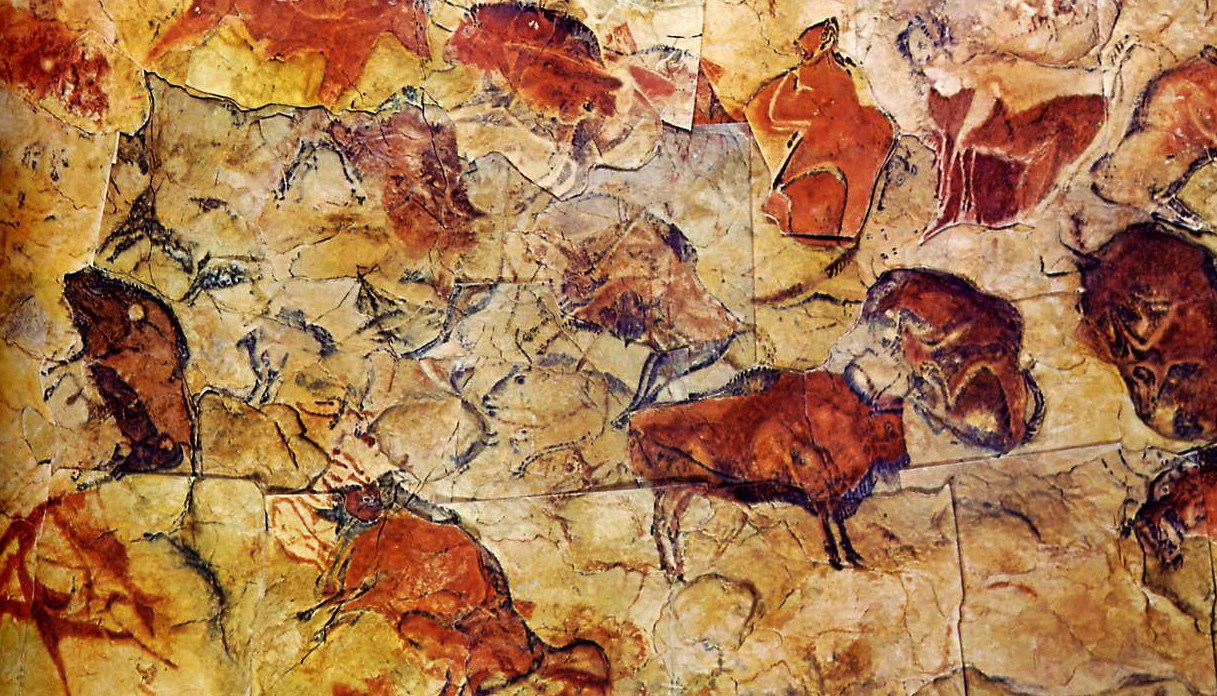
When I am drawing or painting, a private game that I play with myself is seeing how I can convey the essence of my perceived reality - be it landscape, flower, person - with the minimum of lines (in drawing) or colour (in painting). I try to distill the subject to the absolute minimum of detail which still allows the viewer to recognise (more or less!) what is being portrayed. Each work is an endlessly interesting challenge in this respect. Organising abstraction as visual elements that convey reality is really a game to see how best one can succeed in minimalist depiction of the subject matter. Artists have done this since time immemorial - think of the essence of bison galloping across the walls of Altamira or the aurochs of Lascaux. Dolphins cavorting across the frescoed walls of Minoan palaces and octupii reaching around their painted ceramic jars come to mind too. In all these cases, the imagery is distilled and organised almost to the point of abstraction, yet utter realism results - powerful, arresting and memorable.

Altamira Caves, rupestrian art

Altamira Caves, rupestrian art

Dolphin Fresco, Knossos, Late Minoan Period (ca. 1500 BC)

Dolphin Fresco, Knossos, Late Minoan Period (ca. 1500 BC)

Old Masters, from Renaissance times onwards, also skilfully selected and simplified design elements to make their compositions more successful and beautiful. They used the abstraction of closely related values joined together in massed forms, which allowed the viewer's eye to be led to the focal points which are depicted realistically. Abstraction was certainly not the "invention" of the 20th century. If you carefully study any good drawing or painting, of no matter what era, that is purportedly realistic, you can see all sorts of amazing elisions, squiggles, blobs and lines that seem to have nothing to do specifically with the subject being depicted. Yet, when looked at as a whole, the art is convincing. I am sure, too, that the artist was probably having fun and enjoying playing as the work progressed.

Beginning with a drawing by Jeannine Cook

Today I was out painting on the marshes, and the reflections and patterns were unbelievable as the tide flowed serenely in. Working in watercolours, plein air, not from photographs, one can become schizophrenic as things change so quickly. Added to that changeability of light and pattern, you have a lot of humidity, so watercolours seem to take for ever to dry. So I was doing what I seldom do, doing two paintings concurrently.

Pretty soon, I remembered, a little wryly, a remark I found that Hans Holbein the Younger had made: "everything began with a drawing..."

Portrait of Sir Thomas Elyot, 1532–34, chalk, pen and brush on paper (pink-primed paper), Hans Holbein the Younger (Image courtesy of the Royal Collection)

Portrait of Sir Thomas Elyot, 1532–34, chalk, pen and brush on paper (pink-primed paper), Hans Holbein the Younger (Image courtesy of the Royal Collection)

How true! If I had not made a relatively loose but nonetheless careful drawing before I started each painting, I would have been in deep trouble. In one painting, I got fascinated with the reflections of three docks along a creek edge, and the play of light on their pilings, roofs, etc. However, between the drawing and later (sort of!) completion of the watercolour, people had moved boats around, the tide had come in, the sun had gone over and clouds had come up. Without at least a rough "road map" underneath, I would not have known how to continue the painting at some points.

I think I first learned to the value of an initial under-drawing for a watercolour many, many years ago in Alaska. I was doing a landscape of the dramatic mountains and inlets near Homer, and to my delight, there was a little red plane parked at just the right focal point. I had drawn it very roughly, intending to return in more detail as I got more to painting that part... Painting away happily, I suddenly realised that I was hearing the sound of a plane engine starting up. Before I could remedy my omissions of detail, the little red plane had sailed up into the air and disappeared! So much for my focal point!

In other words, draw, draw and draw again - one never regrets it.

Going miniature by Jeannine Cook

This morning, when hunting for a copy of Omar Khayyam's Rubaiyat on our bookshelves, I happened on a forgotten but delightful little book of portrait miniatures published in England some while ago. I promptly sat down to savour of the wondrous skill of the heirs of Jean Clouet who had pioneered such tiny portraits when he was Court Painter to Francois I of France in the early 1500s.

Portrait of Charles IX, 1560s, Italian pencil and red chalk, Francois Clouet, (Image courtesy of the Hermitage Museum)

Portrait of Charles IX, 1560s, Italian pencil and red chalk, Francois Clouet, (Image courtesy of the Hermitage Museum)

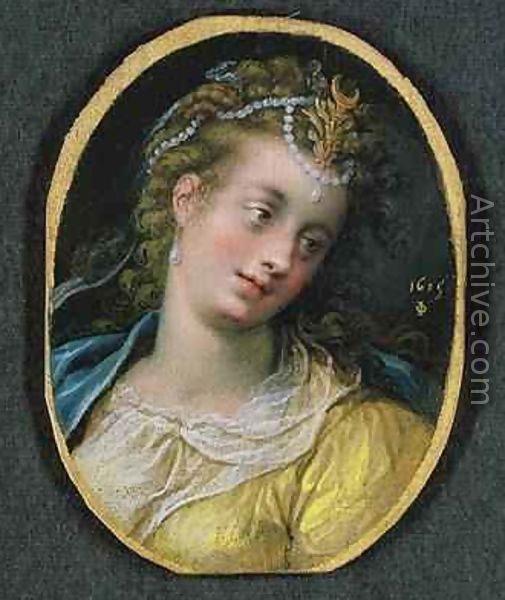
His son, Francois Clouet, and Hans Holbein the Younger followed and developed this genre of limning, as miniature-painting was called. During Elizabeth I's reign, the English Court enthusiastically favoured miniature portraits for political purposes as well as love and desire as they were expressed in that era of courtly love. Luxurious, bejewelled frames surrounded gems painted by Nicholas Hilliard, Hans Ewoth, Hilliard's pupil, Isaac Oliver, and others.

Diana 1615 - Isaac Oliver

Diana 1615 - Isaac Oliver

The next generation was equally gifted in limning, with Isaac's son, Peter Oliver, and Samuel Cooper producing extraordinary works. Cooper's miniature of Oliver Cromwell has an amazingly contemporary feel to it and an almost photographic quality in the likeness, including the warts which apparently Cromwell expressly instructed him to record!

First painted on paper in watercolour and gouache, the miniaturists gradually evolved towards painting on ivory, with later artists such as Rosalba Carriera achieving great luminosity on this surface. Miniatures continued to be greatly esteemed, especially in England, but their second great flowering came when court painting was revived under the influence of Joshua Reynolds and Gainsborough. Miniaturists George Engleheart and Richard Cosway were among the leading artists during the period 1750-1850. In France, too, even after the Revolution, miniatures enjoyed great success, with Jean-Urbain Guerin and Jean-Baptiste Isabey using their great skills to combine simplicity of line and form with exactitude of subject matter. Photography's invention sounded the death knell for miniatures. As I gazed at the exquisite small images in the book I had found, I could not help reflecting on the difference between these works of art which served as portrait-records of all manner of people down the ages and the small thumbnail photos we all post on websites like Facebook today as representative of ourselves for others to see.

One of the most wonderful collections of miniatures is held by the Wallace Collection, Hertford House, in London's Manchester Square. The collection dated mainly from the 17th and 18th century, and the variety and jewel-like quality of these miniatures have always remained fixed vividly in my memory. Well worth a visit. Of course, the other two London museums boasting important collections of miniatures are the V & A and the National Portrait Gallery. Another small and lovely collection I happened on is at the Gibbes Museum in Charleston, SC - again with the British heritage influencing the commission of many of these miniatures by the early South Carolinians.

I always love the many coincidences in life that come along. In the case of finding this book on miniatures, it drove home to me the interesting technical considerations a miniaturist has. Size and thus proportions, the amount of information to include and the technical considerations of surface, paint medium and even the format of a circle, the normal shape for a miniature (although rectangles were used)... these are very specific parameters. The coincidence in this case was that I have been recently using the format of artists' trading cards, 2 1/2 x 3 1/2", to paint and draw as an experiment. This small size presents a whole new set of considerations and requirements, particularly in terms of composition - fun to try out! But it has already left me with a heightened sense of respect for those great limners of earlier times. They were great masters.

Trust by Jeannine Cook

Growing up on a farm in Tanzania, I learned very quickly that trust between humans and between humans and animals made the world go round. Wild animals, wary and watchful, sometimes paid one what I considered the supreme compliment of trust, allowing a human near them, to share their world at close quarters, whether they were mighty elephants or miniature dik dik antelope.

Here in coastal Georgia, the same system operates with birds and wild animals we meet. I was watching a raccoon perched comfortably and serenely on the deck railing this afternoon, watching us as we moved around inside the house, and again reflected on this vast issue of trust. In this instance, the raccoon arrives at the same season every year, during the daytime, to get food. She is feeding her four very small babies and needs help, she thinks! But trust is an ever-increasingly interesting subject. Just this last week, on Krista Tippett's "Speaking of Faith" programme on NPR, she interviewed Paul Zak, the scientist who has almost single-handedly invented the term, neuroeconomics, all based on trust. He has discovered that trust, the social glue that holds together families, communities, societies, is dependent on oxytocin, a molecule produced in the brain. When each of us feels trusted, we produce more oxytocin, and thus we trust more too. This trustworthy behavior is of course much easier to foster in person to person (or animal, I believe!) contacts, and when corporate culture gets too distant and impersonal, we run into the financial and ethical problems we have been experiencing more and more in recent times.

As an artist, I reflected, it is not just the person to person relationships with other artists that is important. Of course, relating to artists whom one admires and respects is totally rewarding. My recent visit to the opening of The Luster of Silver silverpoint exhibition I had helped curate at the Evansville Museum of Arts, Science and History, Evansville, IN, was made far more special by the encounter, finally, face to face, with many wonderful artists with whom I had been corresponding by e-mail. I suspect the oxytocin levels must have been zooming for us all during that weekend!

Victor Koulbak, silverpoint (Image courtesy of the artist)

Victor Koulbak, silverpoint (Image courtesy of the artist)

Nonetheless, there is another level of trust that is, I believe, terribly important for each artist. Trust in oneself and one's abilities. Innumerable times, I have embarked on a painting or drawing, particularly in silverpoint where you cannot erase anything, and suddenly felt something akin to panic: "oh, can I do this as I want? How do I accomplish it?" Experience has finally taught me to listen to a still small voice inside my head, saying, "Trust yourself. It will work out". And somehow, it does seem to. Perhaps not always splendidly, but nonetheless to an acceptable level. That sort of trust only comes with experience and self-awareness, I suspect. But it is invaluable, not only in art, but in every avenue of life. Maybe Paul Zak will find another molecule in the brain, cousin to oxytocin, that engenders trust in oneself and one's abilities!