Definitions of Art by Jeannine Cook

In June's issue of ARTNews, there is a long article about art which only happens once because you, the participant-viewer, happen to be experiencing it. Without you, there is no art. In other words, countless artists today are challenging the definitions of art way beyond the video, performance, installation, happening – all the diverse art creations we have seen proliferate.

By these definitions, is the traditional "art-object" likely to go the way of the dodo? This whole issue has been wandering around in my head as I worked today on a silverpoint drawing. It is all a little ironic. I endeavour, like countless other artists, to create a piece of art that is not only predicated on concepts of art that have existed very nicely, thank you, for at least eight centuries, but I also try to be mindful of doing things in a way such that the archival qualities of the piece are assured to the maximum possible. I have read enough already about the expensive headaches that curators and conservators are having in many museums as they try to preserve the artwork done last century with all sorts of less than permanent materials. Today, too, we read of the technical problems museums and collectors are encountering when they purchase cutting edge videos and other technological marvels. Before too long, the ever-galloping changes in technology leave these pieces high and dry on the flood banks, out-of-date and unusable as the equipment not longer exists. Some collectors are getting careful about requiring the artist to guarantee that the lifespan of the art is ensured.

In our headlong world, I often feel that the actual quality of art has, in recent times, become of secondary importance to the new, the trendy, the cutting edge and thus the attractive flavour of the moment for those who have had lots of money to spend. Considerations of longevity of the art, let alone its potential "timelessness", have seemingly been cast aside on many occasions.

As one now reads of the continued strong market shown by blue chip Old Masters and work that has been done in the more traditional media, it makes one wonder : what next? The serious, educated collector will always exist for whatever definitions of art pertain. But what future lies ahead for those of us who quietly go on trying to create art that can, if deemed worthwhile, last for at least a hundred years? One has to hope there will always be enough diversity among the publics of the world to ensure support of all types of art. Always assuming that we are not all collectively shortening our viable time span on earth through climate change... If we are, it becomes pretty academic at some point as to what type of art each of us creates! Perhaps that is the very point of the art which only happens once, when one is lucky enough to exist to experience it. That is worth pondering.

A Sense of Place - Mayo Clinic version by Jeannine Cook

The Mayo Clinic (http://www.mayoclinic.com/ and http://www.mayoclinic.org/) celebrated the twentieth anniversary of its Arizona campus a couple of years ago. To mark the occasion, six ladies, led by Dr. Caswell and Ms. Currier, created a quilt triptych about the flora, fauna and Mayo campus in Arizona. It has been displayed in Jacksonville at the Mayo Clinic this year and once again, it underlines how a sense of place, and knowledge of that place, can lead to utter beauty of creation.

Brilliant colours finely balanced and composed, wonderfully imaginative beading and often three-dimensional quilting, choices of fabrics to enhance each component in the quilt - the triptych is a visual feast. The six ladies knew their world. There are saguaro cactii, indigenous palo verde trees and flowers, quails, owls, the Arizona mountains and wide dramatic sunset skies as backdrop. Into this highly evocative and lyrical landscape, the Mayo buildings and different aspects of their medical world are woven and nestled. There is life and movement, yet enough detail to delight the eye on closer inspection. It is a wonderfully evocative, intricate piece, a real labour of love.

A small part of the 20th anniversary Mayo Quilt done in Scottsdale, AZ

A small part of the 20th anniversary Mayo Quilt done in Scottsdale, AZ

Watching people's reactions of wonder and delight as they spotted the quilt hanging in a wide corridor and came to have a closer look made me realise afresh how a passionately felt "sense of place" can be magical. The amazingly successful collaboration of these six needlewomen/artists has created a vibrant, intense work that will be long remembered. It is also an eloquent statement about the Mayo Clinic itself. It certainly made my day at the Mayo a memorable visit.

The Power of Images by Jeannine Cook

The power and influence of images is a huge and fascinating subject, over which countless experts pore. Professor Georges Didi-Huberman, who teaches social sciences at the Paris School of Advanced Studies, specialises in this subject. He claims that images only possess power when they are being used, and since their juxtaposition to something else inevitably alters them each time, all is relative. Carrying on this line of logic, he asserts that art history has been too lineal and monolithic (and he will be advising a fresh presentation of the art at the Reina Sofia Contemporary Art Museum in Madrid in keeping with this thesis).

Instead of art becoming ossified, he asserts that we should all draw on our past to create our present, like Picasso always remembering El Greco or Malevich being nourished by Russian icons. Interestingly, Didi-Huberman, in a long article in El Pais (http://www.elpais.com/) of June 2nd, 2009, talks of expecting very little from contemporary art, since it is predicated on money-making and networking in galleries and the art market, an "academic system". He contrasts it to the world of flamenco, where an enthusiast expects a great deal - "at a minimum, that flamenco talks of life and death."

Kazimir Malevich - Black Cross, 1915, Oil on canvas, 80 x 80 cm, Russian State Museum, St. Petersburg, Russia

Kazimir Malevich - Black Cross, 1915, Oil on canvas, 80 x 80 cm, Russian State Museum, St. Petersburg, Russia

That art should ideally talk of passion and "life and death" goes back to my belief that in as many instances as one can manage, an artist should listen to his or her inner voice and be true to it. It is not always possible, of course, but when passion has driven the creation of an artwork, people know it. And they respond to it, even if they don't really know why. Things can go in and out of fashion, but good art rings "true". Dean Valentino, a television executive in Los Angles, was being interviewed in January 2009 in Art + Auction magazine and talked of today being a "time of connoisseurship" where every piece of art created needed to "justify itself" to art that had been created previously, in the same way as Didi-Huberman described Picasso, for instance, drawing on the heritage of El Greco.

Another expert art dealer, New Yorker Jack Gilgore, specialising in Dutch, Flemish and 19th century French paintings, put it more succinctly in a June interview in Art + Auction, (http://www.artinfo.com/artandauction/) : "Art is a form of communication and the pictures must have a soul. They have to have something special. You know it when you see it."

How to create an image of integrity, passion and power? That is the eternal challenge and goal for each of us artists!

Art - an opportunity for reflection by Jeannine Cook

I had donated artwork to The Art Connection in Boston (http://www.theartconnection.org/) so that they can find nonprofits who cannot afford art for their walls but need the uplifting messages art can provide. Their spring/summer newsletter states, "Art offers an opportunity for reflection and inspiration. It can change a mood, increase morale, stimulate dialogue and build community." As I reflected on that statement, I realised that I frequently see the truth of it in the world all around me, as I am sure many others do too.

It does not take the present economic woes to underline the real value placed by people of all works of life in art - be they seasoned collectors or simply lovers of art. There have been enough studies done now to show the role art can play in helping people under stress, in hospital environments, for example. Years ago, a large painting of mine was placed on a wall opposite the elevator door on the ICU floor of the local hospital. One day, a dear friend phoned to say that when he had got to that floor one early morning of family drama, he saw my painting as he got out of the elevator. "I can't tell you how much it helped calm me down," he confided. I was deeply moved.

Moon over the Marsh, watercolour, Jeannine Cook artist

Moon over the Marsh, watercolour, Jeannine Cook artist

Coincidentally, a solo exhibition of my work, A Sense of Place, has just opened at the same Southeast Georgia Health System Outpatient Care Center Art Gallery in Brunswick, Georgia. Again, I am told, this gallery is constantly the scene of someone studying the art on display, collecting themselves and finding a short respite from the stresses usually connected with hospital scenes. By selecting watercolours, silverpoint and graphite drawings of local areas of beauty and serenity, I hope to remind the viewers of the wider world beyond. (Moon over the Marshes - watercolour)

The role of art as stimulating dialogue is always visible in communities where art has become an important ingredient in daily life. I read recently how many towns in the Rust Belt region are turning to art to try and revitalise their downtown areas which are so abandoned. Artists are like the yeast in bread, helping stimulate activities in empty buildings which cry out for new life and fresh starts. There is always something to discuss, too, when art is created or on display. Even the simple act of standing in front of a piece of art or listening to music or theatre - whatever - alongside a stranger seems to give one licence to address that person and start a dialogue. As a matter of fact, I met one of my now-dearest friends because I said something to her as we stood in front of a painting in a museum and we started talking. That's the magic of art! It empowers us all and takes us out of ourselves.

Thinking of the French landings anniversary by Jeannine Cook

As the West remembers D-Day today on its 65th anniversary, my mind goes back to many earlier years along the Normandy and Brittany beaches and cliffs. As a young woman, I spent many hours in those impressive and eloquent cemeteries that spoke of such sacrifice.

It is heartwarming, however, to see reminders that even today, there is spontaneous gratitude in France, not just on 6th June. When I was in Brittany last October as Artist in Residence with Les Amis de la Grande Vigne in Dinan, I was drawing at the dramatic headland facing the English Channel called Pointe du Grouin.

Pointe du Grouin, Cancale - inks., Jeannine Cook artist

Pointe du Grouin, Cancale - inks., Jeannine Cook artist

It is north of Dinan and round the corner, going west, from lovely Cancale, home of such succulent oysters. While I was drawing in the biting wind, my husband was exploring the concrete fortifications and bunkers that remains from the German occupation. Inside, there was scrawled on the wall, "6 juin 44, merci" - "6th June, 1944, thank you". Simple, but telling.

Germn Bunker north of Cancale (Rundle Cook photographer)

Germn Bunker north of Cancale (Rundle Cook photographer)

While I was drawing, an elderly, distinguished-looking French lady came up to talk to me. After a long and delightful conversation (despite my watching the light disappear from what I drawing with dismay!!), her husband joined us. He told me of his work with the SAS for the British, remaining in France after 1940, because the British deemed him of more help in France than outside. Both Churchill and General De Gaulle decorated him for his valour after the war. Yet, as I stood up to bid him and his charming wife goodbye, it was he, the wartime hero, who thanked me formally and in most moving terms, for what the British - and Americans - did to save France.

"Seizing Nature as she is" by Jeannine Cook

Pierre-Henri de Valenciennes was a French painter who lived from 1750 to 1819. He was an early advocate of painting directly from nature in order to produce landscapes. While in Rome from 1778 to 1782, he used to make landscape studies at different times of the day to catch the changes in light. As a result of this practice, one of the pieces of advice he developed for fellow painters was, "Work in haste, so as to seize nature as she is".

Pierre-Henri de Valenciennes - View of the Convent of Ara Coeli with Pines , 1780s, (Image courtesy of the Louvre)

Pierre-Henri de Valenciennes - View of the Convent of Ara Coeli with Pines , 1780s, (Image courtesy of the Louvre)

I remembered this piece of advice with wry amusement as I sat painting in a beautiful Spanish garden, these past weeks, and struggled to keep pace with the changing light and the periodicity of flowers as they opened and closed at different times of the day. Working in the brilliant Mediterranean light of early summer is a delight, but humbling in that every hour makes a huge difference in the appearance of subject matter. Shadows on white walls that are entrancing at nine in the morning are long gone at ten o'clock. Fragrant, subtly-coloured nicotiana flowers (tobacco flowers) that are wide open at seven a.m. shut firmly a couple of hours later and do not open again until early evening. Their timing is closely linked to their attraction to moths who pollinate them enthusiastically in the nighttime hours. But painting under those conditions is another matter!

No wonder Pierre-Henri de Valenciennes was advocating speed and catching the most distinctive traits of that particular landscape when he was painting plein air in the Rome area. He, and every plein air artist since then has learned that nature is a severe task mistress when it come to painting outdoors.

The new but oldest Venus known... by Jeannine Cook

What a fascinating piece of news announced this week - that German archaeologists at the University of Tuebingen have found a minute but powerful sculpture of a female figure that dates from some 35,000 years ago! The six centimeter ivory figurine, so voluptuous as to be almost pornographic, has caused a sensation ever since it was found last September in many tiny pieces in a cave at the archaeological site of Hohle Fels in the Ach River Valley. Art and passion were mingled from a very early time in man's existence, it seems, and this sculpture tells of man's capacity for creation in most eloquent ways.

The image of this figurine reminds me of another most powerful and diminutive sculpture which left a lasting impression on me. At the wonderful exhibition, Rings - Five Passions in World Art, that the late J. Carter Brown curated to celebrate the Atlanta Olympics in 1996, I saw a 4 1/2 inch dark clay "Man from Cernavoda". Much later than the newly discovered Venus, the seated Man dates from 5500 - 4700 B.C., but again its expressive, simple forms speak of timelessness and the continuity of man's emotions. Seated on a tiny stool, his head supported by his arms resting on his knees, the Man is sturdy, still, eternal and deep in thought. This Neolithic statuette was found in a grave near Cernavoda, Romania, and in the same grave was also found a similar-sized figurine of a seated woman.

Such amazing archaeological finds remind us all that our artistic heritage goes back an incredibly long way. Artists have always wrestled with two or three-dimension depictions of subjects that are supremely important to individuals and to groups of humans. The paring down and distillation of a subject to its vivid essence has been of concern since man began sculpting, drawing or painting - that is a hallmark of every artist's endeavour. We now know that we artists have been involved with this venture for even longer than we previously thought!

A walk in the park by Jeannine Cook

I have always believed that artists are, to an extent, deeply influenced by the world around them. The art that we produce reflects our environment, our optic on life and an understanding of life that is very personal. Granted, when artists are commissioned to produce art, that is a different situation as someone else is dictating requirements for the art and its content. But if an artist is just producing art driven by his or her own passion and vision, then that art is often a mirror of that artist and the surrounding world.

As society grows more urban, it is inevitable that the art produced will reflect more urban concerns, ethos and mores. That is the world in which the artist moves, to a great extent. The artists who live in more rural settings are frequently producing a different type of art, influenced by their surroundings, whether consciously nor not.

I found it interesting, in this context, to read of new research done by Marc G. Berman at the cognitive neuroscience laboratory at the University of Michigan, Ann Arbor. In a recent study, he tested people who had been walking either in a park or in downtown streets. Those who had been for a walk in the park had higher scores for memory and attention. The conclusion was that a natural environment, one that man has been used to since time immemorial, favoured mental reflection and restoration. Conversely, an urban setting, with traffic distractions, noise, people - all visual and auditory stimulation - required full attention and didn't allow mental peace.

.  Rhythms of the Old Wharf, watercolour, Jeannine Cook artist

.  Rhythms of the Old Wharf, watercolour, Jeannine Cook artist

I could not help wondering if those factors do not also play into the creation of art - of all forms - as well. Peace and quiet, in today's world, are rare, and the complex beauty of nature is also often hard to find. I know that if I am drawing or painting, even in the studio, and I run into a problem, a walk (beneath the magnificent live oaks, along a sandy lane fronting the marshes and salt water creek near my home), is sure to sort out my head and thus help me forward in the artwork. Of course it is a personal preference, but I am always delighted to return to rural quiet when I have been in a big city. It really is a case of chacun a son gout - to each, his choice - but it does seem to show up in the art we all produce.


Leonardo da Vinci's advice on viewing art by Jeannine Cook

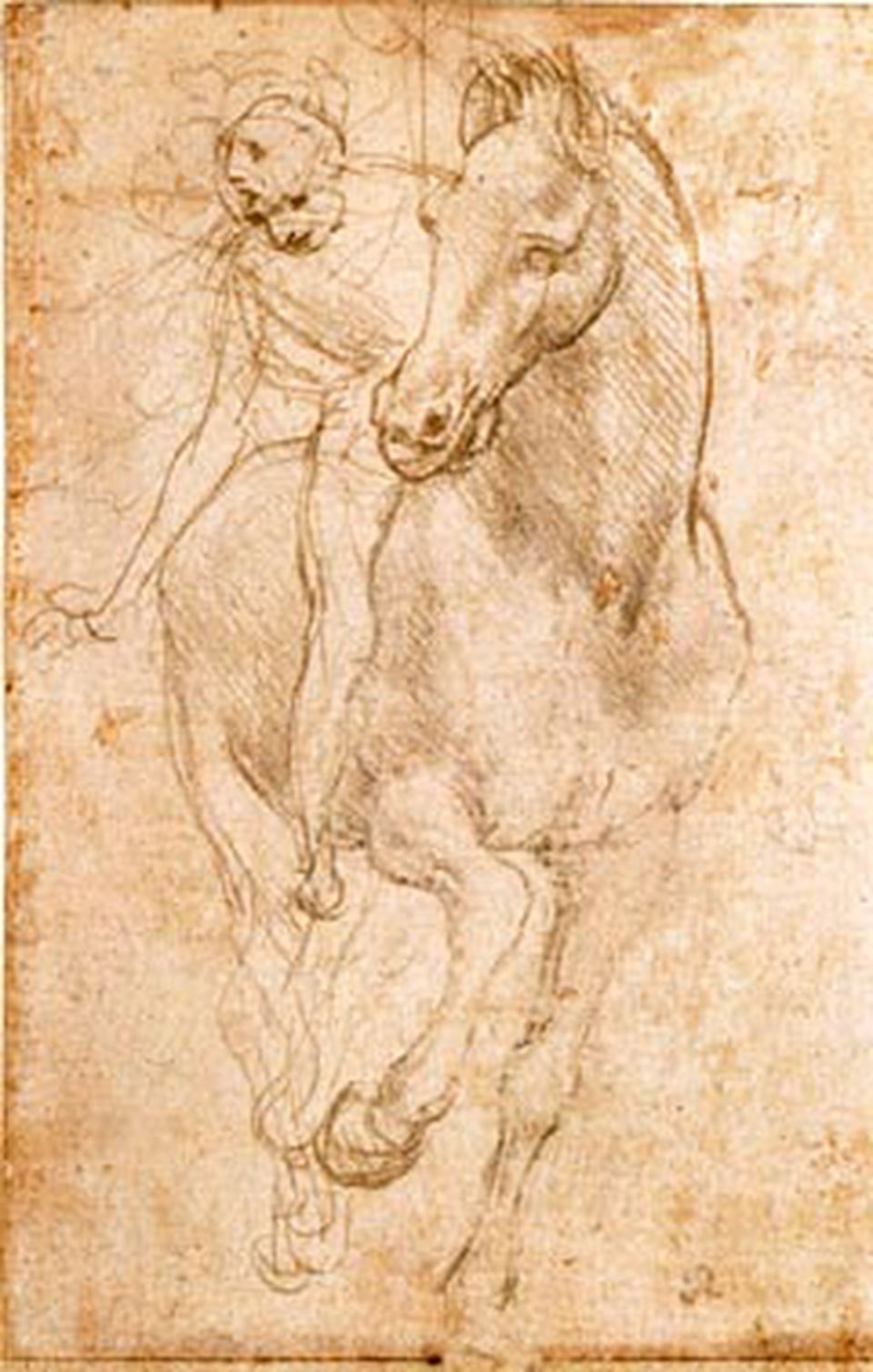
Leonardo da Vinci advised art viewers that the perfect distance from which to view a painting was the length of the human face. To me, that is a fascinating dictum, because it tells a lot about how Leonardo planned his paintings. Firstly, despite his living in Italy where the Mediterranean light is frequently sunny and bright, Leonardo must have factored in the darkness of building interiors and flickering illumination when considering how his paintings were to be viewed. He must also have wanted his paintings to be appreciated fully in all their subtle detail and nuance, only possible from a close examination. That short distance between viewer and art also tells of the intimate dialogue Leonard wanted to set in motion when he created art.

When you see Leonardo's drawings, particularly his silverpoints, this intimacy is even more salient. Most of his silverpoints are perhaps two to three inches by four to five inches, at most. They are tiny. But despite their diminutive size, they are incredibly powerful.

Study of Horses, Leonardo da Vinci, silverpoint

Study of Horses, Leonardo da Vinci, silverpoint

His notebooks and drawing books, too, are very small indeed and it amazed me, when I saw some of them at the Louvre in a wonderful exhibition, that he had such control of his hand on such a restricted surface, especially when all the writing was "backwards". Drawings have always been considered intimate media. Silverpoints, chalks, pen and inks, graphites, charcoals, pastels and even watercolours - they all invite close inspection, a whispered dialogue between art and viewer. Historically, drawings were to be displayed (and protected) in muted light, in the inner sanctum of an art lover's home, in the "cabinet de dessins". Usually of a scale that is in function of the human hand and the marks it makes on paper or vellum, a drawing is ideally viewed by a single person at a time, a very human scale in concept and proportionality.

Plant-bush study, Leonardo da Vinci (Image courtesy of the Royal Collection)

Plant-bush study, Leonardo da Vinci (Image courtesy of the Royal Collection)

The scale of art is an endlessly interesting consideration, with a huge effect on the viewer. Every artist gets involved in this issue each time a work of art is conceived, as you have to decide what size the work of art is going to be. At present, we seem to live in a world of extremes - there are diminutive, often gem like creations and then there are the colossal works which often have trouble fitting even into large public spaces. These are works conceived for viewing from a long distance, with the art often dominating the space in dramatic and often vividly coloured fashion, with robust content and form. Perhaps an obvious example of a large canvas is Picasso's passionate antiwar Guernica, measuring 11 x 25.6 feet, now at the Reina Sofia Museum in Madrid (http://www.museoreinasofia.es/). Viewing gives a visceral jolt, but I always feel I need to back away quite a distance fully to understand its powerful messages.

Another series of large paintings that come to mind are the 14 Mark Rothko paintings in the Rothko Chapel adjacent to the Menil Collection in Houston, Texas (http://www.rothkochapel.org/).

The Rothko Chapel

The Rothko Chapel

Their size, (11 x 15 feet or larger in the triptychs), the chapel built to house them and the general ambiance created by these vast dark canvases are utterly memorable. This is the artist who declared back in 1942, about his and Adolph Gottleib's work, "We favor the simple expression of the complex thought. We are for the large shape because it has the impact of the unequivocal..." Interestingly, in the next decade, he replied to critics who were claiming that he was working on a large scale to compensate for a lack of substance in his paintings. He wrote, "I realise that historically, the function of painting large pictures is painting something very grandiose and pompous. The reason I paint them, however ... is precisely because I want to be very intimate and human. To paint a small picture is to place yourself outside your experience, to look upon an experience as a stereopticon view or with a reducing glass. However you paint the larger picture, you are in it. It isn't something you command!"

And yet, Rothko circles back to what Leonardo said, in terms of the viewer's ideal distance from his paintings. The span of centuries does not change this recommendation: Rothko suggested that eighteen inches are an ideal distance from which to view one of his canvases. Like Leonardo, Rothko knows that at those close quarters, a sense of intimacy leads to a dialogue with the art that can take the viewer far beyond self into the realm of the unknown.

Art, an underground stream flowing through life by Jeannine Cook

In a wonderful PBS American Masters piece on Philip Glass, the composer talks of music being an underground river always flowing, into which one needs to tap by listening carefully and attentively. (http://www.philipglass.com/)

In the same way, I think that visual art is part and parcel of many people, another underground stream flowing through their life. The more you learn to see, the more you can tap into the underground stream - whether that seeing leads to the creation of art or the active enjoyment and collection of art. The stream usually starts flowing early on in life, even if one is unconscious of it at the time. Many artists draw on early visual memories in the creation of later work, even if the memories are transformed. One of my fellow Visiting Artists at Spring Island, SC, is the perfect example of this transposition - Brian Rutenberg, from the Charleston area, uses his "underground stream" of visual experiences to paint wonderfully abstract evocations of those remembered places. Even though he does not live in Charleston now, those childhood memories flow on for him into his art.

Pavilion, 2008-09, by Brian Rutenberg, oil on linen, courtesy of Jerald Melberg Gallery, Charlotte, NC

Pavilion, 2008-09, by Brian Rutenberg, oil on linen, courtesy of Jerald Melberg Gallery, Charlotte, NC

In the same way, I find that my memories of East Africa will periodically become part of my art.

Patterns of Africa, silverpoint, watercolour, Jeannine Cook artist

Patterns of Africa, silverpoint, watercolour, Jeannine Cook artist

This alchemy of the subterranean presence of art being transformed, often almost in spite of oneself, into art is so important that one needs to learn to trust that inner voice, that inner eye. It is part of the experience that is built up over time in the creation of art. Educating one's eye to see potential drawings and paintings, honing one's skills, studying and appreciating other people's art, from all periods, particularly in museums, are all part of tending that underground stream flowing inside each of us.

In a strange way, it makes me think of a description of a French winegrower about the way wines are created. He talked of the slow and noble evolution of the wines, "carrying with them hopes for a prolonged life." With vineyards that have existed for generations, surviving all manner of calamities from disease to war to revolution, there is always the promise of a fresh harvest, a continuing wine making cycle. Indeed, these cycles of wine cultivation and creation represent "a taste of eternity". (War and Wine, a wonderful book by Don and Petie Kladstrup, published in 2002 by Broadway Books). The winegrower was perhaps, in his own way, talking of the same sense of a continuum, an underground stream into which to tap as he created his wines.